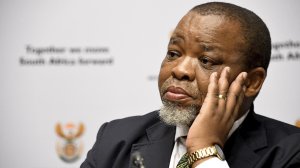
Disinformation
Disinformation refers to false or misleading information deliberately spread to deceive audiences, distinguishing it from misinformation, which is shared without intent to mislead. It spreads through social media platforms, state-backed media outlets and coordinated online networks, often amplified by bot accounts and paid influencers. In an African business and political context, disinformation campaigns have targeted elections, mining and land disputes, foreign investment narratives and geopolitical rivalries between Western powers, Russia and China. Networks based in cities such as St Petersburg have been linked to campaigns across the continent, including in South Africa, Zimbabwe, Benin and Senegal. Such campaigns often exploit local grievances, sometimes using intermediaries or local political figures to lend authenticity to fabricated narratives. Disinformation can distort public perception of policy, investment climates and security issues, undermining institutional trust. Governments, tech platforms and civil-society groups have developed fact-checking initiatives and content moderation policies to counter its spread, though enforcement remains inconsistent. The rise of artificial intelligence tools has made fabricated text, images and video increasingly convincing and harder to detect. Regulatory bodies in several countries are considering legislation to address online disinformation while balancing free-speech concerns. The issue has become a recurring theme in coverage of foreign interference, election integrity and geopolitical competition on the continent.
Disinformation Updates

Home Affairs takes action against disinformation campaign on Constitutional Court judgment
7th October 2026 The Department of Home Affairs is alarmed by an apparent coordinated disinformation campaign surrounding the Constitutional Court judgment of 7... →

The Electoral Code of Conduct on Countering Disinformation
29th September 2026 Ahead of the 2026 Local Government Elections, the Electoral Commission (IEC) introduced the Electoral Code of Conduct on Countering Disinformation.... →

SA local elections will test voters’ ability to spot fake news
By: ISS, Institute for Security Studies 25th September 2026 Public confidence in identifying disinformation is falling just as AI and hyper-local campaigning make election manipulation harder to detect.... →
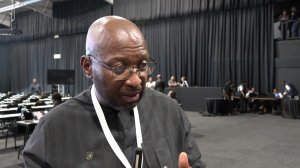
IEC prepared but cautious as local elections face legal hurdles, deepfake threats
By: Thabi Shomolekae 23rd September 2026 The Independent Electoral Commission of South Africa (IEC) remains cautious but says it is prepared as it navigates legal battles, ballot security,... →
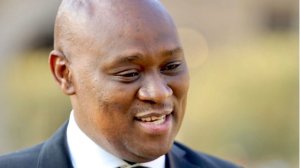
ActionSA sues ANC’s Maepa over alleged AI-faked claims 
By: Thabi Shomolekae 26th August 2026 ActionSA has launched coordinated actions against the ANC’s Kgoši Maepa, lodging a formal complaint with the Independent Electoral Commission (IEC)... →
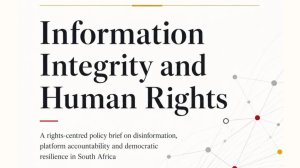
Information Integrity and Human Rights
19th August 2026 The South African Human Rights Commission (SAHRC/ the Commission) has published its Policy Brief on Information Integrity and Human Rights, which... →

South Africa links Russian financing to coup-accused influencer
By: Bloomberg 11th August 2026 South African prosecutors allege that Russia financed an attempted escape from the country by a social media influencer wanted by Benin in... →

SA’s anti-immigration movement raises the stakes on social media
By: ISS, Institute for Security Studies 24th July 2026 Vigilante videos, AI-generated content and Mandela-linked framing are fuelling millions of mentions and xenophobic sentiment. With weekly... →

ActionSA calls for stronger safeguards against election disinformation
22nd July 2026 ActionSA has today submitted comprehensive recommendations to the Electoral Commission (IEC) on its Draft Electoral Code of Conduct on Countering... →

Lucrative online influence detected during South Africa’s 30 June protests
By: ISS, Institute for Security Studies 2nd July 2026 The impact of South Africa’s 30 June anti-immigration protests was doubtlessly terrifying for many foreign nationals. Yet the unofficial deadline... →
 |
 |
1 |
 |
 |