





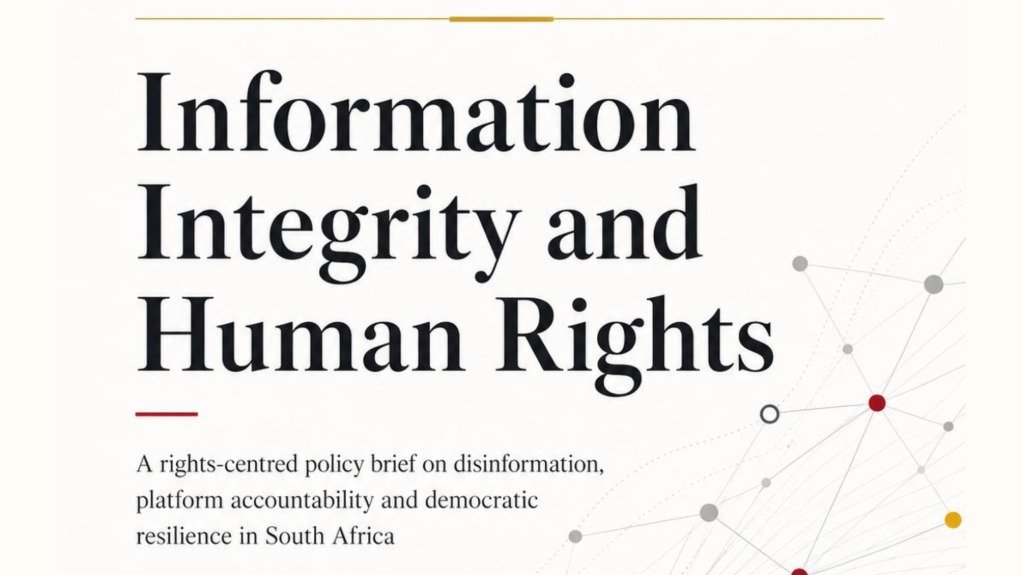
- Information Integrity and Human Rights1.94 MB
The South African Human Rights Commission (SAHRC/ the Commission) has published its Policy Brief on Information Integrity and Human Rights, which outlines a rights-centred approach to disinformation, platform accountability, and democratic resilience in South Africa.
The Policy Brief draws on the Commission's broader work on human rights in the digital environment, its investigations and institutional experience, research and stakeholder engagements, regional and international developments, and the Commission's 2025 Summit on Human Rights and Disinformation.
The Summit convened government, Chapter Nine institutions, National Human Rights Institutions, civil society, academia, journalists, fact-checkers and technology specialists to examine the growing impact of information disorder on human rights. The Commission's central finding is that disinformation can no longer be treated merely as a communications or social-media problem.
When false or manipulated information contributes to violence, discrimination, public-health risks, electoral disruption, attacks on vulnerable communities or the erosion of trust in democratic institutions, it becomes a human rights concern. At the same time, the Commission cautions that measures intended to counter disinformation must themselves comply with human rights standards. Freedom of expression remains fundamental, and responses must be lawful, necessary, proportionate and designed to avoid censorship or the suppression of legitimate dissent.
Report by the South African Human Rights Commission
EMAIL THIS ARTICLE SAVE THIS ARTICLE ARTICLE ENQUIRY FEEDBACK
To subscribe email subscriptions@creamermedia.co.za or click here
To advertise email advertising@creamermedia.co.za or click here


