






The Independent Electoral Commission of South Africa (IEC) remains cautious but says it is prepared as it navigates legal battles, ballot security, and the rising threat of digital disinformation ahead of the upcoming local government elections.
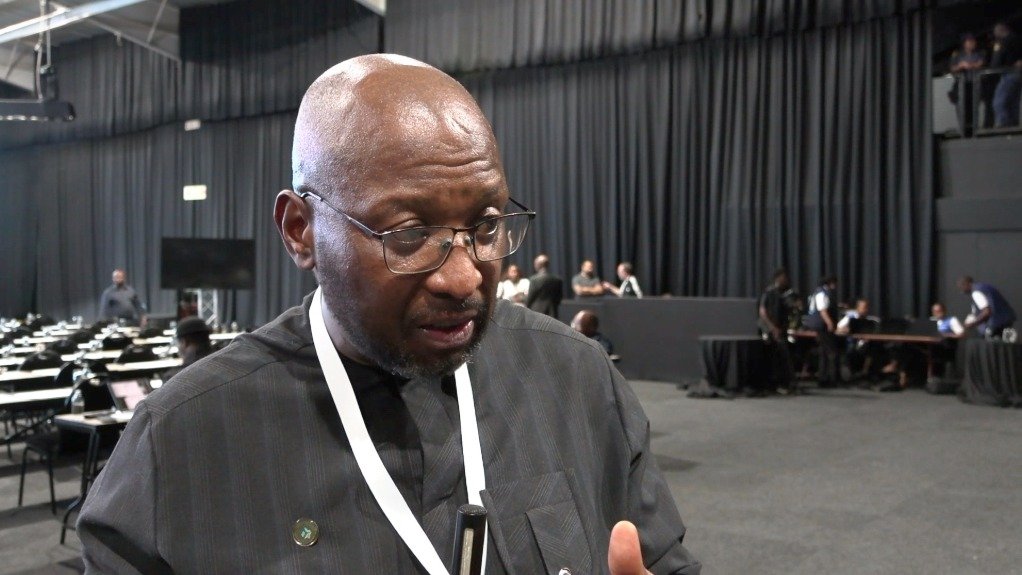
Speaking on the shifting electoral landscape, IEC general manger for electoral matters James Aphane clarified the commission's stance regarding the ANC following the Electoral Court's dismissal of the party's legal challenge.
The court had rejected the ANC’s bid to include 181 candidate councillors after the party failed to meet the official submission deadline.
Addressing potential next steps if the ANC appeals, Aphane emphasised that the IEC cannot act on speculation.
"Depending on what the ANC gets from the upper court, the IEC will have to act accordingly when that order has been placed before us. We’ll know what it is that we can do, but now it will be premature for us to start saying what it is that we are going to do, because we don’t know when it will happen," he said.
When questioned whether a successful court challenge would force the IEC to reprint ballot papers, Aphane said timing is everything.
"It depends on where we are in the electoral timetable, because the issue before the court was not the electoral timetable itself," he explained.
Aphane compared the strict security protocols surrounding ballot papers to those of financial systems, underscoring the integrity of the physical vote.
"The ballot paper is a high-security feature. As you know, it’s almost equal to a bank note," Aphane remarked.
He explained that while specific printers have been contracted to handle production, the locations of the printing facilities remain strictly confidential for security reasons.
Aphane highlighted that once counted, ballots are moved to undisclosed secure facilities in case a recount is legally ordered. Aphane clarified that while the IEC frequently partners with metro police or the South African Police Service (SAPS) for escorts based on risk assessments, they are not legally mandated to have police presence at all times.
With an increasingly complex digital landscape, the IEC is bracing for a surge in regulatory breaches. Aphane noted that the 2021 enforcement framework, combined with the current digital environment and disinformation codes, means "you are likely to see a lot of violations."
However, Aphane stressed that the IEC is not a judicial body and that the responsibility to enforce penalties lies entirely with the Electoral Court, while political parties bear the responsibility of reporting infractions.
The commission is strongly advocating for political maturity and peer accountability.
"We call upon the electoral court and the parties themselves to do self-correction," Aphane stated. He revealed that many reported incidents never make it into official violation statistics because parties use the allocated 36-hour window to resolve issues independently after reading the code. If self-correction fails, matters are escalated to the Electoral Court.
Meanwhile, addressing past concerns, such as the discovery of abandoned ballot boxes in KwaZulu-Natal during a previous election, Aphane reassured voters that a misplaced box does not equal a compromised vote.
"If somebody discovers a ballot box with ballot papers, it means the results of that ballot are already in the result system... but it's not a nice thing, obviously."
The IEC warned that the biggest threat to public trust may not be physical logistics, but digital manipulation. The proliferation of artificial intelligence (AI) has made it incredibly easy to weaponise old or manufactured incidents.
"Because of the digital environment and AI, we are going to see people recirculating old news," Aphane warned.
"I can assure you now, we are going to see a video of a ballot box somewhere in the bush. Whether it’s real or not is a subject that you and I need to investigate. That’s why this issue involves something called deepfakes, wherein people can do something that is more realistic than you can ever imagine."
EMAIL THIS ARTICLE SAVE THIS ARTICLE ARTICLE ENQUIRY FEEDBACK
To subscribe email subscriptions@creamermedia.co.za or click here
To advertise email advertising@creamermedia.co.za or click here


