Constitutional Court
The Constitutional Court is the apex court in South Africa and the highest judicial authority on constitutional matters. Established in 1995 following the end of apartheid, the court was created to safeguard the rights enshrined in the country's Constitution and to ensure that all law and conduct is consistent with constitutional principles. It sits in Johannesburg at Constitution Hill, a site that formerly housed apartheid-era prisons and now symbolises the transition to democracy. The court comprises 11 justices, including a Chief Justice and Deputy Chief Justice, all appointed by the President after a public nomination and interview process conducted by the Judicial Service Commission. The Constitutional Court has jurisdiction over constitutional disputes between organs of state, challenges to the constitutionality of legislation or executive action, and matters referred to it by lower courts. Its decisions are binding on all courts and organs of state and cannot be appealed. The court has played a central role in shaping South African law on issues ranging from socioeconomic rights and land reform to electoral disputes and the separation of powers. Notable rulings have addressed government accountability, access to housing and healthcare, and the limits of executive authority. The court's independence and its willingness to hold government to account have made it a key institution in South Africa's constitutional democracy. Its judgments are widely studied across the continent and have influenced constitutional jurisprudence in other African jurisdictions.
Constitutional Court Updates

Premier of the Western Cape Government and Another v Speaker of the National Assembly and Others; City of Cape Town and Others v Speaker of the National Assembly and Others (CCT 103/25; CCT 144/25) [2026] ZACC 37
18th September 2026 Click here to read the full judgment on Saflii [1] These are two applications brought in terms of section 167(4)(e) of the Constitution for... →

Constructive dismissal: When an employee's resignation becomes the employer's liability
18th September 2026 Constructive dismissal is often misunderstood by both employers and employees. Unlike a conventional dismissal, the employer does not expressly... →

ConCourt victory blocks state procurement capture
18th September 2026 Sakeliga welcomes today’s Constitutional Court victory over the Public Procurement Act by the Premier of the Western Cape, the City of Cape Town,... →
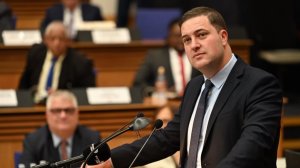
Hill-Lewis welcomes ConCourt decision to invalidate Public Procurement Act
By: Irma Venter 17th September 2026 Cape Town Mayor Geordin Hill-Lewis has welcomed the Constitutional Court's unanimous decision to invalidate the Public Procurement Act (PPA), owing... →

DA government wins major Constitutional victory for South Africans, protecting taxpayer money
17th September 2026 Today, the DA Western Cape government won a major Constitutional Court victory, standing up to bad national legislation – and the DA government... →

Pig farm vs power station: South African court tells state‑owned Eskom to clean up its pollution
10th September 2026 About 74% of South Africa’s electricity is generated by coal-fired power stations owned by the state-owned electricity provider, Eskom. These... →

Location is not a luxury: The Constitutional Court rewrites the rules on housing and spatial justice
1st September 2026 On 2 July 2026, the Constitutional Court affirmed the fundamental importance of location as an aspect of adequate housing, cementing the... →

DA’s ConCourt hearing against VAT Act underway
27th August 2026 This morning the Democratic Alliance’s lawyers began argument in the Constitutional Court, for a final order of constitutional invalidity over... →

Beyond the termination clause: The survival of the common law right to terminate
27th August 2026 Most standard form construction contracts contain comprehensive default and termination clauses. However, not all default and termination clauses... →

Jurisdiction without borders? The Constitutional Court settles the test for competition authority’s jurisdiction over foreign banks
26th August 2026 For over a decade, the question of whether South Africa's competition authorities have the power to prosecute foreign companies for alleged... →