





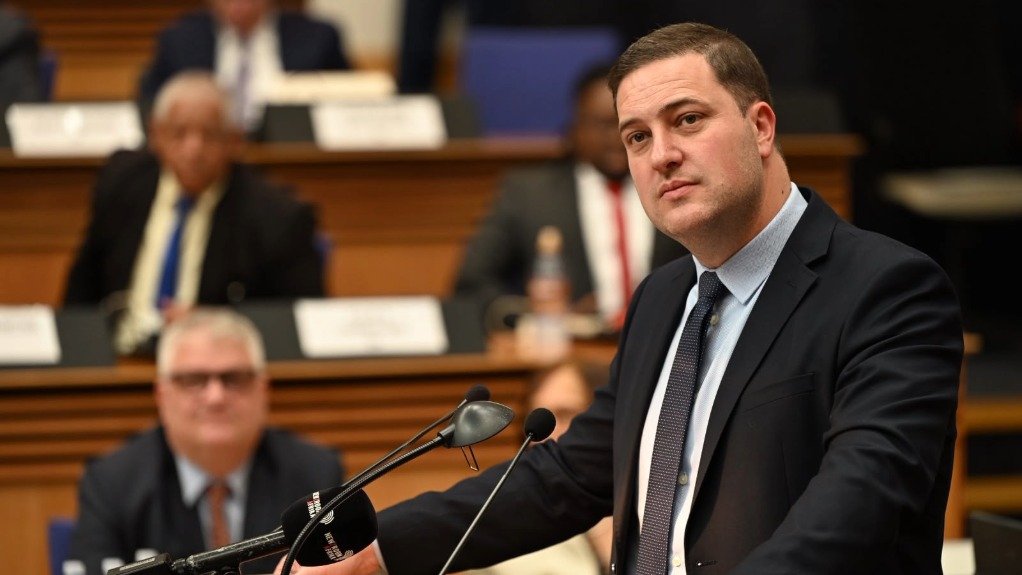
Cape Town Mayor Geordin Hill-Lewis has welcomed the Constitutional Court's unanimous decision to invalidate the Public Procurement Act (PPA), owing largely to insufficient public participation.
The court also awarded costs to the City of Cape Town (CoCT), to be paid by the President, Finance Minister, and Speaker as opposing respondents.
CoCT was one of the applicants challenging the PPA’s validity in the ConCourt. If enacted, National Treasury would have been able to establish a centralised Public Procurement Office, for example.
The Western Cape capital warned that the proposed act would slow down local service delivery and undermine the constitutional autonomy of local government.
“We are glad that the Constitutional Court agreed with our case that the Act was passed unlawfully, with insufficient public participation and parliamentary consideration,” says Hill-Lewis.
“Before we took the step of approaching the court, we wrote to the Finance Minister and President several times raising fairly obvious constitutional concerns relating to this legislation.
“None of those warnings were heeded, but they have now been confirmed by the court, with costs awarded.
“Most importantly, this ruling protects the rights of local and provincial government to pursue their own policies and approaches to procurement, to achieve better public outcomes,” adds Hill-Lewis.
“The court has consistently upheld the independent powers and functions of local governments.
“This act would have slowed down local service delivery and infrastructure investment, making it much harder for municipalities to procure quickly for urgent local needs.”
Hill-Lewis says municipalities must be able to act swiftly to resolve water, sanitation, electrical, waste and environmental issues.
He says the Act would have introduced significant new red tape, such as municipalities being unable to maintain their own database of accredited suppliers and payment records, instead integrating with a national database; the centralisation of all national procurement via a public procurement office (PPO), which would have run the risk of nationwide disruptions if the central system goes offline; and the removal of municipal power to lawfully deviate from procurement regulations for urgent service delivery without centralised approval via the PPO.
Hill-Lewis also cites concerns that around 36 elements of the Act would have required new regulations.
He says the Act also attempted to position the national Finance Minister as a regulatory authority over local government, which is inconsistent with the Constitution, Municipal Systems Act and the Municipal Finance Management Act.
EMAIL THIS ARTICLE SAVE THIS ARTICLE ARTICLE ENQUIRY FEEDBACK
To subscribe email subscriptions@creamermedia.co.za or click here
To advertise email advertising@creamermedia.co.za or click here


