Digitalisation
Digitalisation is the process of converting analogue information and processes into digital formats and integrating digital technologies into business operations, infrastructure and service delivery. It encompasses the adoption of sensors, data analytics, cloud computing, automation and connectivity to optimise performance, improve decision-making and enable real-time monitoring and control. The technology is distinct from digitisation, which refers simply to converting information from physical to digital form, whereas digitalisation involves transforming entire workflows and business models. Key applications include smart grids for electricity distribution, intelligent water management systems, predictive maintenance in manufacturing, and digital twins that create virtual replicas of physical assets. Sectors adopting digitalisation include utilities, mining, manufacturing, logistics, healthcare and municipal services, where it enables remote monitoring, automated responses to system failures, and data-driven resource allocation. In the utilities sector, digitalisation supports demand management, fault detection and integration of renewable energy sources, while in industrial settings it underpins Industry 4.0 initiatives that connect machines, supply chains and enterprise systems. The technology has gained particular significance in regions experiencing infrastructure strain, where digital tools can extend asset life, reduce downtime and improve service reliability without requiring large-scale capital investment. Adoption is driven by falling sensor costs, advances in wireless connectivity and the growing availability of cloud-based platforms that allow organisations to scale digital capabilities incrementally. Digitalisation has evolved rapidly since the early twenty-first century, accelerated by the proliferation of the Internet of Things, machine learning algorithms and high-speed mobile networks.
Digitalisation Updates

Measuring servicification and impacts of services trade and policy
11th September 2026 Services are becoming more important across the economy, and digitalisation is accelerating this process of servicification. This raises policy... →
Digitalisation and AI for power system transformation: Perspectives for the G7
31st October 2025 Digital solutions are reshaping the future of power systems. This IRENA report, developed in collaboration with the Canadian G7 Presidency,... →

2025 African Integration Report
3rd October 2025 Launched at the margins of the 8th STC on Finance, Monetary Affairs, Economic Planning & Integration, the report highlights Africa’s progress and... →

PSA warns Department of Home Affairs to remunerate employees for working extended hours
20th May 2025 The Public Servants Association (PSA), the majority trade union representing employees at the Department of Home Affairs (DHA), has noted with... →

The DA is committed to digitally transforming government services and boosting economic growth
13th February 2025 The Democratic Alliance's commitment in National Government to digitising services, and bringing government interface online, is a very real... →

Trade facilitation report: driving African trade through digitalisation
5th December 2024 The Trade Facilitation Report is the inaugural knowledge report by TradeMark Africa (TMA). It was launched in Kigali, Rwanda, on 3 December 2024 at... →
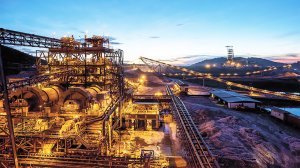
Why gold equities are continuing to underperform the gold price 
By: Martin Creamer 12th November 2024 Why is it that gold equities are continuing to underperform the gold price? That is a question Mining Weekly put to Barrick president and CEO Dr... →
 |
 |
1 |
 |
 |