South African Reserve Bank
The South African Reserve Bank is the central bank of South Africa, responsible for monetary policy, financial stability and the regulation of the country's banking system. Established in 1921, it is headquartered in Pretoria and operates under the South African Reserve Bank Act. The bank's primary mandate is to protect the value of the rand in the interest of balanced and sustainable economic growth. It sets the repo rate, which influences borrowing costs and inflation, and targets an inflation band of 3% to 6%. The Reserve Bank also manages the country's gold and foreign-exchange reserves, oversees the national payment system and acts as banker to government and commercial banks. It is governed by a board of directors and led by a governor appointed by the President. The bank operates with a degree of independence, though its mandate is set by Parliament. Unlike many central banks, the South African Reserve Bank has private shareholders, a legacy of its founding, though this does not affect its policy independence. It plays a central role in South Africa's financial architecture and is a key voice in debates over interest rates, currency stability and economic policy. The bank publishes regular monetary policy statements and economic reviews that are closely watched by markets and policymakers.
South African Reserve Bank Updates

South African inflation rises modestly but bigger fuel-driven jump seen in October 
By: Reuters 21st October 2026 South Africa's inflation rate rose modestly in September, data showed on Wednesday, but economists expect a sharper acceleration in October after... →

You can outsource tasks to AI, but not the risk
16th October 2026 Artificial Intelligence (AI) is rapidly moving from answering questions to taking actions on our behalf. This emerging form of AI, often called... →
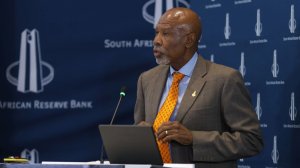
Kganyago says rand resilience cushioning South Africa from shock
By: Bloomberg 16th October 2026 South African Reserve Bank Governor Lesetja Kganyago said the rand has held up well despite the shock caused by the Iran war, reflecting more... →
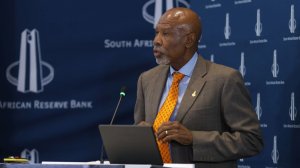
South Africa's central bank governor Kganyago sees upside risks to inflation
By: Reuters 15th October 2026 Rising global energy prices and food costs continue to pose upside risks to inflation in South Africa, the central bank head said on Thursday, with... →

Radical economic policies in Argentina offer lessons – but not a blueprint – for South Africa
14th October 2026 Economic reform is usually judged by its numbers: inflation, deficits, growth. Less attention goes to the beliefs and habits that decide whether... →

R30.25 petrol, higher interest rates, 8.7% Medical aid hike: The cost-of-living shock employers cannot ignore in 2027
7th October 2026 Dark clouds of growing financial pressure are gathering over South African households as we approach 2027, and employers need to look beyond... →

South African food inflation rose in August, ending six months of decline
By: Rebecca Campbell 1st October 2026 South African food and non-alcoholic beverage (NAB) inflation (hereafter to be referred to simply as food inflation, for short) rose in both... →
Franz Ruch appointed seventh MPC member
By: Lumkile Nkomfe 1st October 2026 Economist Franz Ruch has been appointed as an adviser to the governors of the South African Reserve Bank (SARB), effective October 1. As part of... →

Policy uncertainty remains elevated, despite easing somewhat in the third quarter
By: Tasneem Bulbulia 30th September 2026 Although still in negative territory, the North-West University Business School's Policy Uncertainty Index (PUI) for the third quarter eased to... →

South African rand edges up ahead of month-end economic data
By: Reuters 30th September 2026 The South African rand edged up in early trade on Wednesday ahead of a batch of month-end domestic economic data that could provide fresh signals... →