Middle East
The Middle East is a transcontinental region spanning Western Asia and parts of North Africa, characterised by its strategic location at the crossroads of Europe, Asia and Africa. The region encompasses countries including Saudi Arabia, the United Arab Emirates, Iran, Iraq, Kuwait, Qatar, Bahrain, Oman, Yemen, Israel, Palestine, Jordan, Lebanon, Syria and sometimes Egypt and Turkey, though definitions vary. It is home to an estimated 400-million people and holds immense geopolitical and economic significance owing to its vast hydrocarbon reserves, which account for a substantial share of global oil and natural gas production and exports. The Middle East's energy resources have shaped global markets for decades, with key chokepoints such as the Strait of Hormuz serving as critical arteries for international oil shipments. Beyond energy, the region's economy encompasses finance, trade, construction, tourism and increasingly diversified sectors as several Gulf states pursue economic transformation agendas. Major cities such as Dubai, Riyadh, Abu Dhabi, Tehran, Tel Aviv and Cairo function as commercial, financial and cultural hubs. The region is also the birthplace of three major world religions—Judaism, Christianity and Islam—and contains sites of profound historical and cultural importance. Political dynamics in the Middle East are complex, marked by a mix of monarchies, republics and theocracies, ongoing conflicts, regional rivalries and shifting alliances. In recent years, several Middle Eastern nations have announced ambitious renewable energy and nuclear programmes as part of efforts to diversify energy supply and reduce reliance on fossil fuel exports. The region's strategic importance to global energy security, trade routes and geopolitical stability ensures it remains a focal point in international business and policy discussions.
Middle East Updates
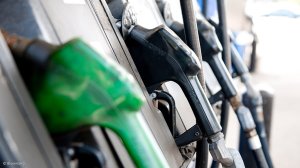
Rising fuel prices revive cost-of-living pressure in Nigeria ahead of 2027 election
By: Reuters 21st September 2026 Nigeria's fuel prices have climbed to record highs as tensions in the Middle East push up global oil prices, piling fresh cost-of-living pressure... →

Trade conditions firmed further in August – Sacci
By: Schalk Burger 16th September 2026 The South African Chamber of Commerce and Industry’s (Sacci’s) Trade Conditions Survey for August shows that trade conditions improved marginally... →
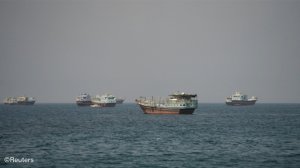
Gulf states call off meeting with Iran, Houthis launch new attack on Saudi
By: Reuters 14th September 2026 Arab states in the Gulf called off a meeting with Iran planned for Monday, while Yemen's Houthis launched a new attack on Saudi Arabia after... →

AfDB launches up to $5.1bn plan for African countries facing energy, fertiliser shocks
By: Rebecca Campbell 10th September 2026 The African Development Bank (AfDB) Group’s board of directors has approved its new initiative, the Global Energy and Fertiliser Crisis Response... →

Global diesel supply to stay tight through winter, industry execs say
By: Reuters 8th September 2026 Global diesel supply will remain tight due to a lack of spare refining capacity, Russia's ban on exports and the approach of peak winter demand,... →
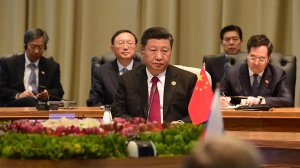
China's Xi urges new Middle East security framework during Egypt visit
By: Reuters 2nd September 2026 Chinese President Xi Jinping called on Middle Eastern nations to oppose external interference and consider reshaping the region's security order... →
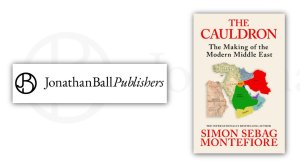
The Cauldron: The Making of the Modern Middle East
26th August 2026 The essential guide to the making of today's Middle East: a spellbinding history from the bestselling, prizewinning historian and master... →
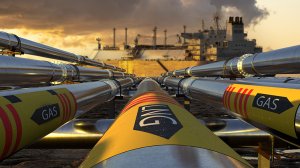
Iran war makes multibillion-dollar Tanzania LNG more attractive, Equinor says
By: Reuters 25th August 2026 The disruption to energy flows in the Strait of Hormuz is making it more attractive for Equinor to develop a long-stalled liquefied natural gas... →
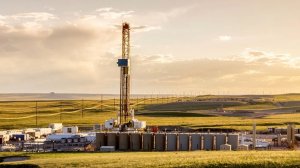
Global 2026 oil supply shortfall to deepen as Hormuz reopening remains elusive, IEA says
By: Reuters 13th August 2026 Global oil supply will fall by 4.3-million barrels per day (bpd), or around 4%, this year, the International Energy Agency (IEA) said on Wednesday,... →
2026 Africa Sustainable Development Report
12th August 2026 This 2026 Africa Sustainable Development Report is released as African countries advance through the final phase of the 2030 Agenda for Sustainable... →