Energy Security
Energy security refers to the reliable and affordable availability of energy supplies to meet a country's or region's economic and social needs. It encompasses the resilience of energy systems against supply disruptions, price volatility and geopolitical risks, as well as the diversity of energy sources and supply routes. Governments and industry stakeholders pursue energy security through strategies including domestic resource development, strategic reserves, diversified import sources and investment in energy infrastructure. The concept extends beyond oil and gas to include coal, electricity, nuclear fuel and renewable energy, reflecting the full spectrum of energy inputs required by modern economies. Energy security considerations influence national policy on resource extraction, trade agreements, pipeline and port infrastructure, and electricity grid interconnections. For resource-importing nations, energy security often drives efforts to reduce dependence on single suppliers or transit routes, while resource-rich countries may prioritise stable export markets and infrastructure to monetise reserves. The rise of renewable energy and battery storage is reshaping traditional energy security frameworks, introducing new dependencies on critical minerals and manufacturing supply chains. Energy security remains a central concern in Asia, where rapid economic growth and industrialisation have driven surging demand for coal, natural gas and oil, much of it imported. Climate policy and the energy transition add complexity, as countries balance decarbonisation goals with the need for affordable and reliable energy. Energy security is closely linked to economic competitiveness, national sovereignty and geopolitical strategy, making it a priority for policymakers and industry alike.
Energy Security Updates
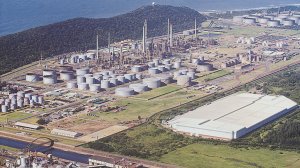
South Africa faces $8bn bill to revive State-owned refineries
By: Reuters 23rd September 2026 South Africa will need more than $8-billion to revive two mothballed state-owned refineries, officials told lawmakers, as the country seeks to... →

Addressing renewable energy supply chain risks: Auction design and policy frameworks
18th September 2026 Recent disruptions to global renewable energy supply chains have increased equipment and shipping costs, intensified inflationary pressures and... →
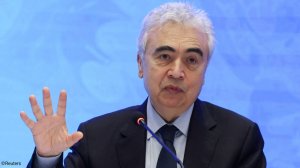
IEA chief says Nigeria could double energy investment within five years
By: Reuters 4th September 2026 Nigeria could double investment into its energy sector within five years after joining the International Energy Agency, its chief Fatih Birol said... →
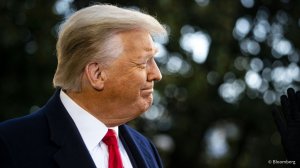
US-China rivalry puts Africa’s climate diplomacy to the test
By: ISS, Institute for Security Studies 17th August 2026 Current geopolitical tensions could be catastrophic for climate action, especially Africa’s renewable energy transition. Climate action,... →

SA: Khumbudzo Ntshavheni: Address by Minister in The Presidency, the Public Lecture by President Cyril Ramaphosa on SADC Vision 2050, KZN (14/08/2026)
14th August 2026 SADC is not simply an institutional arrangement between governments. At its heart, SADC is about people. It is about the young person in Lusaka,... →
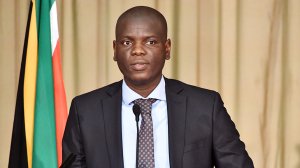
SA: Ronald Lamola: Address by International Relations and Cooperation Minister, to introduce President Matamela Cyril Ramaphosa, the SADC Public Lecture, University of KwaZulu-Natal, Westville Campus (14/08/2026)
14th August 2026 The world is undergoing significant transformation. Great power competition is intensifying. Advanced economies are turning inward. Events beyond... →
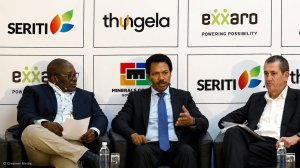
AI’s efficiencies keeping even lower quality operations going longer, energy event hears 
By: Martin Creamer 22nd July 2026 The increased efficiencies achieved by AI are ensuring that even lower quality operations are kept going for longer which benefits all... →

A sharp fall in gas supplies in 2028 threatens South Africa’s economy: how to manage the fallout
22nd July 2026 South Africans are getting used to the term “gas cliff” as pressure ramps up for action to be taken ahead of expected gas shortages. Natural gas... →
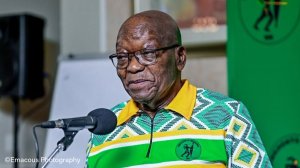
Ntshavheni raises concerns over Zuma’s India visit; briefs on immigration, Cabinet updates
By: Tasneem Bulbulia 3rd July 2026 Minister in The Presidency Khumbudzo Ntshavheni on July 3 briefed media on the outcomes of the Cabinet meeting held earlier this week, noting that... →
Nigeria joins IEA, boosting global energy governance
By: Schalk Burger 2nd July 2026 Nigeria has joined global organisation the International Energy Agency (IEA), which deepens the IEA's cooperation with Africa’s most populous... →