





The content on this page is not written by Polity.org.za, but is supplied by third parties. This content does not constitute news reporting by Polity.org.za.
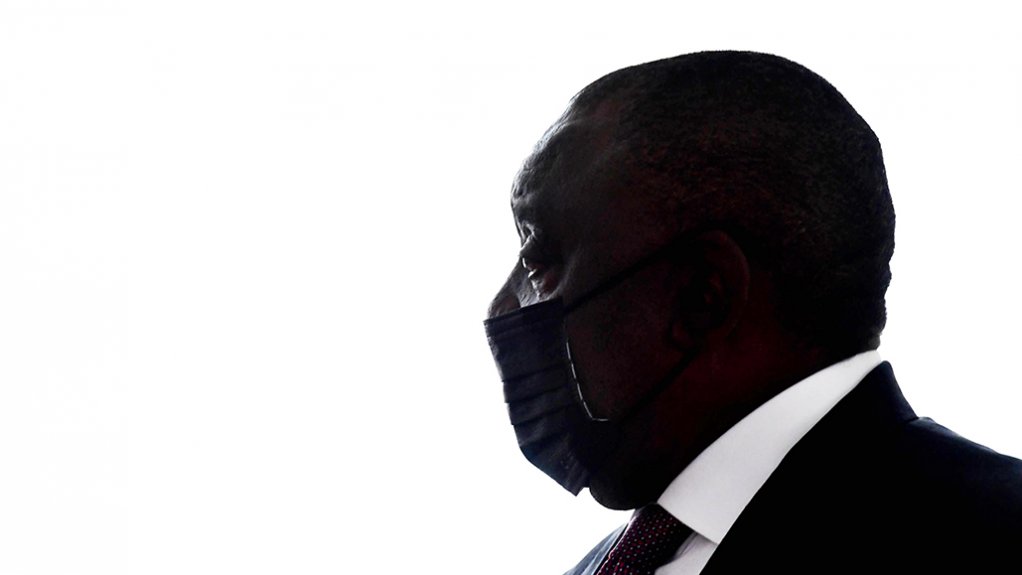
The ANC in Parliament did not cop out of investigating allegations of state capture by the Gupta family in 2016, but saw it fit at the time to let law enforcement agencies lead the probe, says President Cyril Ramaphosa. He acknowledges, however, that in hindsight, a Parliament-led process could have also been adopted, as the two investigations would have been mutually exclusive.
Ramaphosa’s second day before the state capture commission kicked off on Thursday with a look at his party’s role in Parliament. He insisted that the delay was due to the ANC being slow in tackling the issue when it surfaced first through media reports, and then later through the GuptaLeaks e-mails. It was not the party reneging on its 2012 resolution to hold a more activist parliamentary role that is orientated around the people of South Africa, Ramaphosa said.
“Initially the thinking was that the investigation be done by law enforcement and Chapter Nine institutions ... and in the end the parliamentary process was activated. Where there was a fault was that there was a delay,” Ramaphosa said. At this point, he was the leader of government business in Parliament, a role that Ramaphosa characterised as being more of a facilitation of the roles of portfolio committees and the executive.
He also chaired the ANC’s political committee in Parliament, through which the party’s caucus could vent issues that it had with the executive as and when they arose. When in March 2016 DA MP Natasha Mazzone raised a motion for an investigation into allegations in the media about the extent of the Gupta family’s influence on government leaders, the ANC rejected it. The rationale behind this, said Ramaphosa, was that there needed to be more than just media reports. Parliament needed more substantive evidence, before launching a probe. In any case, he added, it was not just a black-and-white process, but should be looked at in the context of political encounters in Parliament.
Evidence leader Advocate Alec Freund took Ramaphosa back to 2011, when a Sunday Times report detailed the extent to which members of the executive feared losing their jobs, particularly when summoned to the Gupta residence, presumably for not abiding by the family’s orders. He asked Ramaphosa if, from his perspective, this was not a subversion of the president’s role.
“Indeed it is. If these were true, it would be [a subversion] because the Constitutional architecture is such that things like the appointment of ministers and deputy ministers should be the sole preserve of the president. There should really be no-one who goes around offering people positions like that and threatening them, saying you’ll be fired if you do this and that. It would be a subversion.”
EMAIL THIS ARTICLE SAVE THIS ARTICLE ARTICLE ENQUIRY FEEDBACK
To subscribe email subscriptions@creamermedia.co.za or click here
To advertise email advertising@creamermedia.co.za or click here


