





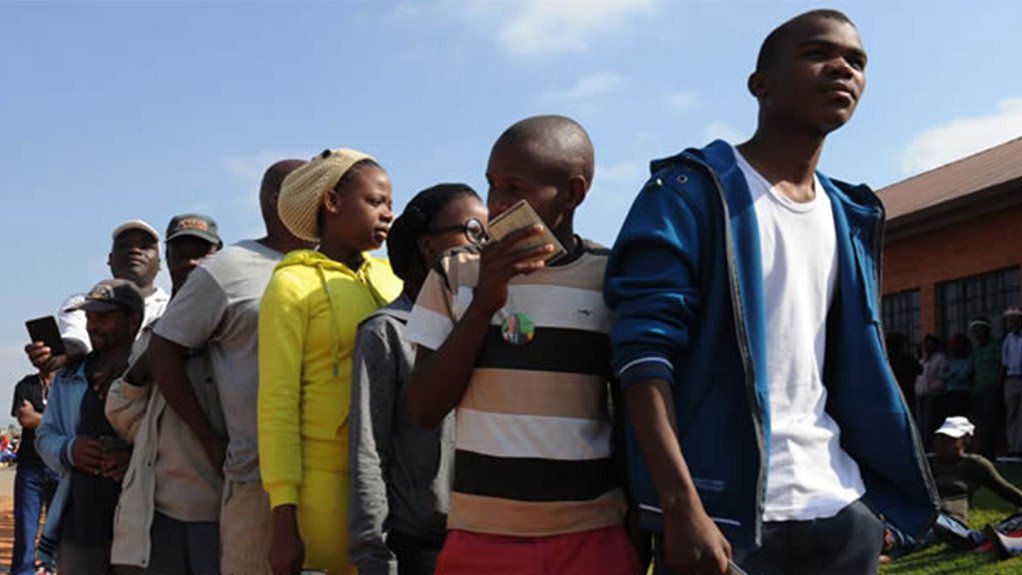
A staggering 50% of registered young South African voters believe that no political party represents their views, according to the latest Khayabus 'Pulse of the People' study by Ipsos.
Ahead of the 2026 Local Government Elections on Wednesday, the findings reveal that instead of standard political apathy, the country is facing a massive wave of youth scepticism.
Young citizens remain entirely unconvinced that casting a ballot will solve the crises defining their daily lives, most notably, rampant youth unemployment.
Political parties have long preached the importance of the youth vote, yet data shows their message is falling on deaf ears, with only 53% of South Africans aged 18 to 24 registered to vote, a figure drastically lower than older age brackets.
Political disengagement starts long before citizens reach the ballot box, the study said, with only 27% of registered youth expressing an interest in politics and elections, compared with 33% of older registered voters.
"Young South Africans appear to be sending a very clear message to political parties," said Mari Harris, political analyst at Ipsos in South Africa. "Many do not feel represented, and many are sceptical of politicians. They say their main issue of youth unemployment does not get sufficient attention."
The study highlights a profound trust deficit between the youth and the country's institutional leadership. Seven in ten young South Africans agree that politicians cannot be trusted.
This cynicism extends directly to local governance. Only 28% of registered voters aged 18 to 24 trust their current local government, while 54% actively distrust them.
Harris clarifies that this is not a symptom of local youth simply checking out.
"Many young South Africans are not necessarily withdrawing from politics because they do not care about issues affecting their communities," noted Harris. "Rather, they appear to be struggling to identify a political home that reflects their interests and resonates with their priorities."
She adds that this trend mirrors global youth sentiments.
Because young voters lack a definitive political home, their segment of the electorate is the most volatile and unpredictable ahead of the 2026 local elections.
Among registered voters aged 18 to 24, who expressed a party preference, no single political party commands strong support.
The EFF and ANC are tied as the most supported parties among young voters at 17% each, followed by MKP at 15% and the DA at 13%.
“Notably, 17% of registered young people either indicated that they would not vote, declined to reveal their political preference or said they did not know which political party they would support, suggesting that choosing a political party remains a difficult decision for many younger voters,” said Harris.
With the EFF and ANC deadlocked, and a massive 17% chunk of the youth population entirely undecided or refusing to participate, the youth vote remains completely up for grabs.
To capture this critical demographic, political entities must change their strategy, Harris said. Standard campaign rhetoric and generic calls for voter turnout will no longer suffice.
"Political parties seeking to grow support among younger South Africans may need to do more than simply encourage voter turnout," she said.
"They will need to demonstrate why younger citizens should believe that participation in the democratic process can lead to meaningful change. This should not only get attention in an election year."
EMAIL THIS ARTICLE SAVE THIS ARTICLE ARTICLE ENQUIRY FEEDBACK
To subscribe email subscriptions@creamermedia.co.za or click here
To advertise email advertising@creamermedia.co.za or click here


