





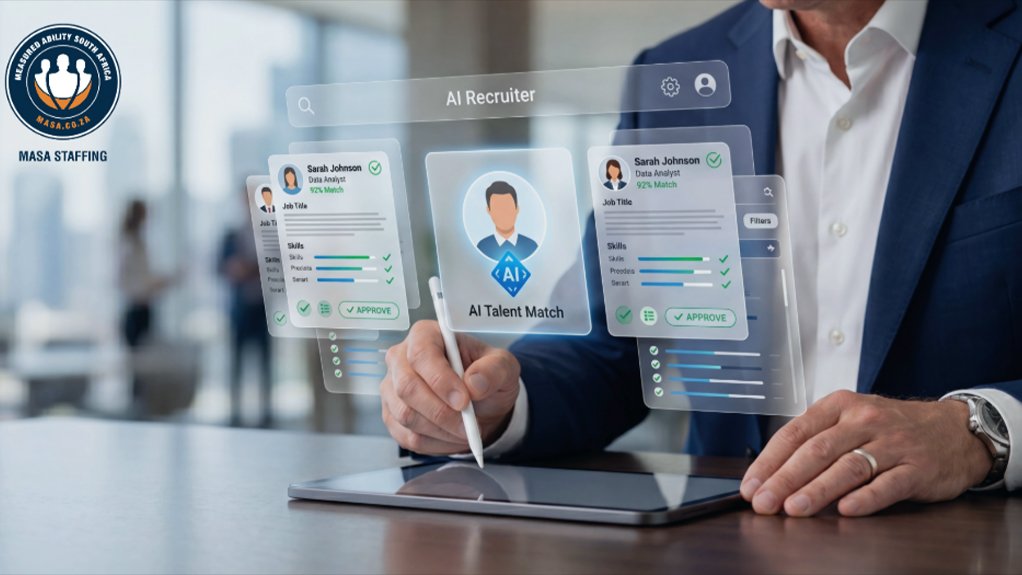

AI has transformed recruitment. Employers can now use technology to screen CVs, write job descriptions, schedule interviews and automate candidate communication faster than ever before.
At first glance, it may seem that these advancements could reduce the need for human-led staffing solutions. In reality, the opposite is happening, notes staffing agency Measured Ability South Africa (MASA).
While AI is making recruitment more efficient, it is not making hiring less complex. Businesses across industries are increasingly using AI to improve productivity, but human expertise remains essential when making critical hiring decisions.
The real challenge is not simply finding candidates. It is identifying the right candidates, verifying skills, managing expectations and reducing hiring risks. These are areas where experienced recruitment specialists continue to provide significant value, says MASA.
AI supports recruitment, but it cannot replace human judgement
AI excels at repetitive recruitment tasks. It can process large volumes of applications, identify relevant keywords and improve response times.
For organisations handling high-volume recruitment or urgent hiring requirements, these efficiencies are valuable. However, recruitment is about much more than matching keywords on a CV.
A candidate may appear qualified on paper but lack the practical skills, reliability or communication abilities required for the role. Likewise, an AI-generated application may be polished without accurately reflecting a candidate's capabilities.
Human recruiters bring context and judgement to the process. They assess practical experience, verify references, evaluate soft skills and determine whether a candidate is likely to succeed within a particular workplace environment.
AI can identify potential matches. Human recruiters determine whether those matches are the right fit. This human oversight is one of the key reasons why staffing solutions remain valuable in an increasingly automated recruitment landscape.
More applications, more hiring noise
AI has also made it easier for job seekers to apply for multiple positions quickly. As a result, employers are often receiving more applications than ever before.
However, more applications do not necessarily mean better candidates.
Hiring managers may find themselves reviewing hundreds of CVs for a single vacancy, many of which are professionally written but not genuinely suited to the role. This can increase administrative workloads and slow decision-making.
This is where staffing solutions add value. Recruitment agencies do more than forward CVs. They screen, assess and verify candidates before presenting them to employers. This improves shortlist quality, saves time and reduces the burden on internal HR teams.
Skills-based hiring still needs human assessment
Skills-based hiring continues to gain momentum as employers focus more on capability and less on qualifications alone. This is particularly important in South Africa, where businesses often face both skills shortages and high unemployment levels.
While AI can identify skills listed on a CV, it cannot always assess how effectively those skills have been applied in real-world environments.
A candidate may claim experience in payroll administration, warehouse management or customer service, but employers still need to understand the depth of that experience and whether the individual can perform under pressure.
Human recruiters help businesses evaluate practical capability rather than relying solely on automated screening results.
Recruitment remains a people-centred process
Technology can improve communication and streamline parts of the recruitment journey, but hiring remains fundamentally human.
Candidates want clarity about roles and workplace expectations. Employers want engaged candidates who are likely to stay and perform well.
When recruitment becomes overly automated, candidates may feel disconnected from the process. This can affect the employer brand and lead to missed hiring opportunities.
Human recruiters provide guidance, answer questions and help align expectations on both sides. This creates a better candidate experience and supports stronger long-term hiring outcomes. Good recruitment is not only about filling vacancies. It is about creating successful employer-employee relationships from the start.
The future is AI-enabled and human-led
AI is not making staffing solutions redundant. It is changing what employers should expect from them.
The most effective staffing partners use technology to improve speed, efficiency and candidate matching while keeping experienced recruiters at the centre of the process. This combination of technology and human expertise allows businesses to make better hiring decisions, reduce risk and build stronger workforces.
MASA exemplifies this approach. With more than 40 years of experience in tailored staffing solutions, the company combines advanced recruitment technology with hands-on expertise. Its AI-enabled recruitment ecosystem supports faster talent identification and scalable hiring processes, while experienced recruitment teams remain focused on understanding each client's workforce needs and workplace culture.
In a labour market where speed matters but trust matters more, human-led staffing solutions continue to play a vital role. AI may enhance recruitment, but people remain essential to making the right hiring decisions.
EMAIL THIS ARTICLE SAVE THIS ARTICLE ARTICLE ENQUIRY FEEDBACK
To subscribe email subscriptions@creamermedia.co.za or click here
To advertise email advertising@creamermedia.co.za or click here


