





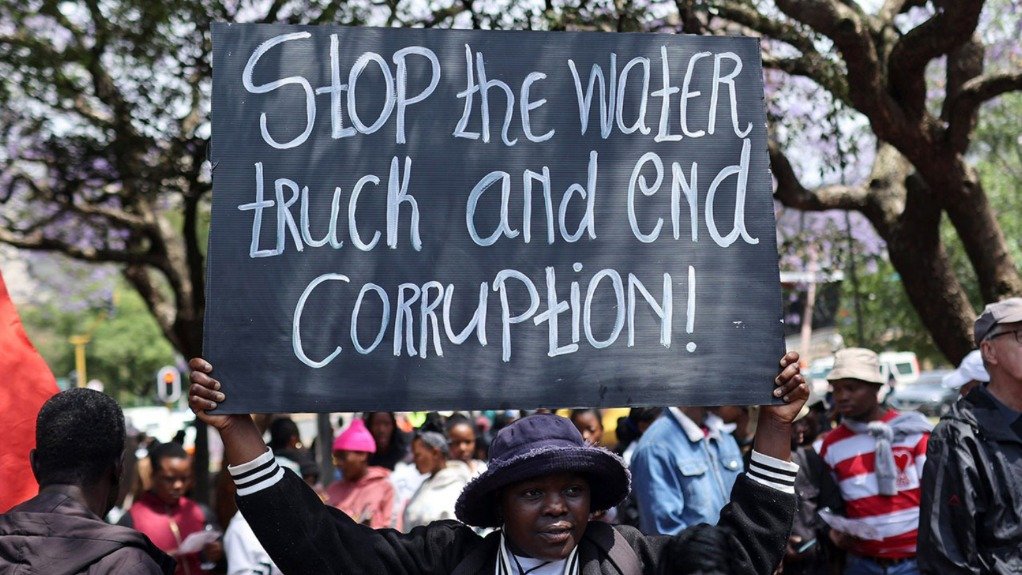

Voters must use the upcoming local government elections to rescue Johannesburg from a “devastating crime-council ecosystem" that thrives on the city's decay, Centre for Development and Enterprise (CDE) executive director Ann Bernstein urged on Tuesday.
Launching the CDE's latest report, 'Time for Action – Corruption in Joburg', Bernstein warned that the dangers of "more of the same" over the next five years are immense.
The report is the fifth instalment in the CDE's 'Johannesburg Matters: Fixing South Africa' series.
According to the CDE, Johannesburg's decline is not only a result of weak administration or municipal incompetence.
Instead, it notes an entrenched network of political, business, and criminal interests has intersected local government, actively profiting from dysfunction.
"Infrastructure theft creates contracts for repairs. Water failures create demand for tankers. Dysfunction creates opportunities for emergency procurement. Those who benefit from failure therefore have an interest in perpetuating it," Bernstein said.
The report draws on simultaneous research commissioned from the Global Initiative Against Organised Crime.
This research exposes overlapping networks manipulating municipal procurement, senior appointments, and critical services such as electricity, water, and property.
Corrupt insiders allegedly collude with syndicates involved in infrastructure theft, sabotage, and building hijacking, using violence and intimidation to silence whistleblowers and investigators.
The CDE noted that this system has flourished owing to persistent political instability and weakened accountability structures.
ADVISED SOLUTIONS
To dismantle it, the think tank proposed a comprehensive, systems-driven action plan focused on making corruption difficult, visible, and dangerous, noting the publication of information across the full lifecycle of major contracts—from bid scoring and beneficial ownership to invoices and proof of delivery—while using data to flag suspicious procurement patterns.
The CDE wants the introduction of open, merit-based processes for senior positions and municipal boards, featuring published criteria and professional assessments.
It said opportunities to profit from chaos must be reduced by installing infrastructure that is theft-proof, tightening controls on emergency contracts, and enforcing stricter supplier rules, while also mandating financial disclosures for high-risk positions and concentrating lifestyle audits where corruption risks are highest.
The CDE called for protecting the Group Forensic and Investigation Service from political interference, triggering automatic external referrals for sensitive probes, and tracking completed findings so they cannot be buried.
The CDE suggested that investigative resources must be concentrated on repeat suppliers and politically connected intermediaries. The CDE explained that the city must use disciplinary action, civil asset recovery, and contractual remedies alongside criminal prosecution to recover losses.
The think tank urged the establishment of secure reporting channels, protection for whistleblowers from retaliation, the creation of rapid-response safety mechanisms, and the consideration of financial rewards for information leading to successful recoveries.
Bernstein emphasised that the city's salvation lies in robust institutional design rather than vague ethical reforms.
"There is no shortage of ethical codes, procurement rules, financial regulations or declarations of principle... The problem is the gap between rules and outcomes," Bernstein said. "Johannesburg needs institutions capable of functioning even when powerful people have an interest in defeating them."
EMAIL THIS ARTICLE SAVE THIS ARTICLE ARTICLE ENQUIRY FEEDBACK
To subscribe email subscriptions@creamermedia.co.za or click here
To advertise email advertising@creamermedia.co.za or click here


