





- UNCTAD Annual Report 202518.32 MB
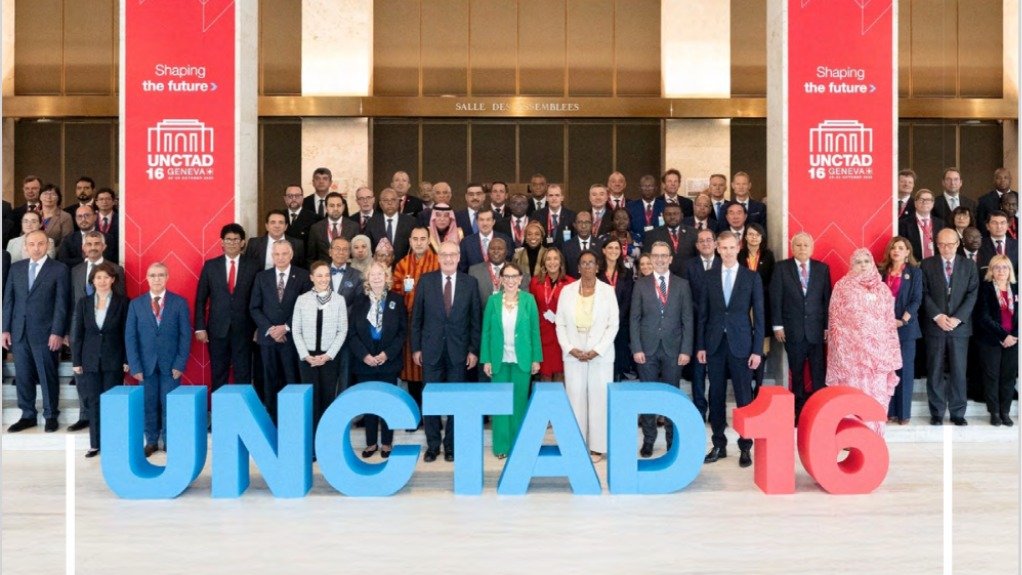
The year 2025 was a defining one for UNCTAD. It was the year of our sixteenth ministerial-level conference, the first held in Geneva since our founding in 1964, and the year our member States adopted the Geneva Consensus, a renewed road map for our work at a time of extraordinary global change.
It was also a year of widespread shocks. Tariff volatility reshaped world trade. Investment flows to developing countries weakened. Debt burdens grew heavier. Aid flows declined. For the most vulnerable economies - the least developed countries, landlocked developing countries, small island developing States, these pressures compounded one another, making the path to structural transformation steeper than ever. Each of these shocks demanded a response across our three pillars of work: in our research and analysis, in our intergovernmental consensus-building and, on the ground, in our technical cooperation.
UNCTAD itself operated under significant resource constraints throughout the year. Budget reductions led to the abolition of posts, and liquidity pressures across the United Nations Secretariat forced difficult choices about what we could deliver and when. Some projects were scaled back. Some meetings were shortened. Some publications were postponed.
And yet, this was also a year that showed what UNCTAD can do under pressure. When tariff announcements began altering the landscape of global trade, we did not wait for the dust to settle. We launched rapid assessments to give member States real-time analysis of what the shifts meant for their exporters, their farmers, their small businesses. We brought evidence to the table when policymakers needed it most. Our technical cooperation programmes, from customs modernisation and debt management to entrepreneurship networks and digital trade readiness, continued to deliver results in over 100 countries and territories.
The centrepiece of the year was our quadrennial conference, the sixteenth session of the United Nations Conference on Trade and Development. In October 2025, member States came together in Geneva and adopted the Geneva Consensus, a comprehensive outcome that reaffirmed the role of UNCTAD as the development arm of the United Nations system and set clear priorities for the years ahead. In the Consensus, member States called on us to deepen our support for electronic commerce and the digital economy, to strengthen our assistance for countries approaching graduation from least developed country status and to sharpen our engagement with landlocked developing countries and small island developing States. They recognised the growing importance of services trade as a frontier for structural transformation, and the urgency of addressing critical minerals governance, illicit financial flows and developing-country representation in the international financial architecture.
This annual report documents what UNCTAD accomplished throughout that demanding year. The pages that follow cover each dimension of our work, from the flagship publications that shaped policy debates, to the intergovernmental processes that built consensus, to the technical cooperation that translated mandates into tangible support for developing countries. They reflect the contributions of every division and office: globalisation and development strategies, international trade and commodities, investment and enterprise, technology and logistics, our work on Africa and least developed countries, statistics, intergovernmental outreach and support service and our presence in New York. They also reflect the work of our communications team, which expanded the reach and visibility of UNCTAD at a time when our analysis was in high demand.
The year ahead will bring no less complexity. But the Geneva Consensus gives us a clear mandate, and the work documented in these pages shows an institution that delivers, even under pressure. UNCTAD was built for moments like this. It will continue to rise to them.
Report by UNCTAD
EMAIL THIS ARTICLE SAVE THIS ARTICLE ARTICLE ENQUIRY FEEDBACK
To subscribe email subscriptions@creamermedia.co.za or click here
To advertise email advertising@creamermedia.co.za or click here


