





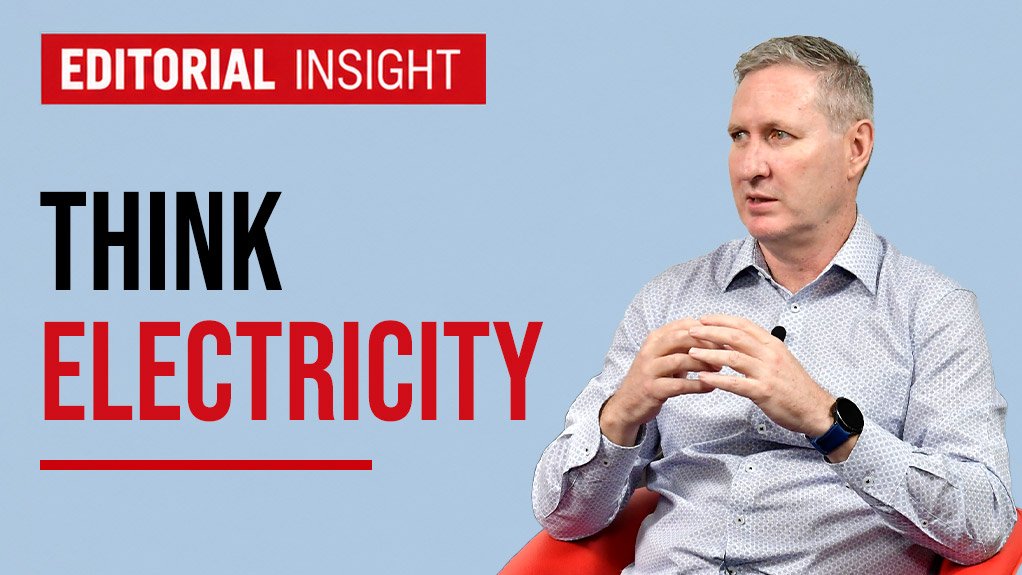
Global statistics continue to reaffirm the role of electricity as the future dominant energy carrier. More and more energy services are being electrified, including through electric vehicles, while new sources of large-scale demand, such as data centres, are emerging at pace.
The International Energy Agency has already proclaimed this the ‘Age of Electricity’, as electricity demand outpaces overall energy demand. It is forecasting that global electricity demand will increase at a yearly rate of 3.6% from 2026 to 2030, which is at least 2.5 times faster than overall energy demand.
Meanwhile, the Energy Institute’s latest ‘Statistical Review of World Energy’ talks of a tipping point not only for the role of electricity, but also the source of that electricity, which is increasingly being generated from renewables.
Renewables, the review states, are now substituting rather than supplementing fossil generation; a significant statement, given that the Energy Institute is publishing a review that for most of its 75 years was published by BP.
An earlier report by Ember showed that record solar PV growth in 2025 meant that clean power sources grew fast enough to meet all new electricity demand; the first year since 2020 without an increase in electricity generation from fossil fuels and only the fifth year without a rise this century.
Alongside solar PV, battery energy storage is experiencing explosive growth, with the Energy Institute showing that global installed battery capacity grew by 66% to 302 GW in 2025.
Growing electricity consumption is also anticipated to be an important driver of liquefied natural gas (LNG) demand, as countries prioritise flexibility and seek to shift away from coal. Shell, for instance, is forecasting that LNG demand will increase to nearly 700-million tonnes a year by 2050, about a 65% rise from 2025 levels.
For South Africa, the mega-trend towards electricity is crucially important, because the country possesses all the ingredients required to embrace it in a way that is supportive of its overall competitiveness and future industrial development.
This relatively strong positioning is based on the country’s world-class solar and wind resources, the availability of land, and an extensive, albeit undersized, grid. It is supported further by pent-up demand from a sophisticated, albeit diminishing, industrial base, and established engineering capabilities built around one of the largest electricity systems in the developing world.
The challenge, therefore, is not one of potential but one of political foresight.
A political vision that places electricity at the centre of energy policy is currently lacking; epitomised by unhelpful and distracting notions of reversing electricity and energy in the department’s name.
It’s time to think electricity, so that the policy architecture is supportive of implementing the market design – together with the associated regulatory, pricing and institutional mechanisms – needed for the emergence of a true electro-state.
That requires policy and regulation that keep pace with technological change rather than constrain it, alongside a genuinely competitive electricity market designed to deliver the most reliable and affordable power possible.
EMAIL THIS ARTICLE SAVE THIS ARTICLE ARTICLE ENQUIRY FEEDBACK
To subscribe email subscriptions@creamermedia.co.za or click here
To advertise email advertising@creamermedia.co.za or click here


