





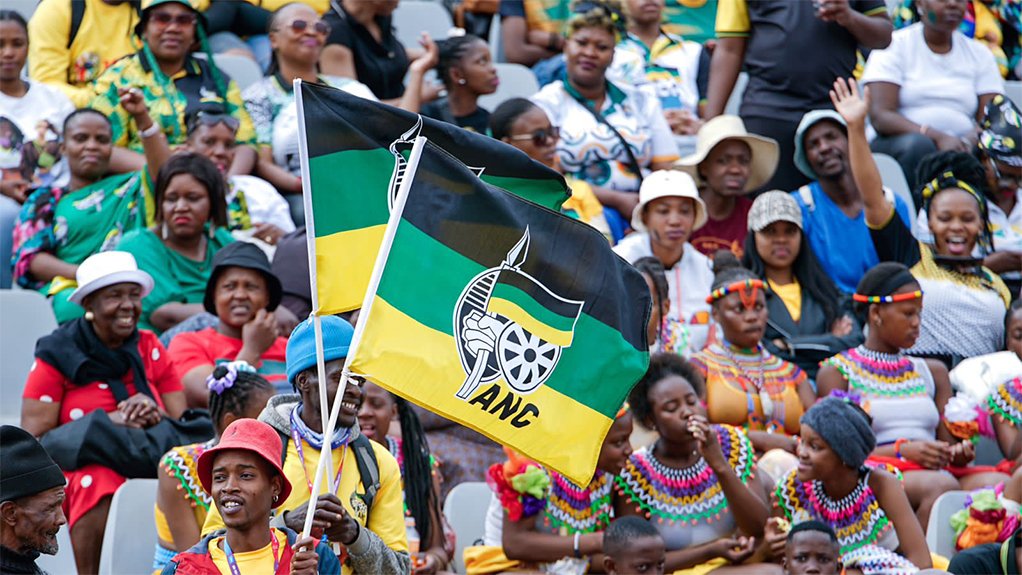

There is something profoundly symbolic about comparing the African National Congress (ANC) today to the Titanic. Both are tales of significant historical importance, enormous confidence, and the belief that their position was almost unassailable.
The Titanic was hailed as an engineering marvel. It was thought to be nearly unsinkable. Yet, beneath its grandeur lay vulnerabilities that its confidence could not overcome. When it struck the iceberg, its size, reputation and celebrated history could not save it.
An analogous historical moment confronts the ANC.
The ANC held a special place in South African politics for many years. It had been an exceptional source of political legitimacy because of its involvement in the liberation movement. Voting for the ANC was more than just a political decision for many South Africans; it was a declaration of sacrifice, historical allegiance, and hope for a better future.
Performance, however, cannot be replaced by history.
A fundamental contradiction is revealed by the upcoming local government elections: a movement that once inspired millions of people with the promise of freedom now finds it difficult to persuade many communities that it can provide the most fundamental components of that freedom, such as water, electricity, good roads, functional municipalities, sanitation, and economic opportunities. In this case, the iceberg is not a single event. It is the result of years of poor administration, decaying municipal infrastructure, political factionalism, weak institutions, accusations of corruption, and the widening gap between the general public and political leadership.
Perhaps the salient danger is that leadership may mistake the loyalty of its remaining supporters for evidence that the ship is still seaworthy.
The Titanic did not sink because its passengers "lacked confidence" in it. It sank because those responsible for navigating it failed to respond adequately to the dangers ahead.
Similarly, the ANC's predicament cannot be resolved through election slogans, appeals to liberation history, or last-minute political promises. The question is whether the organisation can confront its own institutional weaknesses and acknowledge that political legitimacy must be renewed through public service and accountability.
An important aspect of this analogy, however, is that it has another dimension. As a result of the Titanic's sinking, not only its owners and captains suffered. Ordinary passengers paid the ultimate price.
In South Africa, the consequences of municipal governance failures are similarly borne disproportionately by ordinary people: the unemployed young person, the struggling small-business owner, the factory worker, the pensioner, and communities that continue to live without reliable basic services.
There is therefore much more at stake in the elections of 4 November than simple political fortunes. They will provide an opportunity for citizens to express their assessment of local government and the institutions entrusted with serving them.
The ANC's history deserves recognition. In any case, its history cannot be used as an indefinite insurance policy against public accountability.
The question is no longer whether the Titanic was once a magnificent ship. The question is whether those navigating it recognise that it is taking on water—and whether they are prepared to change course before it is too late.
Written by Bongani Mankewum, Director of the InfraFIN
EMAIL THIS ARTICLE SAVE THIS ARTICLE ARTICLE ENQUIRY FEEDBACK
To subscribe email subscriptions@creamermedia.co.za or click here
To advertise email advertising@creamermedia.co.za or click here


