





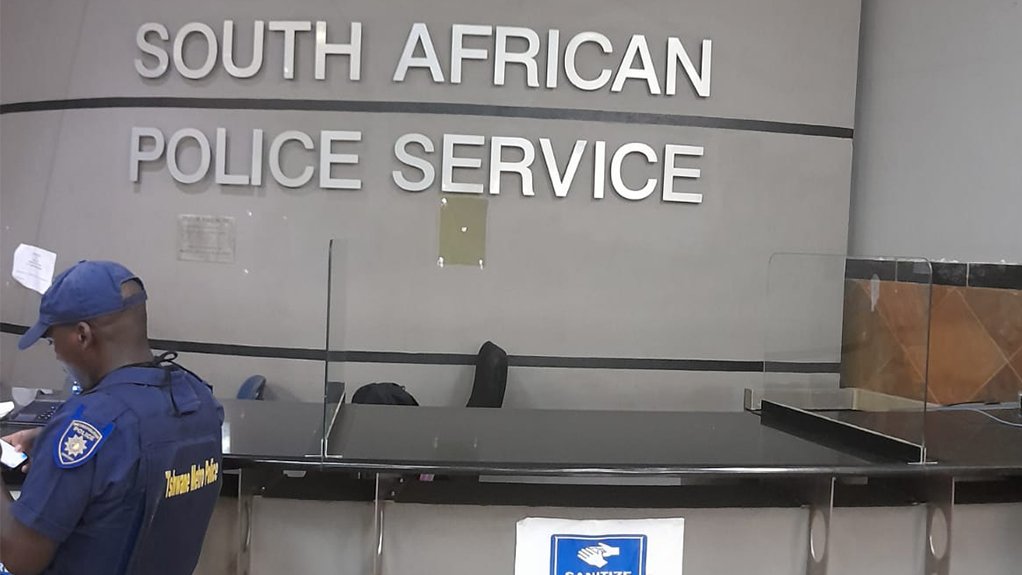

The new reform agenda puts high-crime stations in the spotlight, but their commanders need the tools and authority to succeed.
Recommendations from the Madlanga Commission into political interference, crime and corruption in South Africa’s criminal justice system could lead to significant changes in policing practices. Already, the South African Police Service (SAPS) is implementing its new Police Reset Agenda, presented by Acting Police Minister Firoz Cachalia at the May budget vote.
The Reset Agenda is a response to the police leadership crisis and longstanding concerns about corruption, weak accountability, poor discipline and uneven operational performance. It aims to strengthen leadership and governance, intelligence and detective capability, modernise systems, and improve resource management. It places considerable emphasis on rebuilding public trust.
A critical part of the reset focuses on 140 high-crime police station precincts, which Cachalia says are the first implementation sites. These stations will receive operational support, stronger oversight, more resources, infrastructure upgrades and closer performance monitoring. The aim is to improve overall performance and learn lessons that can be applied across the SAPS.
Much has been said about what will be done at these stations, but far less about the commanders responsible for running them.
The role is demanding at the best of times. Station commanders’ wide range of responsibilities includes: the conduct, performance, and discipline of members; use of human, physical, and financial resources; condition of station buildings and premises; crime prevention and investigation; and overall command and control.
The list of 140 stations has not been released, but they will likely face heavy caseloads, resource constraints and infrastructure problems. These are particularly challenging stations to manage. For them to demonstrate what better policing looks like, the people commanding them need to be very good at the job.
Station commanders shape day-to-day policing. How they lead and manage affects how members are supervised, how resources are used and how the station responds to the community. Stronger station-level leadership is part of rebuilding both police performance and public trust.
Questions about whether station commanders are adequately selected and prepared are longstanding. Research by the Institute for Security Studies in 2009 pointed to weak command and control, poor guidance and support for members, inadequate inspections and poor discipline at the station level.
The issue is particularly relevant now. SAPS told Parliament in June that approximately 3 000 posts were being advertised for promotion, with vacant station commander posts being prioritised and expected to be filled in October.
The current appointments provide an opportunity to reconsider the capabilities required to run a police station well, how much weight these receive in the selection process, and whether the process identifies the right people.
When four new provincial commissioners were appointed in July, SAPS said this was ‘not simply about filling vacant posts at senior management level,’ but about ensuring that ‘the right leaders, at the right time, are placed in strategic positions that align with the vision and priorities of our organisation.’ This should also apply to station commander appointments, particularly in the 140 priority precincts.
But station commanders must also be properly prepared for the job. The SAPS already provides formal management training through the Station Management Learning Programme, which covers crime prevention and detection, communication, management and leadership, and planning and operational management.
But research found weaknesses in how the programme’s training needs were identified, in supervisory support and follow-up, and in commanders’ ability to apply what they had learnt. SAPS also announced a mandatory induction programme for new station commanders in 2025.
The focus on the 140 stations provides an opportunity to revisit how commanders’ readiness is assessed and how they are prepared for the role – both when they are appointed and as they continue in the job. SAPS annual reports show pass rates of over 99% for leadership and management programmes, suggesting these assessments are not working well enough for demanding management roles.
Evidence on police supervision also points to the value of ongoing support, including easy access to human resources advice and help with management systems. Coaching or mentoring from more experienced supervisors could also be helpful.
Authority is another issue. Station commanders are responsible for their members’ performance and discipline, but have little say over who those members are, since appointments, transfers and promotions are handled through broader SAPS human resources processes. They cannot readily remove someone who is performing badly or acting corruptly.
SAPS is moving towards dedicated disciplinary units staffed by qualified and trained officials, which should help address longstanding weaknesses in disciplinary processes.
But station commanders should be able to raise problems and have confidence that the systems around them will respond. If they are to be accountable for their station’s performance, they cannot be held responsible for problems they cannot resolve. For example, even basic issues like repair and maintenance depend on centralised procurement processes.
The SAPS should use the 140 priority stations to identify gaps in commanders’ authority and organisational support and address them as part of the reset. Acting National Commissioner Lieutenant-General Puleng Dimpane says restoring command and control is central to the Reset Agenda, including rebuilding operational authority ‘from station level to national level.’
While most public attention is focused on the national level, the local police station is where leadership most directly affects the public experience of policing. Strengthening management at the 140 stations is vital to learning what works for policing countrywide.
Written by Anine Kriegler, Senior Researcher, Justice and Violence Prevention, ISS Pretoria & Andrea Francke, Research Intern, Justice and Violence Prevention, ISS Pretoria
EMAIL THIS ARTICLE SAVE THIS ARTICLE ARTICLE ENQUIRY FEEDBACK
To subscribe email subscriptions@creamermedia.co.za or click here
To advertise email advertising@creamermedia.co.za or click here


