





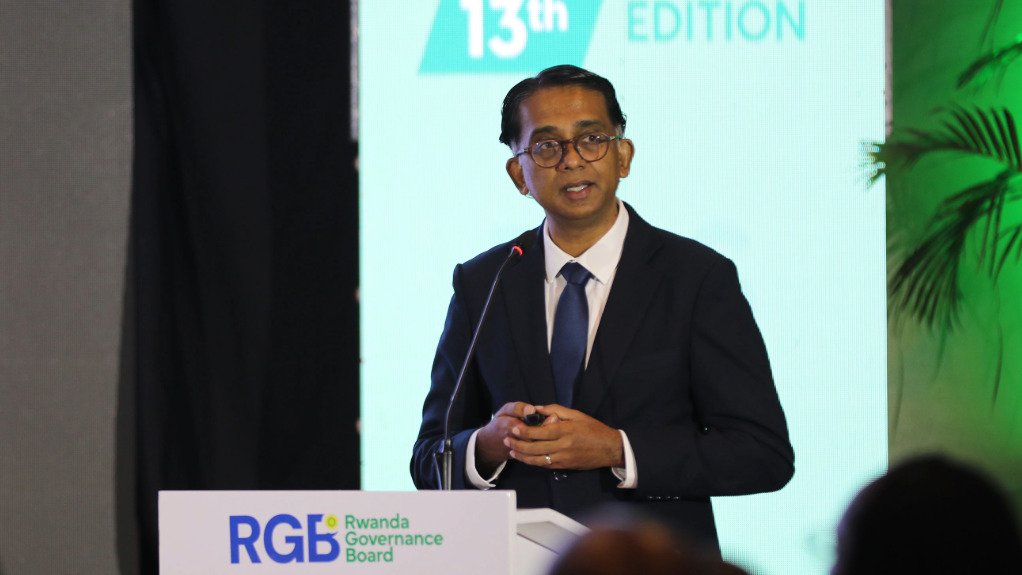

South Africa has ranked eighty-fifth out of 133 countries globally in the 2026 Chandler Good Government Index (CGGI), and sixth among the 35 African countries assessed, with relative strengths in the Robust Laws & Policies (forty-fourth) and Attractive Marketplace (forty-eighth) pillars.
These results come as Africa recorded the second-strongest regional governance progress this year, with 71% of the African countries assessed in both 2025 and 2026 achieving higher overall scores.
The index notes that South Africa’s overall score declined slightly over the same period, underscoring the gap between its pillar-level strengths and its broader trajectory.
“Africa’s strongest gains were in Financial Stewardship, followed by Helping People Rise. This points to progress in public financial management and outcomes such as education and healthcare.
“The challenge now is to sustain these gains and strengthen the capabilities needed to deliver better outcomes for citizens,” says Chandler Governance Group (CGG) knowledge director Dinesh Naidu.
Now in its sixth edition, the CGGI assesses government capabilities and effectiveness across 133 countries representing 94% of the world’s population, up from 120 countries in 2025.
It measures 35 equally weighted indicators across seven pillars, providing governments with a framework to benchmark performance, identify gaps and learn from the experience of other countries.
Globally, CGG says the findings point to improving governance performance.
Of the 120 countries assessed in both 2025 and 2026, 61% recorded higher scores, the highest yearly share since the Index launched in 2021. Longer-term progress has been less consistent, however, with only 43% of the 104 countries tracked since 2021 recording an overall improvement.
AFRICA’S LEADING GOVERNMENTS
The index notes that Mauritius is Africa’s highest-ranked country at fifty-fifth globally, followed by Rwanda at sixty-second, Botswana at seventieth, Morocco at seventy-ninth and Tanzania at eightieth.
South Africa ranks sixth on the continent at eighty-fifth globally.
Across Africa, CGG says average scores improved in six of the seven CGGI pillars over the past year. Despite these gains, Africa remains the lowest-scoring region overall and its regional average is still below its 2021 level.
Of the 35 African countries included in the 2026 Index, 23 rank outside the global top 100 and none ranks in the top 50. Seven African countries joined the Index this year: Chad, the Democratic Republic of Congo, Gambia, Guinea, Lesotho, Liberia and Togo.
CGG says South Africa’s ranking in Robust Laws & Policies reflects the continued relative strength of the laws and justice system that underpin public trust and investor confidence, even as that ranking has declined gradually over the past three years.
SA INVESTMENT ATTRACTIVENESS ADVANCES RAPIDLY
Its Attractive Marketplace ranking, by contrast, has climbed from sixty-sixth globally in 2021 to forty-eighth this year.
CGG says South Africa’s score improvement on this pillar since 2021 is the fourth best of any country in the world, pointing to improving conditions for investment, enterprise and economic competitiveness.
It argues that translating these strengths into consistent implementation remains key to delivering tangible improvements in people’s lives.
“For South Africa, the results highlight the importance of building on existing strengths. Sound laws and an enabling marketplace are the foundation, but effective governance takes stronger institutions, consistent policy implementation and responsible resource management, so these strengths carry through to the wider picture,” says Naidu.
The CGGI is designed as a practical diagnostic tool, helping governments identify gaps, track progress over time and learn from peers facing similar constraints. Rather than treating rankings as an end in themselves, the Index provides evidence that can inform reform priorities and strengthen the capabilities required for effective government.
“Every country faces its own governance challenges and is guided by different priorities. Governments that are willing to take stock of the evidence, learn from peers and strengthen their institutions are well placed to achieve meaningful and sustained improvements,” Naidu concludes.
EMAIL THIS ARTICLE SAVE THIS ARTICLE ARTICLE ENQUIRY FEEDBACK
To subscribe email subscriptions@creamermedia.co.za or click here
To advertise email advertising@creamermedia.co.za or click here


