





Demand for critical energy transition minerals, including cobalt, copper, graphite, lithium, manganese, nickel, platinum group metals (PGMs) and rare earth elements, could more than triple by 2030 under net-zero scenarios and Africa holds about 30% of the global reserves of critical energy transition minerals.
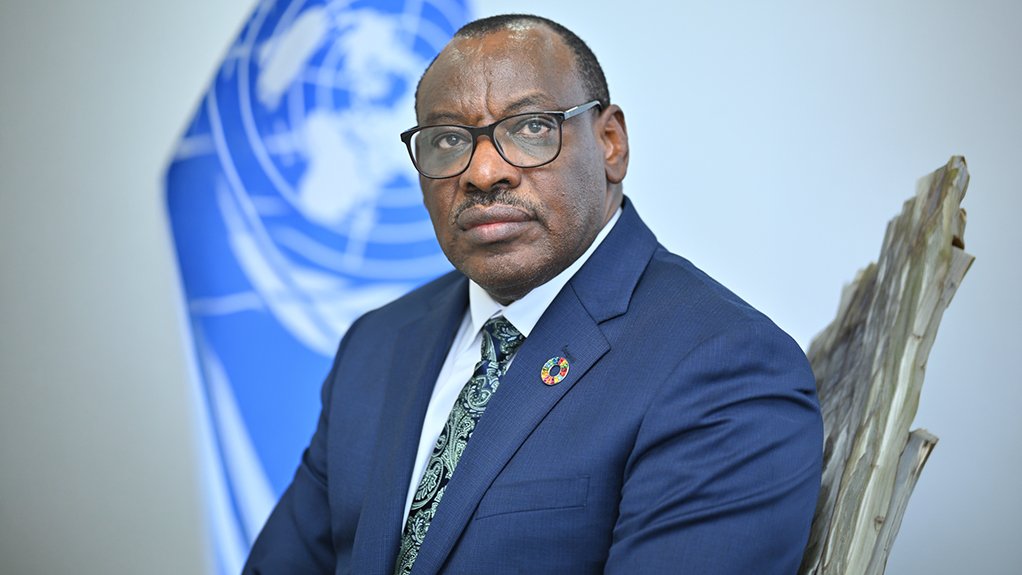
The Southern African Development Community (SADC) region is a testing ground for Africa’s strategic resolve to reshape its future through deliberate choices, while avoiding dependency and driving transformation, says UN Economic Commission for Africa (ECA) executive secretary Claver Gatete.
Major economies are already repositioning supply chains in the name of energy security, which presents a narrow window of opportunity for concerted action to move beyond Africa's resources being a source of wealth for other economies.
Minerals contribute about 10% of SADC’s GDP, 25% of exports and 20% of government revenues.
However, the sector accounts for only 7% of direct employment, reflecting the need to move into mineral-based industrialisation and value-addition, which hold greater job-creating multipliers, he says.
The region has an opportunity to correct this imbalance by moving decisively into processing, manufacturing and technology development to move up from the bottom of the value chain, says Gatete.
Critical energy transition minerals are a pathway to industrialisation, regional integration and technological learning for the SADC region.
Beyond dependence on raw material exports, critical energy transition minerals create sustainable jobs for women and young people, stimulate local enterprise, generate optimal public revenues and strengthen Africa’s position in the global green economy.
Africa produces more than 77% of the world’s cobalt, 21% of natural graphite, 1% of lithium, 65% of manganese, 5.6% of nickel and 83% of PGMs.
In the SADC region, the Democratic Republic of Congo (DRC) holds a dominant position in cobalt, Zimbabwe has lithium resources, South Africa has platinum and manganese and Zambia has copper resources.
A study commissioned by the ECA and its partners in 2021 found that building a 10 000 t battery precursor plant in the DRC could cost about $39-million, or about three times less than in the US, while also reducing emissions compared with existing supply chains routed through China.
This is precisely the kind of opportunity Africa must seize; not simply exporting ore, but producing higher-value goods, developing technical capabilities and skills and retaining more value in the continent, he says.
“To tap the wide opportunities that this sector presents, the SADC region needs to overcome a number of structural challenges. The current policy disconnect makes it difficult for the region to work together and attract investment as a trading bloc.
“Additionally, skills gaps limit the ability to move into higher-value activities. Left unaddressed, these constraints will ensure that other countries continue to capture the gains.”
A fundamental shift in strategy is needed on the exploration, mining, value addition and marketing of the critical minerals in the SADC region.
SADC countries must invest seriously in geological knowledge, as data is power in extractive industries. Without accurate information on resource quantity and quality, countries negotiate critical energy transition minerals investments from weakness and leave value on the table, Gatete points out.
Further, the region must act as a bloc and develop a minerals compact aligned with continental frameworks such as the Africa Mining Vision, the SADC Regional Mining Vision, the Africa Green Minerals Strategy and the African Continental Free Trade Area.
Such a compact should harmonise royalty regimes, investment rules, local-content requirements and skills frameworks, as well as support the development of cross-border value chains.
Additionally, policies and strategies that promote local value addition, industrialisation, and value chains development should be introduced and enforced.
For example, the recent ban on the export of unprocessed lithium in Zimbabwe and unprocessed cobalt in the DRC has the potential to encourage and promote local value addition, he says.
The region must also power mineral processing with clean, reliable and affordable energy. SADC’s solar, hydro and other renewable resources can become a competitive advantage, if they are linked to beneficiation, value addition, refining, recycling and manufacturing.
Low-carbon production is not only an environmental imperative, but is increasingly a market requirement. The region must craft and implement smart policies that promote local value addition at source, marketing of critical minerals and investment in technology.
Deliberate efforts should be made to build the skills required for a modern mineral-based industrial economy, Gatete emphasises.
Further, community-benefit agreements must become the norm, and not the exception. Equity participation, local procurement, local content, skills development, environmental bonds and transparent revenue-sharing mechanisms can help ensure that mining benefits outlast the mines themselves.
Communities should not be asked to carry the costs of extraction while others capture the returns, he states.
As history has shown, resource wealth alone is not a guarantee for deep transformation. For generations, the continent has supplied the world with raw and semi-finished commodities while receiving a disproportionately small share of the significant wealth created from the sector.
“Unless the continent changes course, this new boom risks repeating an old narrative of exporting raw materials while importing prosperity, with countries and mining communities left with degraded landscapes, limited services, a few lasting economic opportunities and very little to show from the harnessing of their mineral resource wealth,” he warns.
The ECA is working with member States to accompany and support this shift by strengthening regional value chains, improving geological mapping, attracting responsible investment, and addressing the high cost of capital that constrains African projects.
The SADC region can offer lessons for the rest of Africa on how extraordinary mineral endowment can drive value addition, regional integration and inclusive development.
The SADC region has what it takes for a just and equitable energy transition that contributes to both global climate goals and domestic development. Anything less would replicate past inequities under a new banner, he says.
As SADC leaders are set to meet in Durban on August 17, the real test is whether SADC will act with shared purpose and strategic urgency. This summit should mark a turning point towards structural change that creates jobs, capabilities and prosperity across Southern Africa.
SADC must seize this moment to supply the world’s energy transition and power its own economic and social transformation, says Gatete.
EMAIL THIS ARTICLE SAVE THIS ARTICLE ARTICLE ENQUIRY FEEDBACK
To subscribe email subscriptions@creamermedia.co.za or click here
To advertise email advertising@creamermedia.co.za or click here


