





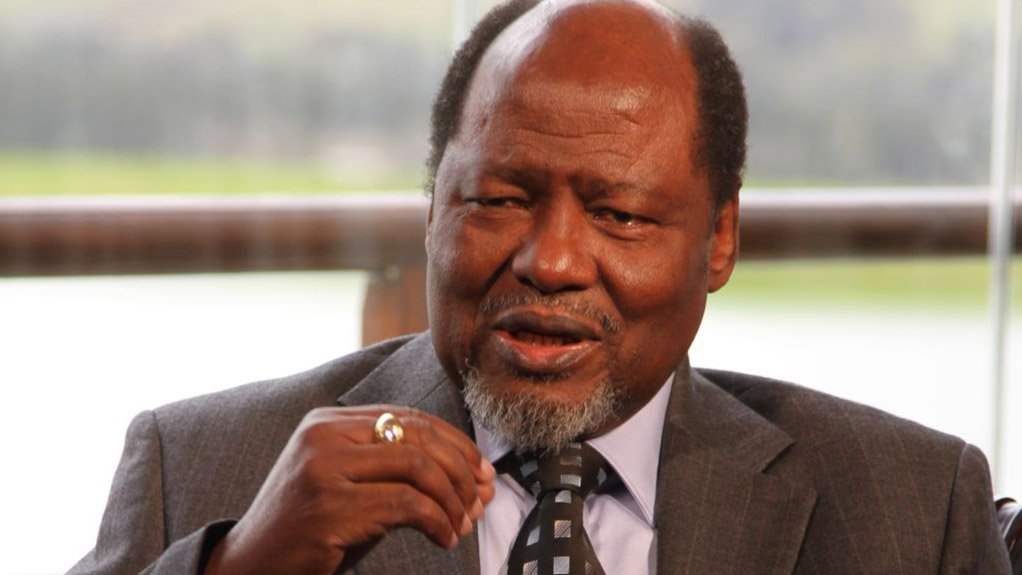
THE PRINCIPAL AND VICE-CHANCELLOR OF UNISA, PROFESSOR MANDLA MAKHANYA
THE CEO OF THE STEVE BIKO FOUNDATION MS OBENEWA AMPONSAH
EXCELLENCIES MEMBERS OF THE DIPLOMATIC CORPS PRESENT
PROFESSORS AND ACADEMICS FROM THE UNIVERSITY OF SOUTH AFRICA PRESENT
DISTINGUISHED GUESTS
LADIES AND GENTLMEN
I should like from the outset to place on record my appreciation to the Steve Biko Foundation for extending to me the invitation to deliver the 16th annual Steve Biko Memorial Lecture on the 38th Anniversary Commemoration of the Life and Legacy of Bantu Stephen Biko.
I am indeed honoured to join the impressive list of prominent Africans and icons of liberation struggles in Africa who preceded me in delivering the Steve Biko annual Memorial Lecture Series. In this regard, the list includes the late President Nelson Mandela, Former President Thabo Mbeki, Dr. Nkosazan Dlamini-Zuma, Chairperson of the African Union Commission, Archbishop Desmond Tutu, Professor Chinua Achebe, Professor Ngugi wa Thiongo, Dr. Mamphela Ramphele and Minister Trevor Manuel to mention but a few.
Let us use this occasion of the 16th annual Steve Biko Memorial Lecture to salute them for their contributions to the annual Memorial Lecture series and for their individual and collective commitment and dedication to promote black consciousness as a fundamental tool for the total emancipation of the African peoples in South Africa, Southern Africa, Africa as a whole and even for the Africans in the diaspora.
As we meet here today we should remind ourselves that we are living in an asymmetric world where Africa and its resources continue to be plundered and the plight of the African people continue to be reality. As we gather for this 16th annual Memorial Lecture we are all conscious of the fact that Africa is the only continent with the potential of remaining the breadbasket of the world. However, for this to happen we need to rescue the noble ideals of black consciousness, which will enable us to gain consciousness of who we are, what we represent and the imperative need to embrace democracy, fight corruption, fight impunity, promote integrity and end the scourge of perpetual conflict on the Continent.
Perhaps at this stage I should point out from the outset that in the invitation extended to me to deliver the 16th annual Steve Biko Memorial Lecture, fortunately or unfortunately, I was left to cherry-pick my own topic but obviously within the framework of Life and Legacy of Bantu Steve Biko.
Upon reflecting on the history of the Black Consciousness Movement in South Africa, I came to the conclusion that there were distinctly two schools of thought about the Black Consciousness Movement. The first included those who considered the movement as a revolutionary movement that played a critical role in the struggle against the apartheid regime in South Africa and by extension the struggles against Portuguese colonialism in Mozambique and Angola and indeed the struggle against the Unilateral Declaration of Independence (UDI) in Rhodesia now Zimbabwe.
The second school of thought in my view was made up of those who saw no specific role or relevance of the Black Consciousness Movement in the specific struggle against apartheid regime in South Africa or the overall continental struggles against colonialism towards social political and economic emancipation of the black majority on the Continent. This school of thought characterized the Black Consciousness as a wish-wash concept imported from some Africans in the diaspora with no specific role or relevance to the liberation struggles in Africa and in particular to South Africa and Southern Africa.
I should also like to point out that somehow in the invitation I was reminded that the 16th annual Memorial lecture in 2015 coincides with the commemoration of the 40th Independence anniversary of the Republic of Mozambique and therefore it might be an opportunity to reflect the various ways in which the Mozambique Liberation Front (FRELIMO) influenced Steve Biko’s political development and the formation of the Black Consciousness Movement as well as the contemporary relationship between the Republic of Mozambique and South Africa and the other countries in Southern Africa.
Earlier on I mentioned that I thought I was allowed to cherry-pick a topic of my choice but from the invitation letter one would by now realize that in fact I was not given the prerogative of choosing a topic for the 16th Annual Memorial Lecture but that the topic of the lecture was already prescribed in the invitation letter with very little room for maneuver. Nevertheless, I accepted and I am, indeed, pleased to be here and deliver the 16th annual Steve Biko Memorial Lecture.
On the basis of the invitation letter and after reflecting on the background material and in order to try to be honest to the invitation, I decided that I should share my views on the topic: THE BLACK CONSCIOUSNESS MOVEMENT IN THE HISTORY OF THE LIBERATION STRUGGLES IN SOUTHERN AFRICA: Myth or Reality. The idea is to identify the ideological divergence and narrow them down for better understanding of the role and relevance of black consciousness in the liberation struggles in South Africa and Southern Africa.
The basic objective is to demonstrate that the two schools originate from similar political circumstances but differing at the level of theory and practices. Since the origins are the same the overall objective cannot be very much different. Obviously the major consideration and the source of inspiration were to bring to end the apartheid regime in South Africa and therefore contribute to the advancement of democracy in South Africa, Southern Africa and Africa.
At this juncture allow me to preference my lecture by suggesting that the liberation struggles in Southern Africa had a lot in common. More precisely they had a lot of similarities in terms of philosophical orientation and political demands. This was precisely so because FRELIMO, ANC, MPLA , ZAPU, ZANU and later ZANU PF consulted regularly under the leadership of the Front-line States led mostly by Presidents Julius Kambarage Nyerere, Kenneth Kaunda, Samora Moisés Machel, and Robert Mugabe on how to effectively conduct the liberation struggles to free Southern Africa in particular, and Africa in general.
Just as the enemies of the struggle shared information, the movements also shared information and experiences in consolidating the gains of the movements and intensifying the struggles. We can therefore talk of common discernable patterns and trends in the struggles against the system of apartheid in South Africa and racial segregation in the Portuguese colonies in Southern Africa. The important thing to note is that there were more similarities than differences and a victory of one was considered as a victory of all.
Significantly, the two schools agreed on the historical evolution of the Black Consciousness Movement. They all agree that it originated and was promoted largely by Africans in the diaspora. We all agree that Pan-Africanist ideals and therefore Black Consciousness emerged in the late nineteenth century in response to European colonization and exploitation of the African continent.
There is a common understanding that Pan-Africanist philosophy held that slavery and colonialism depended on and encouraged negative, unfounded categorizations of the race, culture, and values of African people. These destructive beliefs in turn gave birth to intensified forms of racism, the likes of which Pan-Africanism sought to eliminate. At the same time, it is generally accepted that, the Black Consciousness Movement is associated with the American educator W. E. B. Du Bois and others who promoted the concept of Pan Africanism and who participated in either of the two Pan African Congresses in 1900 or in 1945.
For example, there is no disagreement on the role of Du Bois in the promotion of black consciousness philosophy. It is therefore common knowledge that Du Bois echoed Civil War era Black Nationalist Martin Delany's insistence that black people take pride in their blackness as an important step in their individual and collective efforts towards political and economic emancipation. But it is also important to remember that in 1897, Henry Sylvester-Williams, a West Indian Barrister, formed the African Association in London, England to encourage Pan-African unity; especially throughout the British colonies. Sylvester-Williams, who had links with West African dignitaries, believed that Africans and those of African descent living in the Diaspora needed a forum to address their common problems.
In 1900, Sylvester- Williams organized the first Pan-African meeting in collaboration with several black leaders representing various countries of the African Diaspora. For the first time, opponents of colonialism and racism gathered for an international meeting. It is general acknowledged that the conference, held in London, attracted global attention, placing the word “Pan-African” in the lexicon of international affairs and making it part of the standard vocabulary of black intellectuals.
The two schools also converge on the historical fact that as a broader political concept, Pan-Africanism’s roots lie in the collective experiences of African descendants in the New World. It was in the New World that the campaign for racial equality and an end to racial discrimination started.
There is also agreement that Africa assumed greater significance for some blacks in the New World for two primary reasons. First, the increasing futility of their campaign for racial equality in the United States led some African Americans to demand voluntary repatriation to Africa. Next, for the first time the term Africans, which had often been used by racists as a derogatory description, became a source of pride for early black nationalists. Hence, through the conscious elevation of their African identity black activists in America and the rest of the world began to reclaim the rights previously denied them by Western societies.
At this stage of the lecture I would like to submit that in fact there are not two schools of thought about the origin of the Black Consciousness Movement. We should therefore reject the claim that Black Consciousness Movement had neither role nor relevance in the struggles for the liberation of continent from colonialism and the system of apartheid in South Africa and Southern African in general.
From a historical perspective it is clear that the link between the Black Consciousness Movement in the continent and the Africans in the diaspora would clearly suggest a common struggle within the Continent and in the diaspora and therefore a common understanding. From the African perspective it was abundantly clear that the enemy of the struggle was the same.
Significantly, in my view it is clear that the Liberation Movements in Southern Africa were conscious of the fact that even though the enemy could be differentiated between Portuguese colonialism and apartheid South Africa or the UDI declared by Ian Douglas Smith former prime minister of Britain's rebellious colony of Rhodesia, the impact on the black communities in Mozambique, South Africa, Angola and Zimbabwe was the same. At this stage we can therefore conclude that Black Consciousness and the Black Consciousness Movement cannot be a myth but a reality in the history of the continent.
What most people do not realize is that colonial segregation in Mozambique was in some cases just on the same level as the policy of segregation and separate development practiced by apartheid regime in South Africa. Therefore, one cannot say in precise terms what Biko learnt from FRELIMO or how in precise terms FRELIMO benefited from the Black Consciousness Movement except to say that the nature of the enemy in Mozambique, South Africa, Angola and Zimbabwe was the same and therefore the method of combat in theory and practice had more similarities than differences. Put it differently, we learned from each other as the struggle continued. However, I find it interesting that in the FRELIMO we have used the words like Conscientization to refer to the work of education of the people in the sense of rising their Consciousness or awareness about their state of subjugated people and their rights but foremost about their capability to conquer their freedom and the power to conduct their own destiny. In other words, to raise their consciousness about their dignity, their pride and the ownership of their own self as individuals and as people. I notice also that to one of the Steve BiKo’s children was given the name of Samora, like Samora Machel, the second leader of FRELIMO and the First President of the Independent Mozambique. The possibility of the influence of FRELIMO’s led struggle for Independence influencing Steve Biko cannot be ruled out, and he would have not been the first one to have been influenced because we know of many in Africa who went as far as naming their Children as Frelimo or Aluta. Even in the United States of America I came across a primary school named FRELIMO SCHOOL.
I therefore do not consider black consciousness to be a myth. It was, in fact, an inspirational philosophy that politically galvanized all the liberation movements in Southern Africa by raising their consciousness of the fact that when a dictatorship, colonialism, oppression, exploitation and segregation are a fact, revolution becomes a must and a reality.
Therefore, Black Consciousness helped sharpen the political minds, leading to a more conscious decision-making process among members of the liberation movement to fight and destroy dictatorship, oppression, exploitation and segregations in all their manifestations. As liberation movements we were all guided by our political consciousness, which inspired our determination and commitment to end oppression and racial discrimination by fighting the system of apartheid and Portuguese colonialism to the bitter end.
It is precisely for this reason that Steve Biko said “the most potent weapon in the hands of the oppressor is the mind of the oppressed. In other words he who controls the mind of the oppressed determines the future of the oppressed.” It is also from this mode of thinking that Karl Marx said: “necessity is blind until it becomes conscious and therefore freedom is the conscious of necessity”. Significantly, Steve Biko contextualized this by saying “Black Consciousness is an attitude of mind and a way of life, the most positive call to emanate from the black world for a long time.”
From this perspective I should like to suggest that as we discussed the place of ideas in the liberation struggles in South Africa, Southern Africa and in Africa allow me to continue to place emphasis on the relevance of consciousness in the struggle for political and economic emancipation by quoting from Victor Hugo, French poet who argued that “there is one thing stronger than all the armies in the world, and that is an idea whose time has come”. In the same trend of thought Oscar Wilde an Irish author, playwright and poet elevated Victor Hugo’s assertion when he said that an idea that is not dangerous is unworthy of being called an idea at all.
In this regard, black consciousness movement in the context of the struggle against the system of apartheid in South Africa and indeed in the broader context of liberation struggles in Southern Africa and Africa was timely and dangerous to the architects of the system of apartheid in South Africa and indeed Portuguese colonialism in Mozambique and Angola and therefore the entire Southern African Sub-region.
It was therefore for this reason that Bantu Stephen Biko had to be eliminated and his ideas destroyed. Unfortunately, Biko was eliminated but fortunately his ideas continue to inspire many and often celebrated as part of the life and legacy of Bantu Stephen Biko the comrade intimately associated with the philosophy of Black Consciousness.
I would like to submit that in essence the black consciousness movement arose from the necessity to address the injustices inflicted on the black people by colonialism, apartheid, oppression, domination, exploitation and segregation. The philosophy was essentially to raise awareness of these unacceptable injustices, mobilize, galvanize and unite the black people to fight for their right to be treated equally like people of other races. Therefore, the black consciousness movement fought for a just cause; one in which all people regardless of race, color of skin, religious belief and political orientation could live in peace, equality and harmony.
I therefore submit again that Black Consciousness is not a myth it is a reality. As a member of a liberation movement FRELIMO I experienced this reality since I was motivated by my own consciousness to join FRELIMO so as I could contribute to the fight against colonialism, oppression and injustices perpetrated against the black race at all cost including sacrificing my life if that should have been necessary.
I must admit unfortunately, I never met Steve Biko as I was in exile and he was fighting from the “belly of the beast”, the apartheid regime in South Africa. Unfortunately, comrade Biko was assassinated only two years after the proclamation of the Independence of Mozambique The apartheid system robbed his life from us in brutal circumstances that defy the respect for the dignity of any man including black-man.
LADIES AND GENTLMEN
In conclusion to the 16th annual Steve Biko Memorial lecture I should like to assert that as someone who was closely involved in the liberation struggles in Mozambique under FRELIMO, Black Consciousness Movement in South Africa reflected the concern for the existential struggle of the black person as a human being, dignified and proud of his blackness, in spite of the oppression of colonialism and the exploitation by imperialism and capitalism and suppressed under the system of apartheid.
It has been argued and correctly so that from the perspective of the history of black consciousness, within and outside the continent, it is abundantly clear that the main objective of this global movement of black thinkers was to build black consciousness and an African consciousness, which it was strongly felt had been suppressed under colonialism and exploited by imperialism and capitalism and most certainly the system of apartheid in South Africa in particular and in Southern Africa in general.
From the point of view of the 16 annual Steve Biko Memorial Lecture on the topic of Black Consciousness Movement: Myth or Realities in the History of the Liberation Struggles in Southern Africa, I should like to submit that it is clear that the Black Consciousness Movement, encouraged the evolution of a movement of black people to determine their own destiny on the basis of their own political consciousness based on their specific circumstances and the political environment forced into them.
The movement also encouraged the political notion that for the black people to reverse their then predicament of misery, oppression, exploitation and segregation, had to have and believe in their pride and blackness as both a distinct identity and a powerful culture resistant to any foreign domination and exploitation. As an idea and a mind-set black consciousness was recognized by the apartheid South Africa as a politically dangerous idea capable of mobilizing the black-race within and outside the Continent against any system of racial discrimination, subjugation and exploitation. In my view Black Consciousness was both militant and avowedly non-violent.
There is no doubt that the Black Consciousness Movement was also inspired by the success of the FRELIMO in Mozambique in its armed struggle but also in its philosophical manifestations. From this perspective it is generally accepted that the Black Consciousness Movement was a movement that stood together in support of all the liberations movements in Africa and in the diaspora. One would therefore conclude that the Black Consciousness Movement has a place in the annals of the history of the liberation struggles in South Africa, Southern Africa and Africa.
Black consciousness ideals remain relevant and valid even today as besides the noble goals of rescuing the pride and resolve of the black people, it was also a political philosophy that was and continues to be instrumental in mobilizing, galvanizing and uniting people to attain a just society.
A society in which different races live in an egalitarian setting. A society in which there is more solidarity amongst the people regardless of race, religious belief and political orientation. A society in which all the people live in harmony, working together to address the imbalances inherited from the horrendous past. Black consciousness was never about one race, group or people dominating, exploiting, oppressing and segregating other groups or races. It was and continuous to be for peace, justice, equality and harmony amongst races and groups of people. This has been all along the Liberation Struggle, from 1962 to 1975 and after the attainment of Independence also the philosophy of the FRELIMO in Mozambique
Finally I cannot conclude the 16th annual Steve Biko Memorial Lecture without paying tribute to group of South Africans who were arrested and incarcerated for celebrating the independence of Mozambique under FRELIMO. It should be recalled that in late August and September 1974, after holding rallies in support of the FRELIMO government which had taken power in Mozambique, many leaders of the BCM were arrested under the Terrorism Act and the Riotous Assemblies Act. Arrests under these laws allowed the suspension of the doctrine of habeas corpus, and many of those arrested were not formally charged until the next year, resulting in the arrest of the "Pretoria Twelve" and conviction of the "SASO nine", which included Maitshe Mokoape and Patrick Lekota.
These were the most prominent among various public trials that gave a forum for members of the BCM to explain their philosophy and to describe the abuses that had been inflicted upon them. Far from crushing the movement, this led to its wider support among black and white South Africans. There is no doubt that these events of intimidation and torture caught the attention of the sympathetic media and moved BCM closure to the United Nations and indeed the Organization of African Unity (OAU).
In my final remarks I seek the indulgence to bring to the attention of the distinguished audience that of Monday 28 September 2015 the Executive Secretariat of the Forum for Former African Heads of State and Government, commonly referred to as Africa Forum, signed a Memorandum of Understanding with the University of South Africa (UNISA) ushering a new era of cooperation and collaboration between the two institutions.
The MOU which was signed by Professor Mandlenkosi Stanley Makhanya, Principal and Vice Chancellor on behalf of UNISA and Professor John A Tesha, Executive Secretary of the Forum for Former African Heads of State and Government on behalf of the Forum provides a framework for collaboration for providing training for and on behalf of the Forum by UNISA for participants selected by UNISA for Africa Forum, hosting seminars, public lectures and workshops by UNISA where possible and necessary collaboration on selected areas of Applied Research, Action Research and Theoretical Research.
As we mark the 38th Anniversary Commemoration of the Life and Legacy of Bantu Stephen Biko hosted by UNISA it is also an opportunity to pay tribute to the University for the excellent work it is doing in South Africa, Southern Africa and on the Continent. It is well recognized that UNISA is the largest open distance learning institution in Africa and the longest standing dedicated distance education university in the world. In my humble view, UNISA early one-century old deserves a word of congratulation as the oldest long-standing African University in the field of distance learning. Indeed, it has a world record.
What is interesting is that for some time now members of the Forum have been invited to spend some time at the African Presidential Archives and Research Center (APARC) at Boston University, United States. At the same time APARC has been organizing annual presidential gatherings in Africa. The last one I attended was in Mauritius. I am informed that APARC seem to be experiencing some problems with Boston University and it is possible the Presidential visitors in residence may be discontinued. I would call upon the Principal and Vice Chancellor of UNISA to consult with the Executive Secretary of the Forum to explore possibilities for developing a programme perhaps to be named UNISA Former African Presidents in Residence.
I THANK YOU AND GOD BLESS
EMAIL THIS ARTICLE SAVE THIS ARTICLE FEEDBACK
To subscribe email subscriptions@creamermedia.co.za or click here
To advertise email advertising@creamermedia.co.za or click here


