





The South African government is accelerating its five-point migration strategy, marking significant milestones in the deportation, verification, and repatriation of undocumented foreign nationals across multiple provinces.
Established by President Cyril Ramaphosa, the Inter-Ministerial Committee (IMC) on Migration is overseeing a strict enforcement mandate, with a focus to crack down on legal violations, border security technology upgrades (including drones and satellite monitoring), legislative reforms, and strategic diplomatic partnerships across the African continent.
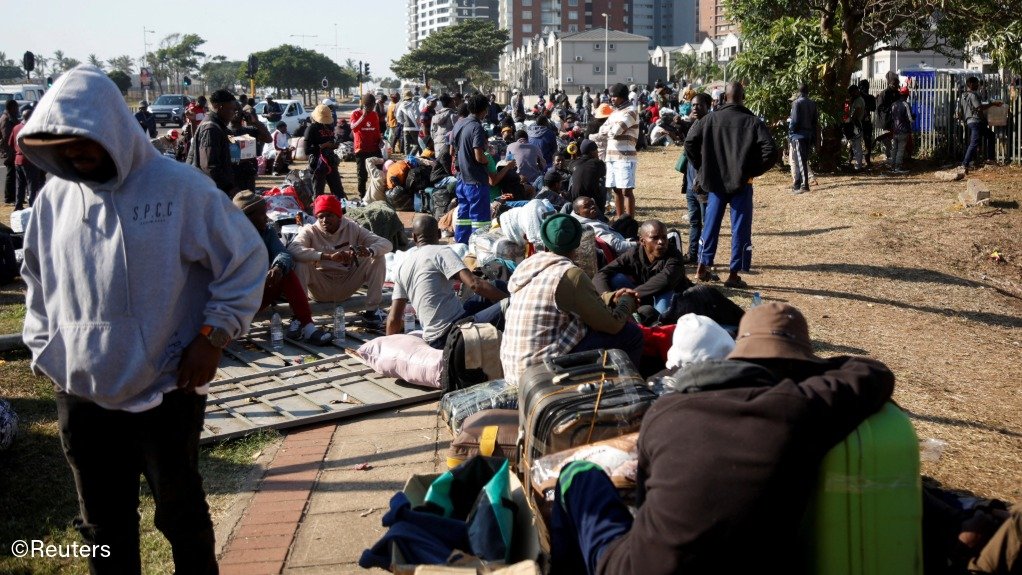
Thousands of migrants are queuing in major cities for processing, ahead of the nationwide anti-immigration protests set for Tuesday. Fears of violence against foreign nationals are heightened as police and private security coordinate ahead of Tuesday’s planned protests.
While standard deportations continue through the Lindela Repatriation Centre, a growing number of African nations have actively requested the voluntary repatriation of their citizens. Malawi, Ghana, Nigeria, Mozambique, Zimbabwe, Kenya, and the Democratic Republic of Congo have all engaged with South African authorities to facilitate this process.
To date, 15 162 Malawian nationals have been processed for repatriation, with more currently undergoing verification.
To expedite this high volume, the government has extended the jurisdiction of the Musina Refugee Reception Office in Limpopo to handle verifications. Logistics are currently being activated to transition operations to a new Temporary Repatriation Processing Centre outside Musina.
Once fully operational, the eThekwini facility will close, and remaining Malawian nationals will transfer to Musina.
This decentralised approach aims to relieve pressure on Lindela and fast-track clearances through the Beitbridge Port of Entry. The expansion is supported by international and local stakeholders, including the UNHCR, the International Organization for Migration, the Red Cross, and Save the Children.
The IMC issued a stern directive declaring June 30 a normal working day, explicitly warning civilian groups against taking the law into their own hands. The committee reiterated that no unauthorised individual has the right to demand identification or proof of nationality from anyone.
Furthermore, authorities emphasised that blocking anyone from accessing clinics, hospitals, schools, or public services is a prosecutable offence and that violence, intimidation, or targeting individuals based on nationality is criminal and will face the full force of the law.
The committee warned businesses hiring and exploiting undocumented migrants to bypass labour laws will be prosecuted under the Immigration Act.
This warning follows recent anti-immigration protests in the Free State earlier this month, which were accompanied by the looting of shops. The South African Police Service has since opened criminal cases and enacted arrests linked to these incidents.
Multidisciplinary, intelligence-led operations spearheaded by the Deputy Ministers of Home Affairs, Police, and Employment and Labour are intensifying nationwide.
The IMC stated that while continental migration presents deep complexities, South Africa’s path forward must remain anchored in the Constitution, human rights, and the rule of law. The State remains resolute that it will not tolerate the circumvention of its immigration systems, nor will it permit acts of lawlessness against foreign nationals.
EMAIL THIS ARTICLE SAVE THIS ARTICLE ARTICLE ENQUIRY FEEDBACK
To subscribe email subscriptions@creamermedia.co.za or click here
To advertise email advertising@creamermedia.co.za or click here


