





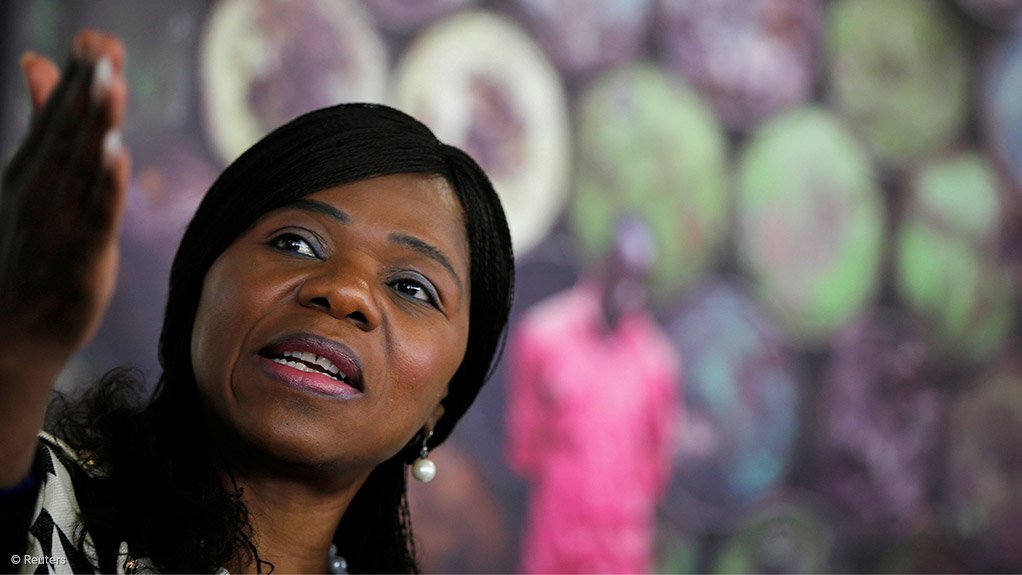
Stellenbosch University Law Faculty Law Trust Chair in Social Justice Thuli Madonsela warned on Thursday that although education has been used to transform the world, to use the famous words of Nelson Mandela, the challenges of justice for different groups is a twenty-first century reality, as is the need for context-aligned and agile education.
Madonsela was speaking at a virtual Conference on Education and Social Justice, under the theme ‘Social Justice and Education for the 21st Century: Towards a Decade of Equalising Opportunities and Optimising Social Justice Outcomes in and Through Education’.
"Social justice is the equal enjoyment of all rights and freedoms regardless of who we are or where we come from. This should be reflected in the fair, just and equitable distribution of all opportunities, resources, benefits, privileges and burdens in a society or group, and between societies,” said Madonsela.
She added that education had enormous potency to play a role in the achievement of social justice.
South Africa’s education system, characterised by relatively poor educational outcomes, is perpetuating inequality and as a result failing too many of its children, with the poor being hit the hardest.
She said it is heartening that leaders were awakening to these realities and mentioned President Cyril Ramaphosa’s talk on the importance of overcoming poverty and inequality as the key challenges of the country’s time.
Madonsela said South Africa’s inequality ratio was currently at a score of 63.
She explained that the problem was not just about the attitudes that were created by the past, it was also about resources that each community was bestowed by the past.
In the education space, the Nobel Peace organisation was one of those pushing the agenda of reflecting on education and ensuring that education was aligned with the needs of each society, the vision of that society and the needs of the twenty-first century, she noted.
Madonsela noted that the education system was designed for the nineteenth century, when industrialisation took off.
“Coming to the twenty-first century, where we need creativity and where humans have to compete with machines, what machines cannot do is be creative beyond learning, but humans are able to supersede machines even if they themselves were trained to operate like machines,” she explained.
EMAIL THIS ARTICLE SAVE THIS ARTICLE ARTICLE ENQUIRY FEEDBACK
To subscribe email subscriptions@creamermedia.co.za or click here
To advertise email advertising@creamermedia.co.za or click here


