





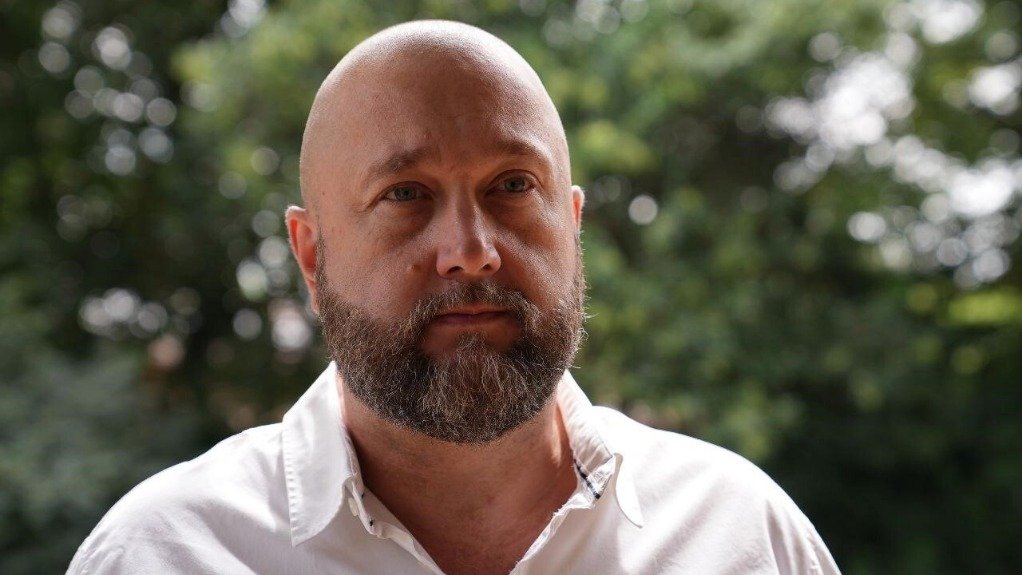
Independent financial and organised crime investigation company IRS Forensic Investigators CEO Chad Thomas said on Tuesday that the ongoing Madlanga Commission has successfully identified a decades-long deficit of leadership and systemic corruption within the South African Police Service (SAPS) as the "absolute root cause" of the nation's violent crime crisis.
Speaking at the 2026 PSG Think Big webinar to unpack ‘What the Madlanga Commission Means for SA's Economy’, Thomas explained that South Africa existed within a “stark, frustrating paradox”.
The said nation boasted a functioning democracy, fiercely independent Chapter 9 institutions, a vibrant media landscape, vast mineral wealth, exceptional human capital, and a prime geographical location.
Yet, it ranks as one of the five most violent societies in the world. It shares grim statistical categories with nations such as Haiti and Afghanistan, countries defined by collapsed administrations or decades of war.
For years, commissions and experts struggled to isolate why a country with such massive potential suffered from a pervasive crime crisis affecting every citizen, he said.
“Now we know the answer. It was the deficit of leadership within our policing structures. It was the empire-building within our policing structures that led us to this horrendous situation,” he explained.
He believes a leadership crisis in the country did not appear overnight but that it has been brewing for over a quarter of a century.
Unlike past inquiries that suffered from crippling delays, he noted that the Madlanga Commission operates as a results-oriented, parallel process designed to actively dismantle this deep-seated rot.
Thomas believes crumbling policing leadership in South Africa began in 2000, when President Thabo Mbeki appointed a civilian without any law enforcement experience to the position of National Police Commissioner.
This set off a damaging 25-year history of political appointments and institutional "empire-building" that severely compromised crime intelligence.
Thomas mapped out a timeline of controversial civilian appointments and intelligence scandals that he says systematically degraded SAPS, highlighting the tenures and fallouts surrounding key figures such as Jackie Selebi, Bheki Cele, Riah Phiyega, Joe Mabaso and Richard Mdluli.
Whether this multi-decade rot was driven by simple personal gratification or aligned with a broader, coordinated agenda, much like the notorious State capture projects, was a matter currently being ventilated through the Madlanga process, he noted.
"We're getting there, we're making progress, and we begin to identify the shortcomings of our policing these past three decades," Thomas added.
While the State slowly works to clean up SAPS leadership, he stated that a historic vacuum has allowed an illicit economy to flourish.
He said organised crime had aggressively moved beyond the shadows, permeating normal, legal business operations across South Africa.
Thomas warned that public sector contracts were now heavily targeted by violent extortion syndicates, commonly referred to as business forums. He cited two examples of how this institutionalised crime impacted everyday citizens.
Just before the Covid-19 pandemic, a R1-billion bridge project was approved to link rural communities in KwaZulu-Natal and the Eastern Cape to alleviate severe poverty and fast-track vital service delivery.
However, he said a local construction mafia intervened, demanding a 30% cut of the project's entire value just to allow work to proceed. Owing to the extreme violence and intimidation associated with the extortion, the project was completely shut down, leaving rural communities stranded.
Thomas called the systemic fraud uncovered at Tembisa Hospital one of the saddest examples of institutionalised organised crime. Syndicates deliberately kept transaction amounts under R500 000 to bypass normal, stringent procurement and tender processes.
The fraud was so brazenly institutionalised that perpetrators had to physically visit the hospital site to sign off on purchase orders and bid documents to ensure their payouts, he said.
The consequences of allowing syndicates to weaponise public procurement are economically severe, he cautioned, as the South African government remains the largest consumer of goods and services in the country.
However, Thomas said a growing number of private sector organisations were actively choosing to no longer accept government entities as clients, citing fears of corruption, extortion, and total reputational ruin.
Despite these deep systemic scars, he remains optimistic. The parallel accountability mechanisms built into the Madlanga Commission mark a critical, unprecedented turning point, he believes.
For the first time in decades, South Africa was actively creating a pathway toward reclaiming its law enforcement structures from the syndicates and empire-builders who compromised them, he said.
EMAIL THIS ARTICLE SAVE THIS ARTICLE ARTICLE ENQUIRY FEEDBACK
To subscribe email subscriptions@creamermedia.co.za or click here
To advertise email advertising@creamermedia.co.za or click here


