





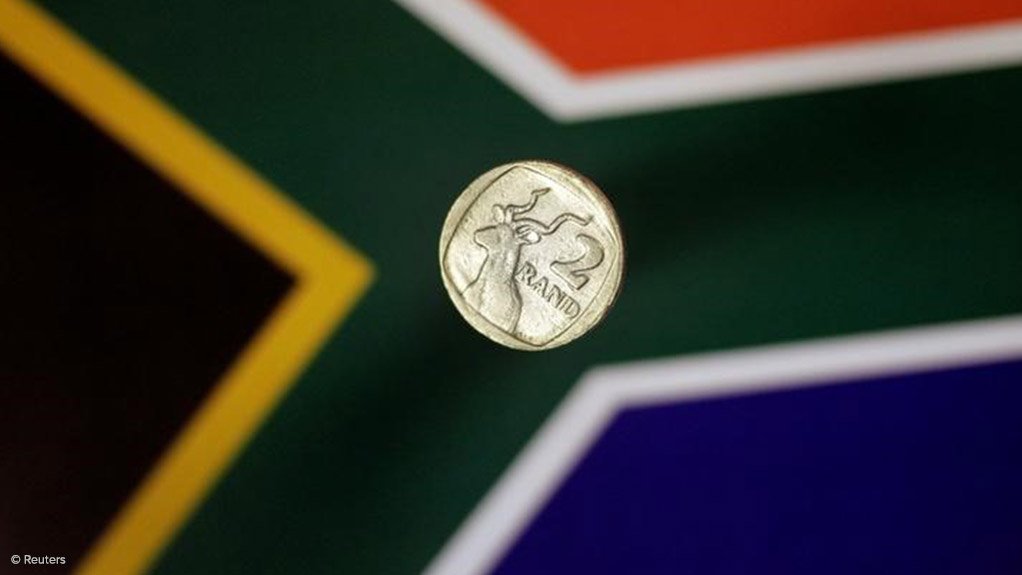
The rand crashed to its previous record low on Thursday, losing more than 30c of its value against the dollar in minutes after the US ambassador accused South Africa of providing weapons and ammunition to Russia.
News24 reported that US ambassador to South Africa Reuben Brigety said the weapons and ammunition were loaded onto a Russian ship that docked at the Simon's Town naval base in Cape Town in December last year.
The rand hit R19.36 - its previous record low, reached in 2020 - following the news. It also came close to hitting a record low against the pound, and was last trading at above R24 on Thursday.
The report triggered fears that the US will take economic action against South Africa, perhaps by scrapping the duty-free export benefits it receives thanks to the African Growth and Opportunity Act (Agoa).
"For many, the fortunes of the rand are becoming more overtly entwined with the political prospects of the African National Congress," Robert Hoodless, an analyst at InTouch Capital Markets, told Bloomberg earlier on Thursday. "President Cyril Ramaphosa seems nowhere to be seen. Perhaps this is because of yet another calamitous diplomatic decision over relations with Russia."
The currency has already been under pressure, breaching the R19/$ level earlier on Thursday amid a toxic cocktail of loadshedding and a deepening economic crisis, as well as interest rate concerns.
"The rand is in a fragile state, with local factors, in particular loadshedding, weighing on the local economy and currency. Rand weakness is expected to continue in the short term," said Bianca Botes, director at Citadel Global.
Earlier this week, SA Reserve Bank governor Lesetja Kganyago warned in a speech at the University of Johannesburg that loadshedding will reduce economic growth by 2% this year. The Reserve Bank economy now forecasts growth of 0.2% this year, and to average 1.0% in the following two years. "[This] is barely an expansion," he noted.
Aggressive hikes in interest rates have also hurt the economy. While the Reserve Bank has insisted that this should help to tame inflation, the reality is also that South African interest rates need to remain competitive to protect the rand.
Investors are used to South Africa offering much higher interest rates than developed markets like the US, which has made rand investments attractive and kept global money flowing to local markets, supporting the rand.
But following aggressive US rate hikes, that differential between the US and local rates has now shrunk, and South African rates are not that attractive anymore – which is compounded with the increased risk about the country's economic outlook.
Kganyago highlighted that the rand has been one of the worst-performing emerging market currencies over the past year.
"Idiosyncratic factors such as persistent loadshedding and the recent greylisting of the country by the Financial Action Task Force have kept investors wary."
He warned that rand weakness could worsen South Africa's worrying inflation situation, as imports like fuel will keep prices high.
All of this has left the Reserve Bank in an impossible situation: interest rate hikes are harming a stricken economy, but it also has to fight inflation and protect the rand's appeal.
"Fighting inflation is much harder when the economy is already underperforming, as tighter financial conditions have the effect of cooling economic activity more broadly. Yet, if allowed to persist, high inflation will either fatally undermine the economy’s growth potential or raise the nearer-term costs of eventually bringing inflation back to target," Kganyago said, possibly indicating that another rate hike will be implemented at the end of month. The market has already priced in a hike of more than 25 basis points.
But Momentum economist Johann van Tonder believes further rate hikes won't bolster the rand.
"The rand is experiencing many setbacks: S&P's downgrade of the country's credit rating outlook, greylisting, weak and low growth due to, among other things, loadshedding, risk aversion towards emerging markets due to the war, and a strong dollar as well. Therefore, another 25- or 50-basis-point increase in the repo rate to counter the setbacks won't help much as it won't strengthen the rand significantly. In fact, it may weaken the rand (and be counterproductive in fighting inflation) as it may lead to negative growth and a recession.
"For the rand to stabilise, a clear implementation plan is needed to solve the electricity crisis and logistical problems, and evidence that it is being put into action, so that the economy can grow and create jobs," Van Tonder added.
Old Mutual chief economist Johann Els believes the rand is undervalued at current levels. He says the rand may recover back to below R17 by the end of the year - if US inflation cools enough for the Fed to definitively halt hikes. This will weaken the dollar. More interest rate hikes are expected in the euro zone, which may also increase pressure on the US currency.
In the medium term, the risk of loadshedding will be much lower in coming years given the large private-sector push for renewable energy. Political uncertainty has also been hurting the rand, and once next year's national election is over, the currency should also benefit, Els added.
"A little bit more economic growth, a little bit more political stability and less loadshedding should keep the rand stable in the medium term."
EMAIL THIS ARTICLE SAVE THIS ARTICLE FEEDBACK
To subscribe email subscriptions@creamermedia.co.za or click here
To advertise email advertising@creamermedia.co.za or click here


