





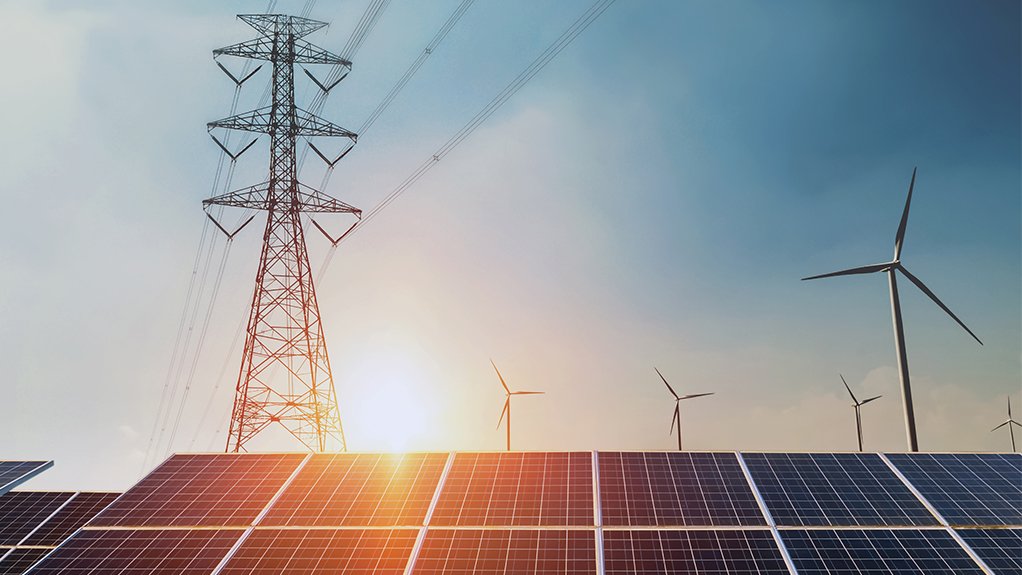
In his keynote address to the 2026 Windaba wind power conference, being held at the Cape Town International Convention Centre, Electricity and Energy Minister Dr Kgosientsho Ramokgopa highlighted the megatrends in the country's electricity sector, as identified by government. There are 11 such megatrends -- many of them are also global -- grouped into four categories: demand, supply, market and infrastructure.
The first two megatrends fall under the rubric of demand. Number one is that coordinated industrial and digital growth is driving new variable energy demand. Number two is the need to protect affordability and access for households and small, medium-sized and microenterprises (SMMEs).
Supply covers three megatrends. The first of these (and the third megatrend overall) is that low-cost renewables are anchoring new build generation and are accelerating decarbonisation. Next, flexibility is now a system requirement and the energy transition is being enabled by renewable generation. (The fifth megatrend is uranium enrichment as a lead-in to nuclear generation; not relevant to a wind power conference, Ramokgopa did not discuss it.)
Four megatrends fall in the market category. Leading this group is the need to localise energy supply chains to strengthen resilience and reduce the risk posed by international turmoil. Next is the need to manage persistent market volatility, to safeguard affordability for customers and SMMEs. Third in this category, and eighth overall, is the need to mobilise innovative private finance, to scale the investment needed for the energy transition. And the final market megatrend is the need to develop and keep critical grid, digital and market operations skills.
Under infrastructure, there is one megatrend: to enable the electricity system, and remove bottlenecks, by rolling-out more transmission capacity and modernising the existing capacity.
The eleventh and last megatrend does not fall under any rubric. It is the need to build national climate-resilient and opportunity-ready energy systems.
Before leaving this topic, Ramokgopa also addressed the issue of the large-scale energy blackout that engulfed Spain and Portugal last year. (Spanish generating capacity is now overwhelmingly composed of renewables.) He noted that the subsequent analysis had concluded that there were risks involved in too rapidly "onboarding" renewable energy. The system needed attention; it was not just a matter of building renewable-energy plants.
EMAIL THIS ARTICLE SAVE THIS ARTICLE ARTICLE ENQUIRY FEEDBACK
To subscribe email subscriptions@creamermedia.co.za or click here
To advertise email advertising@creamermedia.co.za or click here


