





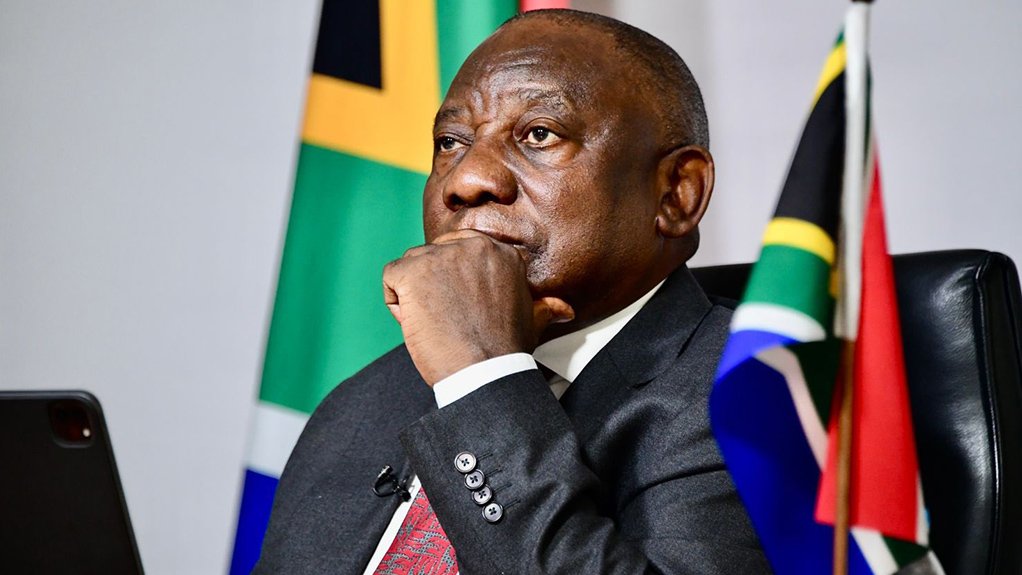

President Cyril Ramaphosa announced on Monday that the Presidential One Billion Trees Campaign aims to plant one-billion trees over the next five years, framing it as a direct challenge to the lasting legacy of apartheid-era urban planning.
Writing in his weekly newsletter to the nation, the President said the initiative forms part of the existing National Greening Programme and seeks to correct severe spatial inequalities.
Historically, white suburbs were designed with lush, tree-lined streets and ample green spaces, while black townships were left with sparse vegetation.
"Trees and green spaces provide recreation and shade. They help to mitigate the impact of climate change and biodiversity loss," Ramaphosa noted.
"But more than that, this greening campaign is a response to the spatial inequality created by apartheid-era urban planning."
Since its launch in April, more than seven-million trees have already been planted: more than two-million trees in the Western Cape; more than one-million trees in Gauteng; more than one-million trees in KwaZulu-Natal and over 500 000 trees in the country’s driest province, the Northern Cape.
A major pillar of the initiative is a deliberate shift toward planting indigenous trees. Large swaths of South Africa are currently covered by non-indigenous canopies originally planted by colonial authorities to meet timber demands. Even Pretoria’s famous jacarandas are classified as invasive.
Ramaphosa warned that these alien species cause severe environmental strain by depleting scarce surface water resources, threatening local indigenous vegetation and escalating the risk and intensity of destructive wildfires, particularly in areas like the Garden Route.
The President emphasised that environmental conservation and economic development go hand in hand. Eradicating invasive trees and cultivating native ones opens up major economic pathways, particularly for the youth, he said.
Several industries are already turning cleared alien plants into industrial biomass and green fuel. Additionally, the Department of Forestry, Fisheries and the Environment, alongside South African National Parks, run the Eco-Furniture Programme.
This initiative trains Expanded Public Works Programme workers to manufacture school desks and benches from cleared invasive wood.
Ramaphosa explained that for young South Africans interested in agriculture, the campaign offers a gateway into seed collection, indigenous horticulture, and eco-entrepreneurship.
The success of the five-year goal relies heavily on partnerships between local communities, traditional leaders, and the private sector.
Ramaphosa praised the citizens, schools, and businesses that have already mobilised, urging the rest of the nation to get involved.
“The momentum that this campaign has gathered is a testament to the power of collective action. Together, we can achieve our goal of planting one-billion trees across South Africa over the next five years,” he said.
EMAIL THIS ARTICLE SAVE THIS ARTICLE ARTICLE ENQUIRY FEEDBACK
To subscribe email subscriptions@creamermedia.co.za or click here
To advertise email advertising@creamermedia.co.za or click here


