





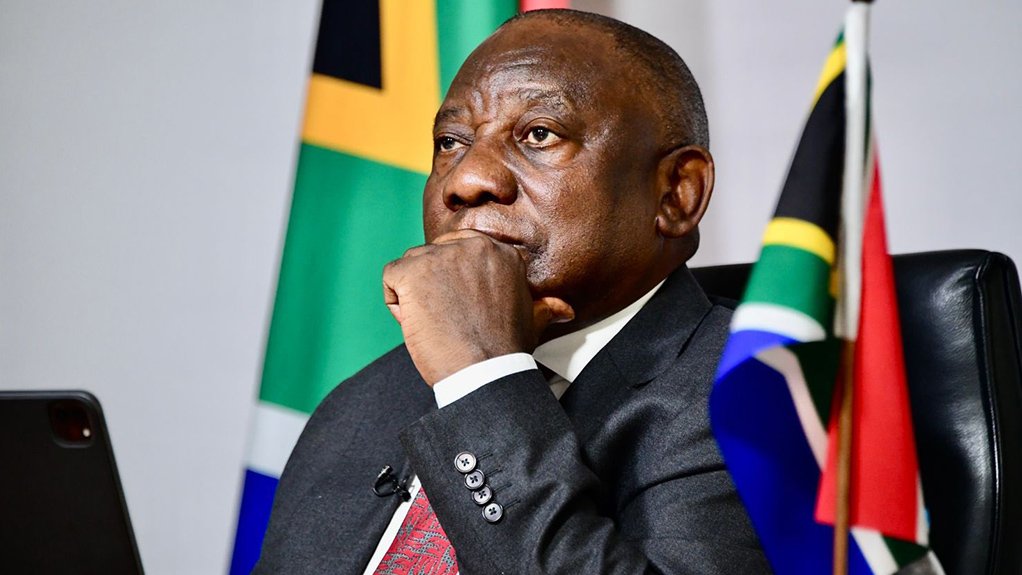

President Cyril Ramaphosa has pledged swift and firm action against criminal networks and corrupt individuals benefiting from irregular water contracts and intentional infrastructure damage, amid the country’s chronic water disruptions.
Writing in his weekly newsletter to the nation on Monday, Ramaphosa acknowledged that water disruptions have left millions of citizens facing daily uncertainty, with the inability to cook, clean, or run businesses.
To reverse this decline, the President highlighted key interventions, major funding boosts, and structural reforms driven by the newly released National Water Action Plan.
He said government is targeting root causes of water failures through targeted municipal support and legislative updates.
The State is pursuing criminal networks and has launched legal action against dozens of non-compliant municipalities violating the National Water Act.
Ramaphosa explained that the water boards are actively assisting struggling municipalities by drilling emergency boreholes and redirecting grant money to the worst-performing regions.
He announced that the National Water Crisis Committee (WATERCOM) will meet regularly to track progress and hold public entities accountable
Further, the National Water Resources Infrastructure Agency Act introduces a specialised agency tasked solely with developing, operating, maintaining, and financing national water infrastructure.
Ramaphosa said six new catchment management agencies have been established to protect major water systems and give local communities more control.
He said South Africa is channelling massive financial resources into rebuilding its failing water network through a mix of national grants and public-private partnerships.
“… in the uMkhanyakude district municipality in KwaZulu-Natal, R1.3-billion of grant-funded projects will improve the reliability of water services to over 130 000 households. In Thembisile Hani local municipality in Mpumalanga, a R2-billion project will provide access to 65 000 unserved households. This project is 80% complete. In Limpopo, mining companies are funding half of a R26-billion pipeline project that will reach 180 000 households,” he noted.
He pointed to the partnership between Rand Water and the Emfuleni local municipality to create a self-sustaining water provider.
He acknowledged that for too many South Africans, turning on a tap has become an act of uncertainty.
Ramaphosa explained that through the programme for unserved rural communities, 71 borehole projects have already been completed in Mpumalanga, Gauteng, KwaZulu-Natal and the Eastern Cape, reaching about 30 000 households that previously had no access.
Between 80 and 100 more boreholes will be drilled this year, and 500 over the next two years, extending water to around 250 000 households, he added.
Ramaphosa emphasised that the main priority now shifts to strict implementation, clear responsibilities, and unyielding accountability to ensure clean drinking water for every community, regardless of where they live.
EMAIL THIS ARTICLE SAVE THIS ARTICLE ARTICLE ENQUIRY FEEDBACK
To subscribe email subscriptions@creamermedia.co.za or click here
To advertise email advertising@creamermedia.co.za or click here


