





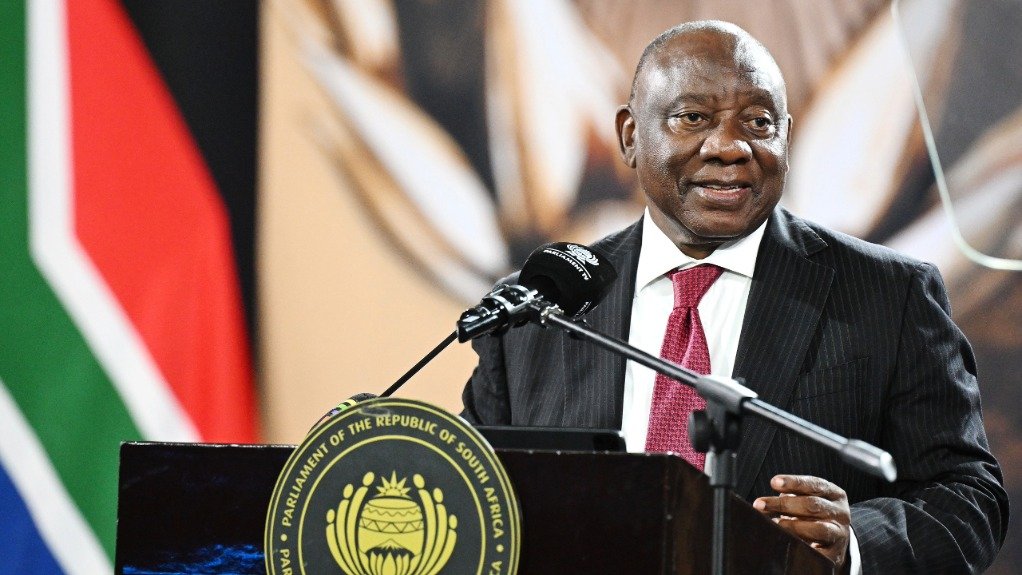
President Cyril Ramaphosa said on Monday that while some believe participatory democracy slows decision-making or leads to excessive contestation, it is a fundamental tenet of the country’s constitutional order.
In his recent weekly letter to the nation marking 30 years since the adoption of the South African Constitution, Ramaphosa emphasised that for democracy to retain its legitimacy, citizens must feel confident that their voices count when critical decisions are made.
Reflecting on the progress made since the early days of the Constitutional Assembly, the President stated that South Africans can reflect with pride on a political culture that is “robust, participatory, continuously evolving and firmly anchored” in democratic values.
He said South Africans are fortunate to live in a society with deeply engaged citizens who know that their voices matter. Active participation by the public continues to give life, meaning, and resilience to the nation's democracy, he added.
He said a strong culture of public participation originated during the early Constitution-making process and continues to shape the country’s governance today.
Ramaphosa has announced that South Africa’s upcoming National Dialogue will feature 195 pilot dialogues across all nine provinces. Running from June to August, these ward-based, digital, and sectoral engagements aim to replicate the broad, inclusive spirit of the 1994 Constitution-making process to craft a shared national vision.
He highlighted that South Africa’s foundational Constitution was built through an extensive participatory approach and said this legacy remained vital to the country's transformational efforts.
Ramaphosa pointed out that members of the public currently participate in law-making through public hearings on draft policies, regulations, and environmental decisions.
He added that people can also participate thorough the yearly Taking Parliament to the People programme, which is convened by the National Council of Provinces to encourage direct interaction with elected representatives.
To tackle contemporary challenges like poverty, inequality, and unemployment, the next phase of the National Dialogue will launch soon, demanding the same broad inclusivity that characterised the original Constitution-making process.
Emphasising the responsibility of today's generation, Ramaphosa urged South Africans to come together and help shape the next chapter of democracy.
“As we look with optimism to this new phase in the life of our nation, I call on all South Africans to come together once more and be part of crafting a new vision for South Africa that both speaks to our contemporary challenges and lays the groundwork for a prosperous future,” he said.
EMAIL THIS ARTICLE SAVE THIS ARTICLE ARTICLE ENQUIRY FEEDBACK
To subscribe email subscriptions@creamermedia.co.za or click here
To advertise email advertising@creamermedia.co.za or click here


