





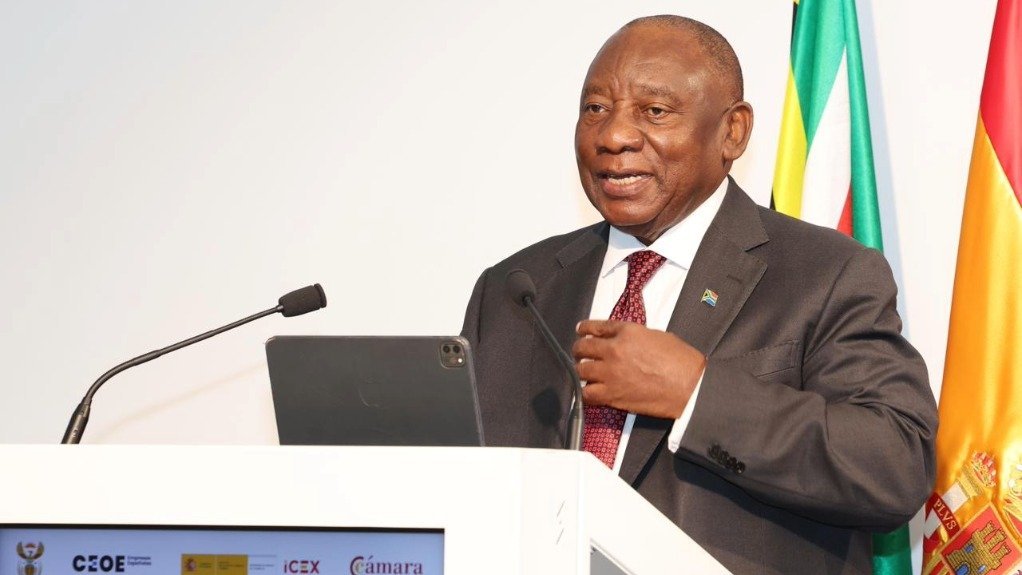
President Cyril Ramaphosa on Monday expressed South Africa’s support for a unified, collaborative approach to the issue of reparations for Africa through forward-looking measures to redress the lingering effects of the slave trade and colonialism.
Every May, the continent observes Africa Month to commemorate the 1963 founding of the Organisation of African Unity.
In his weekly letter to the nation, Ramaphosa said that celebrating and affirming African identity is as integral to the national character as the ideals that anchor democracy.
He said just as truth and reconciliation have been integral to South Africa’s journey, former colonial powers must confront historical injustices with honesty and integrity.
Ramaphosa highlighted that redress is not only about looking backward, but that it is about making a clear commitment to tangible measures that support Africa’s future growth and development. "We are one people. Despite Africa’s many languages and cultures, we take pride in a common identity, in our shared values and in a belonging that transcends geographical boundaries.
"Even as we celebrate our continent’s vibrancy and dynamism, we are mindful of the legacy of Africa’s colonial past and how it continues to shape our continent’s fortunes. While most African countries achieved independence many decades ago, the effects of the colonial era are still evident in much of the inequality, economic exclusion, political instability and conflicts that persist in parts of Africa," he said. He stated that the most extreme form of dehumanisation was the transcontinental slave trade perpetrated by European empires and slave-trading networks across the Sahara and North Africa.
For more than 100 years, he said millions of African men, women and children were hunted down, captured and traded as possessions. "The reality is that much of the wealth of former colonial powers today is the result of the deprivation of Africa’s people. Not only were millions of Africans enslaved, but colonial powers grew wealthy from the vast tracts of African land they forcibly occupied and the valuable resources they extracted," he said. Ramaphosa’s view is that colonial powers have largely avoided a deeper reckoning with the consequences of these acts.
"... some have apologised for specific atrocities, but in the main they have fallen short of full unqualified apologies for colonialism," he said.
He explained that the issue of reparations has been contested for decades, with opponents arguing that modern States differ from those of the colonial period, or that too much time has passed.
However, he said to ignore these claims is to wilfully ignore the intergenerational trauma and social violence that continues to hold back development.
"Whatever form reparations ultimately take, they should be aligned with our continent’s developmental objectives and assist African countries to tackle debt challenges, poverty alleviation, inequality and unemployment," he said.
Ramaphosa noted that just as the exploitation of Africa and the enslavement of millions of Africans made the former colonial powers wealthy, redress must take the form of sustained, direct, material investment in Africa’s development.
"This should include increased foreign direct investment and market access for the African countries affected by slavery. It should include skills and technology transfer. And it should include the return of historical artefacts to their countries of origin," he said.
EMAIL THIS ARTICLE SAVE THIS ARTICLE ARTICLE ENQUIRY FEEDBACK
To subscribe email subscriptions@creamermedia.co.za or click here
To advertise email advertising@creamermedia.co.za or click here


