





While the Gupta's looted R72.3-billion from the State, the National Prosecuting Authority's (NPA) Asset Forfeiture Unit (AFU) and its partners restrained or preserved R14-billion of the loot, and R5.4-billion has been recovered.
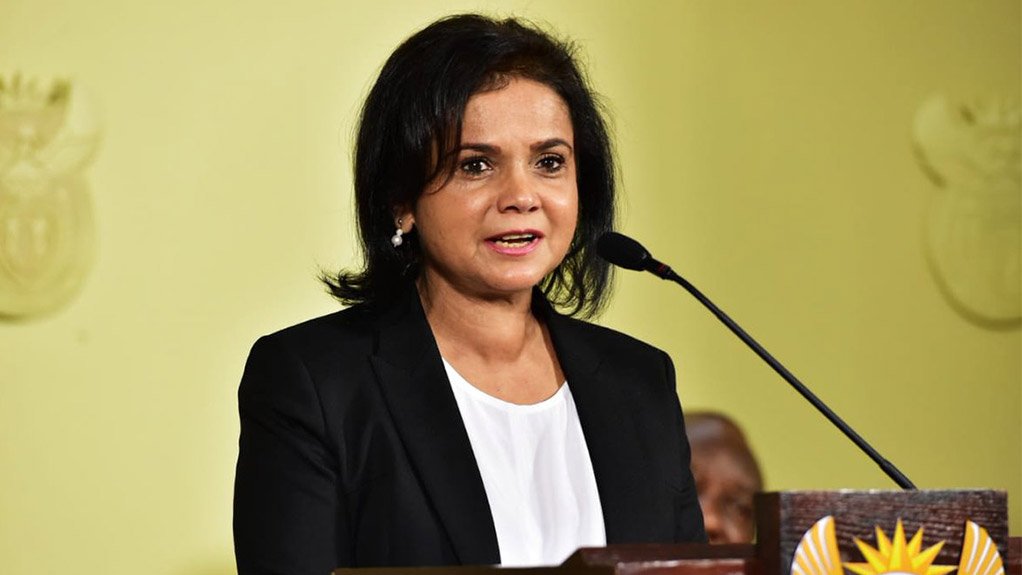
This information is contained in the NPA's presentation on its annual report to the Portfolio Committee on Justice and Correctional Services on Wednesday, where Director of Public Prosecutions Shamila Batohi was at pains to dispel the narrative that the NPA has been doing nothing on State capture.
According to Batohi, the NPA has been on an "upwards performance trajectory" for the past three years: in 2020/21, it achieved 50% of its targets, 71% in 2021/22, and now 75% in 2022/23, the year under review.
"It is sometimes easy to forget, because, I guess, bad news sells ... the really important strides that we have made in terms of rebuilding the NPA during this period, the various initiatives we have undertaken to really reach solid ground, from a very, very shaky start."
And this year, the NPA had some bad news.
In April, it emerged that an Emirati court did not grant South Africa's request to extradite brothers Atul and Rajesh Gupta.
They appeared in court in February, and South African authorities were not kept in the loop.
About a week later, the first state capture case brought to trial saw the Free State High Court granting Section 174 discharges to all but one of the accused in the NPA's Nulane fraud and money-laundering case in a scathing ruling.
The final accused, former Free State agriculture department official Limakatso Moorosi, closed her case and was acquitted.
Batohi described these events as "setbacks" and noted that they were still appealing against the Nulane ruling and working on the Guptas' extradition.
She said the narrative that the NPA is not doing anything about state capture is not only wrong, it is dangerous.
"We are in fact one of the few prosecuting authorities across the world that are prosecuting former ministers, the former secretary-general of the ruling party, a former president of our country and also some of the most powerful CEOs and private sector actors in the country," said Batohi.
"These cannot be regarded by any measure as small fish, although we appreciate that too many architects of state capture remain unaccountable and there is a lot of work that still needs to be done."
She said the NPA's Investigating Directorate (ID) has declared 99 investigations and enrolled 34 cases involving 205 accused persons.
"So, the focus has not only been to get perpetrators to wear orange overalls, and believe me, that is a very important focus for us, but also on following the money and hitting criminals where it hurts most," Batohi said.
According to the NPA's presentation, the Zondo Commission estimated that the state disbursed R72.3-billion to Gupta-owned entities. Even before the commission finalised its report, acting on former Public Protector Thuli Madonsela's "State of Capture" report – which led to the establishment of the commission – the AFU repaid R2-billion "State capture related funds and assets" to the victims.
The AFU, in co-operation with its internal and external stakeholders, restrained and preserved State capture assets worth more than R14-billion. To date, R2.7-billion has been confiscated or forfeited, and R5.4-billion State capture assets have been recovered.
"The reality is that even though the wheels of justice turn slowly, and not just in this country, internationally, in South Africa, impunity no longer prevails. And those with dirty hands know it is just a matter of time before that dreaded knock on the door will come," said Batohi.
She added that criminal prosecutions require patience, good preparation, and a measure of certainty.
"We are certainly grateful for the work of the Zondo Commission, which shone a light on the ravages of State capture – who was involved, the amounts it costs, the damage it caused, etcetera. However, we must remember that the Zondo Commission did not give the NPA a blueprint for the successful prosecution of cases."
She said the NPA had to prove its cases beyond reasonable doubt.
"These matters are too important for our country and we cannot, and will not, be rushed due to public or media pressure. This is when mistakes may happen, which the NPA cannot afford."
According to Batohi, many of the State capture cases are among the most difficult to prosecute, even by international standards. The NPA will only proceed when it is satisfied that there is a reasonable prospect of a successful prosecution.
Deputy National Director of Public Prosecutions Anton du Plessis said the NPA Amendment Bill would be "fundamentally important".
The bill has recently been introduced to Parliament and will establish ID as a permanent body and allow it to appoint full-time staff and capacitate the directorate, which will be called the Investigating Directorate Against Corruption (IDAC).
Du Plessis said these complex corruption matters required prosecution-led investigations, which the bill would enable once enacted.
"And we do believe that is going to be, if you like, the game changer that is required, not for all corruption cases, but for the ones that fall within the ID's mandate."
Du Plessis said the NPA itself was "ravaged by state capture", and it had to rebuild.
"So, one of the things we had to do is systematically rebuild the organisation from the inside out to make sure that after years of neglect, and it wasn't only neglect, it was also in some cases malicious destruction to the organisation, that the NPA has a solid platform underneath it."
He believes they are now well on their way to being an effective, well-run organisation.
EMAIL THIS ARTICLE SAVE THIS ARTICLE FEEDBACK
To subscribe email subscriptions@creamermedia.co.za or click here
To advertise email advertising@creamermedia.co.za or click here


