





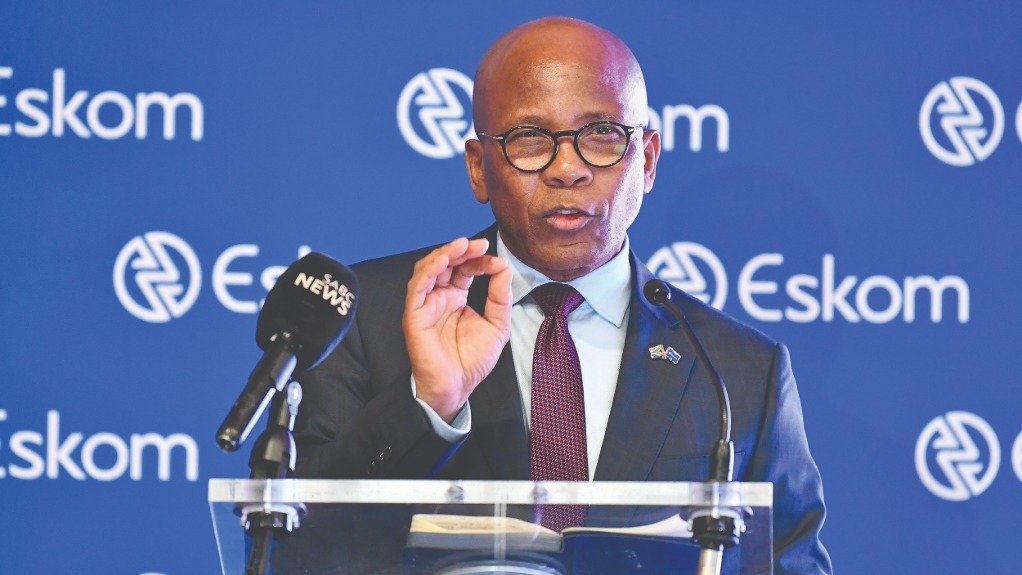
South Africa’s presidency rebuked the chairperson of Eskom for publicly questioning the plan to restructure the State power utility.
The authorities are committed to ensuring that Eskom doesn’t end up in a worse financial position than its current one, with a broad range of interested parties involved in the discussions about the unbundling of the utility, presidency spokesman Vincent Magwenya said on Tuesday.
Magwenya’s comments came in response to Eskom chairperson Mteto Nyati, who warned last week that plans to transferring the power company’s transmission assets to an independent operator may trigger change-of-control provisions in lending agreements, create accounting complications and unsettle bondholders. Chief Executive Officer Dan Marokane in June said the unbundling needs to be handled in a way that’s sustainable for the company.
“It is unfortunate that Mr. Nyati creates an impression as if there’s a process that’s underway without the inclusion of Eskom and at the detriment of Eskom,” he said. “All of Eskom’s concerns are well known and have been thoroughly discussed in government and with Eskom.”
The dispute between the presidency and Eskom’s board highlights growing tensions over the sequencing of the utility’s break-up, with investors closely watching whether the transfer of transmission assets will weaken Eskom’s balance sheet or alter protections for creditors.
President Cyril Ramaphosa last month backed a plan for the establishment of an independent transmission system operator, ending a century-old monopoly by Eskom and bringing in private producers and traders to create a liberalised electricity market.
The National Treasury is expected to appoint advisers in the coming weeks to begin negotiations with Eskom’s lenders over the planned separation of the transmission business, Treasury Director-General Duncan Pieterse said last week. That process is likely to be central to determining how the restructuring can proceed without impairing creditors.
The presidency emphasised that the Eskom Restructuring Task Team includes representatives from Ramaphosa’s office, the Treasury, the Department of Electricity and Energy, Eskom and the National Transmission Co. South Africa.
Eskom has said it supports the creation of an independent transmission system operator, but has argued that ownership of the transmission assets should remain with the utility during an interim period, until financial and creditor-related risks have been resolved.
The transmission business is particularly important to Eskom’s finances because it contributes about 40% of the utility’s earnings, according to Nyati. He said removing the assets before legacy liabilities are addressed could materially weaken Eskom’s balance sheet.
The government remains committed to establishing a fully independent operator, Magwenya said. The reform is a key policy objective under the Electricity Regulation Act and is intended to support a competitive wholesale electricity market, investment and economic growth, he said.
EMAIL THIS ARTICLE SAVE THIS ARTICLE FEEDBACK
To subscribe email subscriptions@creamermedia.co.za or click here
To advertise email advertising@creamermedia.co.za or click here


