





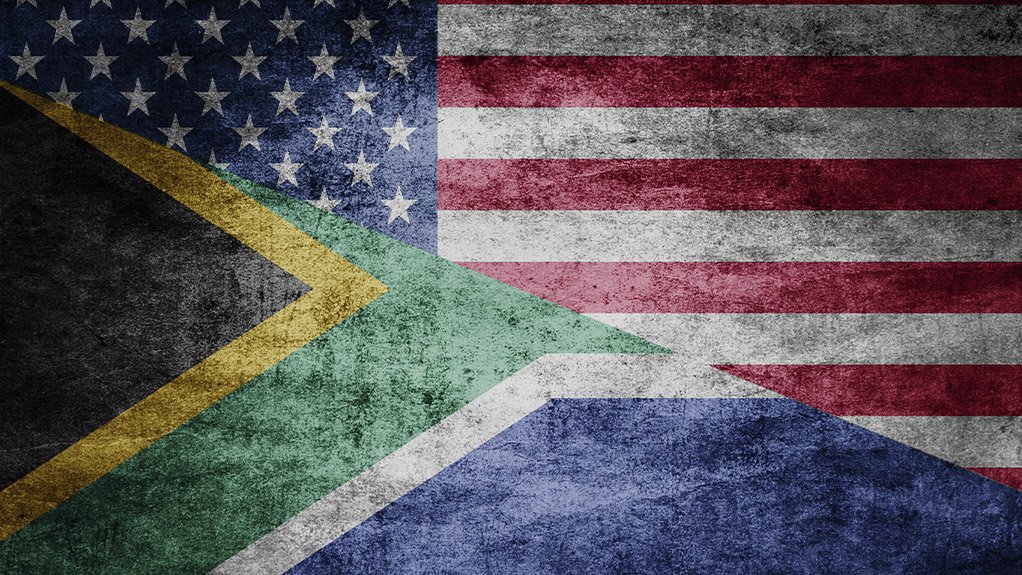
The announcement by the Office of the US Trade Representative to terminate South Africa’s duty-free trade benefits under the African Growth and Opportunity Act (Agoa) has triggered a wave of condemnation and concern across South Africa’s political and civic landscapes.
Opposition parties, agricultural unions, and civil society organisations have expressed concerns over the economic fallout, with some pointing directly to apparent failures in government's diplomatic approach.
The termination is effective from January 1, 2027. According to government, Agoa exports to the US are about 10% of South Africa's total exports and 1% of its total global exports.
The DA expressed “profound sadness” over the exclusion, calling the development completely avoidable.
DA spokesperson on International Relations and Cooperation Ryan Smith stated that the loss of preferential access is a direct consequence of a failure in economic diplomacy by the Minister of International Relations and Cooperation Ronald Lamola.
“This decision, which has granted South African exporters preferential and duty-free access to the US market since Agoa’s implementation in May 2000, is a devastating blow to the South African economy, especially the agriculture and agro-processing, automotive manufacturing, and mining sectors,” Smith said.
According to the DA, Lamola has placed party-political whims ahead of South African interests, by failing to skillfully navigate geopolitical tensions.
Smith further argued that the exclusion reflects broader domestic failures by the ANC, claiming that an “outright refusal” by Lamola and President Cyril Ramaphosa to engage with the DA on domestic policy reform within the Government of National Unity has compounded the crisis.
Meanwhile, the ANC has firmly rejected the US administration's withdrawal of South Africa's Agoa status, stating they will "not succumb to economic bullying" or compromise on domestic transformation policies.
The ANC declared that economic pressure will not dictate South Africa's foreign policy or force government to abandon crucial transformation initiatives such as land reform, BBBEE, and employment equity.
ANC spokesperson Mahlengi Bhengu clarified that losing Agoa only removes tariff preferences and will not result in economic collapse or the closure of the US market to South Africa.
The party argued that fears of catastrophic job losses are exaggerated and confuse general US-SA trade with specific Agoa benefits.
The government aims to protect affected workers and industries by boosting local production and seeking alternative trade markets.
The ANC condemned the DA, AfriForum, and Solidarity for fuelling international pressure.
The party also raised concerns that the timing of the US announcement, during special voting for the local government election, was an attempt to intimidate voters and manipulate democratic choices.
The EFF stated that the termination of Agoa highlighted the "risks of economic dependencies" where market access is used by powerful trading partners to enforce political compliance.
The party believes the loss of preferential US market access is owing to a "systematic campaign of diplomatic hostility and economic pressure" that is punishing South Africa for its independent foreign policy, specifically its decision to take Israel to the International Court of Justice.
The EFF characterised Agoa as a "conditional arrangement" that is designed to advance US geopolitical interests by pressuring African nations to align with American foreign policy.
While acknowledging the decision as a setback, the EFF emphasised that South Africa should look beyond the US market and expand its trade relationships through the African Continental Free Trade Area (AfCFTA), BRICS, and other Global South partnerships.
MARKET-FOCUSED PERSPECTIVE
AgriSA called for continued diplomatic engagement and clear, product-specific guidance for exporters to navigate the post-Agoa landscape.
The organisation emphasised the importance of distinguishing between losing preferential tariff treatment and losing access to the American market entirely.
“The announced withdrawal of Agoa eligibility would not constitute a ban on South African agricultural exports. Businesses would remain able to supply American customers, subject to applicable tariffs and other import requirements,” AgriSA noted, cautioning against either extreme panic and complacency.
While acknowledging the ongoing engagements led by Trade, Industry and Competition Minister Parks Tau, AgriSA stressed that the immediate priority must be sustained dialogue with the US to preserve preferential treatment where possible.
Concurrently, the organisation urged government to accelerate market diversification and implement critical domestic reforms, including improving port reliability, biosecurity measures, sanitary approvals, and certification efficiency.
'POLITICAL IDEOLOGY'
Trade union Solidarity expressed “severe disappointment” at the White House's decision, claiming it flows directly from the South African government's failure to repair deteriorating diplomatic relations with Washington.
This comes after Solidarity undertook a visit to the US this week, ahead of the Agoa suspension, to engage directly with members of the US Congress, the State Department, and White House officials to emphasise mutual benefits of transatlantic trade.
Following Monday’s announcement by the Office of the US Trade Representative, Solidarity alleged that Ramaphosa and Lamola repeatedly ignored warnings that their public statements and foreign policy choices – including Lamola’s remarks during a US visit in September – were jeopardising Agoa status.
The organisation warned that the economic cost to export-oriented industries will put thousands of local jobs at risk.
Echoing these views, pressure group Lex Libertas held the State entirely accountable.
Executive director Dr Ernst Roets pointed out that government expected this outcome but chose not to act on what it said were “known American concerns”.
According to Roets, these included property rights, the promotion of free-market policies, and violence against minorities.
“Instead, the government continued to prioritise its political ideology over the economic interests of the citizens of South Africa,” Roets remarked, adding that the crisis highlights a highly centralised political system that remains detached from community-level realities.
As the January 2027 deadline approaches, pressure is mounting on Pretoria to engage in urgent, constructive dispute resolution with its second-largest trading partner to mitigate long-term damage to the country's manufacturing and agricultural sectors.
EMAIL THIS ARTICLE SAVE THIS ARTICLE ARTICLE ENQUIRY FEEDBACK
To subscribe email subscriptions@creamermedia.co.za or click here
To advertise email advertising@creamermedia.co.za or click here


