





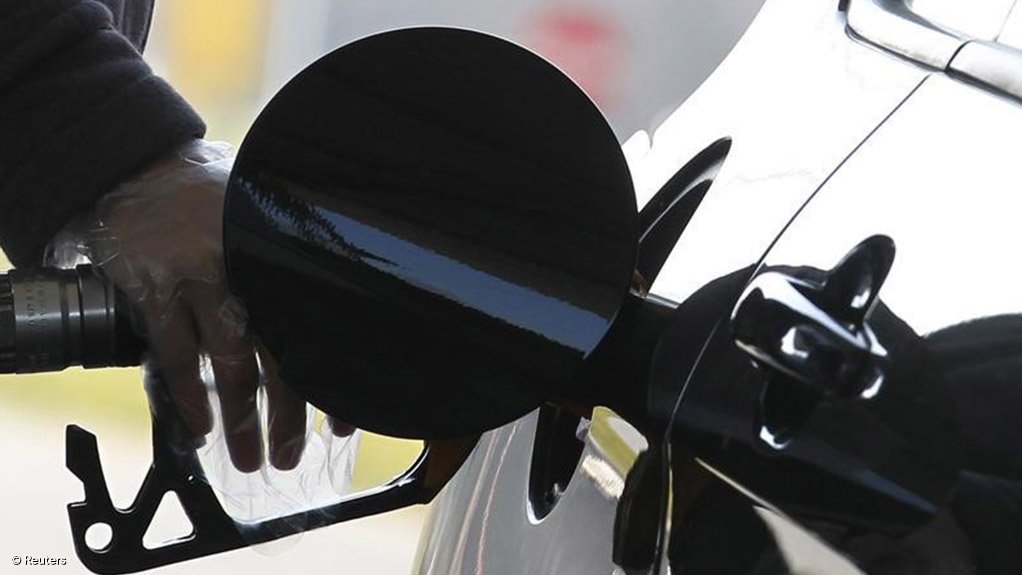
The unprecedented hikes in fuel prices have triggered widespread outrage, prompting political parties, civil society organisations, and trade unions to launch a unified call for immediate government intervention.
According to official data released by the Department of Mineral and Petroleum Resources, 93 octane petrol will surge by R3.12 a litre at midnight on Wednesday, while 95 octane will spike by R3.33 a litre.
Wholesale diesel prices are set to climb by between R2.84 and R3.24 a litre, illuminating paraffin will jump by R3.58 a litre, and LPGas will rise by 42c a kilogramme.
Organisations across the political and social spectrum have warned that these are not ordinary price adjustments, predicting a severe inflationary ripple effect that will hit agriculture, transport networks, small businesses, and already strained household budgets.
Accusing Finance Minister Enoch Godongwana of ignoring a September request for an official review, the civil rights organisation AfriForum has instructed its own research department to conduct a comprehensive audit of the country's fuel price composition.
The investigation will target the calculation, transparency, and efficiency of the General Fuel Levy, Carbon Fuel Levy, and the Road Accident Fund (RAF) Levy, the usage of collected funds and their economic impact on consumers and businesses and long-term structural policy reforms.
"The government is responding like a deer in the headlights of the energy crisis: paralysed with indecision. Someone must expose the root cause of the cost-of-living crisis and push for desperately needed reforms," stated AfriForum head of public relations Ernst van Zyl.
The DA identified the RAF levy as the primary driver of artificially inflated fuel costs.
However, DA spokesperson on Transport Dr Chris Hunsinger, noted that the RAF recently informed Parliament it faces a staggering R450-billion backlog in outstanding claims.
With a yearly revenue of just R47-billion, Hunsinger believes it would take over a decade just to clear the existing backlog, without factoring in new claims or operational costs.
The DA is demanding urgent legislative reform to replace the "bankrupt" entity and permanently remove its corresponding levy from the fuel price equation.
ActionSA has called on the National Treasury to use strong tax collection revenues to buffer citizens against the incoming shock.
ActionSA MP Alan Beesley pointed out that the South African Revenue Service collected R2.010-trillion in net revenue for the 2025/26 financial year –beating initial estimates by R24.7-billion.
ActionSA argued that this structural growth creates immediate fiscal space for a temporary reduction in the fuel levy.
The party announced plans to robustly challenge the upcoming Medium-Term Budget Policy Statement later this month, to ensure the Government of National Unity addresses waste and provides citizen relief.
Trade union UASA echoed the call for emergency relief measures, highlighting that low- and middle-income workers bear the brunt of rising transport costs.
UASA spokesperson Abigail Moyo acknowledged that while international oil volatility and global geopolitical tensions drive market rates, the domestic tax framework remains entirely within State control.
The union urged the State to act decisively before the socio-economic damage becomes permanently entrenched in the local economy.
EMAIL THIS ARTICLE SAVE THIS ARTICLE ARTICLE ENQUIRY FEEDBACK
To subscribe email subscriptions@creamermedia.co.za or click here
To advertise email advertising@creamermedia.co.za or click here


