





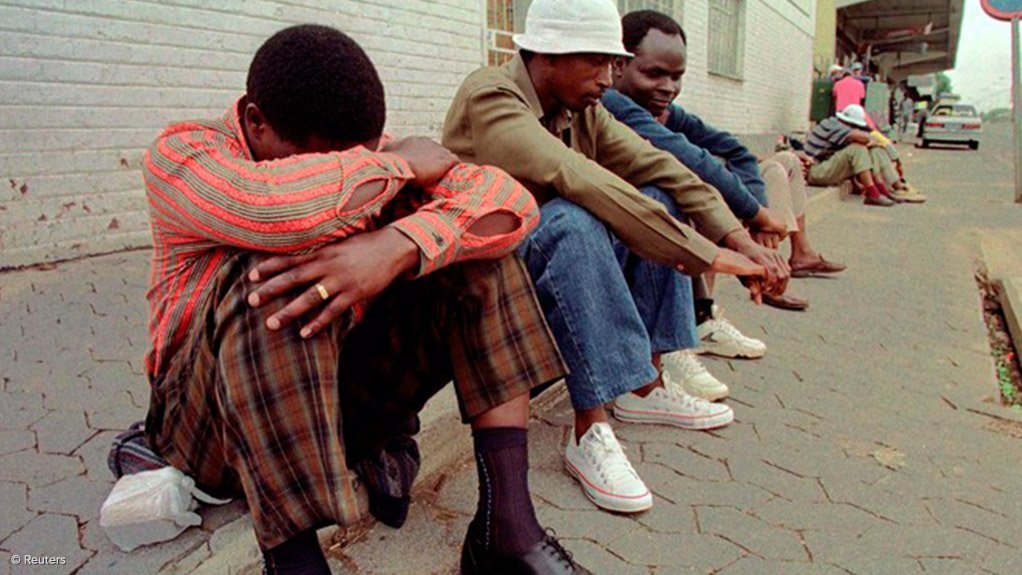
South Africa’s political landscape erupted on Tuesday following a grim data release from Statistics South Africa (Stats SA), which confirmed that the official unemployment rate has surged to 33.6% for the second quarter of 2026.
This represents a 0.9 percentage point increase from 32.7% in the first quarter, pushing the jobless rate to its highest level in four years.
According to Stats SA, the number of unemployed South Africans spiked by 345 000 to reach 8.5-million in Q2 2026, while overall employment dropped by another 16 000.
The expanded definition of unemployment, which includes discouraged job seekers, climbed to a staggering 43.8%.
The data has sparked fierce criticism from opposition and coalition political parties alike, all pointing to a crippling lack of urgency and deep-seated structural failures within the Government of National Unity (GNU).
DA leader Geordin Hill-Lewis said economic reform is moving far too slowly to facilitate necessary job growth.
While the DA is a key member of the GNU, Hill-Lewis made it clear that the party will aggressively demand higher ambition and accelerated reform.
"South Africa does not lack economic potential. It lacks urgency. South Africa cannot afford to lose another quarter to slow reform. We need urgency, clear priorities, and a relentless focus on growth and jobs,” Hill-Lewis stated.
He pointed to excessive red tape, unstable basic services, failing ports and rail infrastructure, and high crime rates as severe bottlenecks for investors and businesses.
"Growth cannot be one priority among many. It must be the priority," he said.
RISE Mzansi National leader Songezo Zibi described the statistics as a recurring picture of an economic stalemate.
He warned that repeating the same economic strategies while expecting new outcomes is a sign of complacency rather than leadership.
Zibi emphasised the breakdown of local government as a primary driver of economic rot.
“Towns and cities are where economic activity actually happens. Without capable, functional, and accountable local governance, businesses cannot expand, basic services fail, and local economies crumble,” Zibi said.
He also called for immediate State intervention to repair core industrial drivers, such as water, energy and freight logistics.
Zibi noted that because of these systemic vulnerabilities, the Standing Committee on Public Accounts has turned a rigorous spotlight onto State departments overseeing infrastructure.
He maintained that enforcing accountability in these sectors is non-negotiable for unlocking private investment.
Expressing grave concern over the industrial sector, ActionSA Member of Parliament Alan Beesley highlighted that South Africa's manufacturing base has shed 100 000 jobs over the past year, a severe 6% contraction.
Beesley slammed the GNU for failing to protect high-value employment and allowing criminal networks to thrive.
"While South Africa's legitimate productive economy continues to shed jobs, the GNU has failed to address the conditions driving businesses out of the market," Beesley said, pointing to the growth of illicit trade and findings from the ongoing Madlanga Commission as evidence of deep State corruption.
Beesley accused GNU Ministers of being consumed by internal political infighting and horse-trading while continuing to enjoy the luxuries of office.
As a result, ActionSA has renewed its direct call to President Cyril Ramaphosa to replace the Ministers managing employment, economic growth, trade, industry, and small business development.
"It cannot be acceptable for Ministers to remain in office indefinitely while the number of South Africans without work continues to rise," Beesley said.
EMAIL THIS ARTICLE SAVE THIS ARTICLE ARTICLE ENQUIRY FEEDBACK
To subscribe email subscriptions@creamermedia.co.za or click here
To advertise email advertising@creamermedia.co.za or click here


