





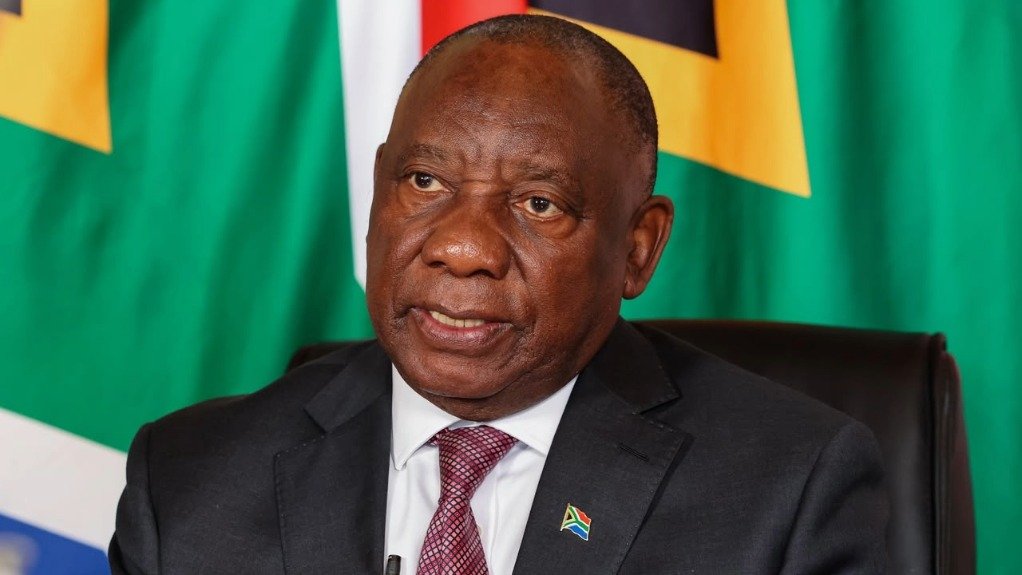
Opposition parties and civil rights organisations have criticised President Cyril Ramaphosa's recent national address on gender-based violence and femicide (GBVF), calling his proposed measures “belated, repetitive, and detached” from the realities faced by women.
The backlash follows intense public outrage surrounding the brutal murders of at least 11 women in Ekurhuleni over recent months.
Acknowledging that GBVF remains a severe national crisis, Ramaphosa admitted that despite existing programmes, the State frequently fails women.
He emphasised that protection orders must not become “mere pieces of paper” and that forensic evidence must not sit unprocessed.
Ramaphosa announced that the government will mandate safety audits across all municipalities to identify high-risk zones, improve community infrastructure (such as lighting and policing presence), and enhance physical safety for women in public spaces.
The President has directed the Minister of Police and Minister of Justice to launch a coordinated, targeted operation to track down, re-examine, and aggressively resolve outstanding and unresolved crimes committed against women and children.
DA leader Geordin Hill-Lewis stated that Ramaphosa has been announcing emergency responses to GBVF since 2019 without producing meaningful change.
Hill-Lewis pointed out that despite an Emergency Response Action Plan, a National Strategic Plan, multi-billion-rand funding commitments, and classifying GBVF as a national disaster last year, a massive gap remains between State rhetoric and the lived experiences of women.
Following a DA-led parliamentary debate on the Ekurhuleni killings, Hill-Lewis emphasised that any new announcements must be judged on implementation rather than what he termed "empty election promises".
ActionSA president Herman Mashaba mirrored these sentiments, describing the President's address as a delayed attempt to manage the consequences of a hollowed-out criminal justice system.
While welcoming a proposed case audit, Mashaba warned that South African Police Service detectives are already overwhelmed and lack the capacity to process cold cases.
He noted that institutional failures frequently subject victims to secondary trauma through poor case management, delayed investigations, and slow police response times.
Mashaba asserted that until these structural deficiencies are corrected, women and children will remain perpetually vulnerable.
Civil society echoed the political opposition's scepticism.
Amnesty International South Africa executive director Shenilla Mohamed noted that the four immediate measures announced by the President come “seven years too late”.
Mohamed called for the mandated case audits to be made public and urged government to formally codify femicide as a specific crime to ensure accurate tracking. She stated that South Africa does not suffer from a shortage of legal frameworks, but rather a severe failure to consistently enforce them and hold non-compliant municipalities and officials accountable.
The EFF rejected the premise of the President's address entirely, describing it as a reactive intervention prompted only by public pressure rather than proactive governance.
The party argued that the State already possesses comprehensive data, such as crime statistics, forensic records, and court dockets, to know exactly which police stations are dysfunctional and where backlogs exist.
According to the EFF, establishing new mechanisms or conducting additional audits avoids what it believes is the real issue: a total lack of political will, administrative capacity, and consequences for officials who fail to investigate and prosecute sexual violence effectively.
EMAIL THIS ARTICLE SAVE THIS ARTICLE ARTICLE ENQUIRY FEEDBACK
To subscribe email subscriptions@creamermedia.co.za or click here
To advertise email advertising@creamermedia.co.za or click here


