





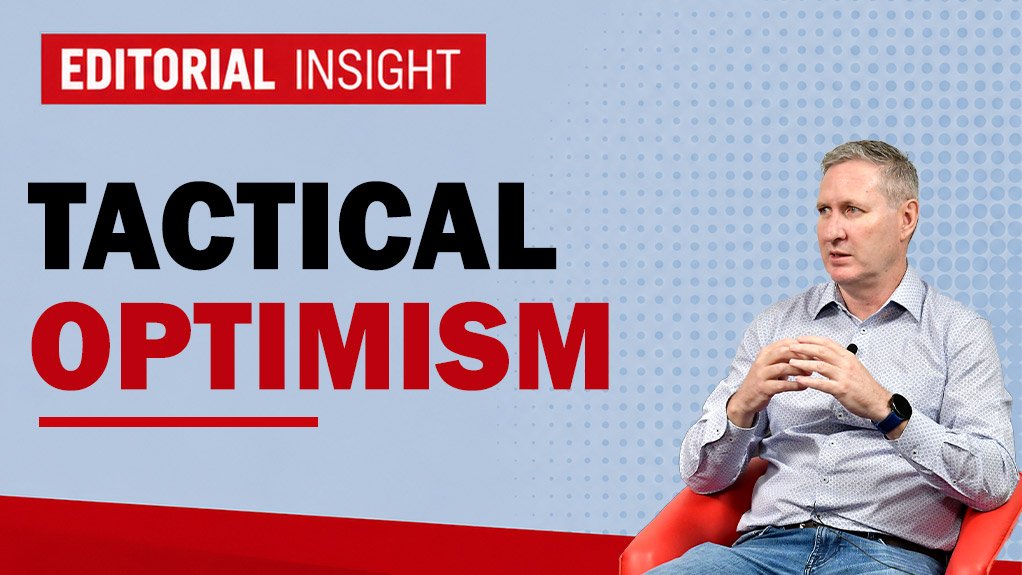
Few could dispute that Discovery CEO Adrian Gore has emerged as the most influential South African business leader of his generation. Even those, or perhaps especially those, who do everything from tying their smartwatch to their dog’s collar to get their 10 000 steps, or who make that special trip to the gym on a Friday simply to tag-in so as to earn those last 100 points needed to meet that week’s fitness goal.
Gore and Discovery are so fully integrated into South Africa’s cultural imagination that dinner-table discussions regularly turn to whether they are dictating everything from how and when we sleep to where we buy our groceries. Pontifications veer wildly from whether Vitality is akin to an Orwellian ‘Big Brother’ to facetious questions about why Discovery has not created a rewards programme to incentivise municipal officials to fix chronically broken traffic lights.
More recently, Gore’s impact has taken a more explicitly political turn. He is playing a central role in the Government-Business Partnership and was key in mobilising fellow CEOs to pledge support for unlocking the country’s potential at a time when that potential risked being blacked out by extreme and intensifying loadshedding.
The partnership has been criticised for intervening to save politicians who should have been left to fail spectacularly at the polls. But given the stakes, the silent majority is arguably grateful for the impetus the partnership is adding to efforts to tackle the country’s multiple crises.
Gore has now documented how the impact of an individual and an organisation can be multiplied in his book titled The Four Principles, which are outlined as including disciplined optimism, focused urgency, declared goals and the Pareto Tail.
Given that Gore is so readily associated with optimism, at times disparagingly so, it is worth reflecting on how he approaches the subject.
Showing optimism in times of crisis, he acknowledges, has connotations of reckless naivety. It also chafes at the prevailing attitude where being negative is associated with being savvy, rational and sophisticated.
As a principle outlined in the book, however, optimism is not a knee-jerk emotional state. Rather, it’s a “disciplined tactic” designed to overcome negative biases or a declinist narrative so that it no longer distorts one’s perception of reality.
This shift in mindset does not ignore the inevitable risks, which Gore the actuarial scientist has been trained to scope, but acknowledges that opportunities are just as inevitable.
While adopting such an attitude appears simple or even simplistic, it’s a principle that is extremely difficult to adopt. Doubly so for those of us in the media, who are expected to not only see the hole in the doughnut but to report on it relentlessly. And, in many instances, that is precisely the role that the media must play.
It is never the full story, however. And South Africans could do worse than adopt such optimism tactically when there are big problems to solve, of which there are many.
EMAIL THIS ARTICLE SAVE THIS ARTICLE ARTICLE ENQUIRY FEEDBACK
To subscribe email subscriptions@creamermedia.co.za or click here
To advertise email advertising@creamermedia.co.za or click here


