





The third edition of South Africa’s ‘Construction Book’, which lists 110 infrastructure projects that are expected to enter procurement over the coming 12 to 18 months, has been released by Infrastructure South Africa.
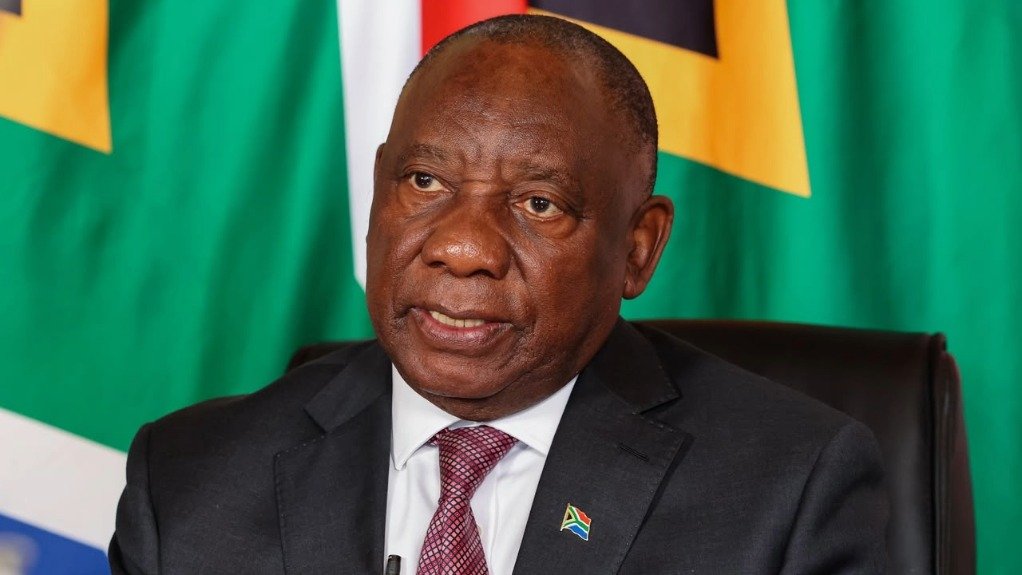
Its publication coincided with the 2026 edition of the Sustainable Infrastructure Development Symposium South Africa held in Cape Town, where President Cyril Ramaphosa announced in a virtual address that the projects had a combined value of some R395-billion.
He also confirmed that quarterly performance reports on the Construction Book would be published “to ensure that these projects move from the page onto the ground”.
Public Works and Infrastructure Minister Dean Macpherson said that while there had been some improvement in converting projects from previous books into procurement activity, it was “not yet good enough” at 58%.
“From now on, quarterly performance reporting will identify which projects are advancing, which are falling behind and where intervention is required,” Macpherson added.
He said the idea was to use the book as a market-signalling instrument and encouraged the construction industry, investors and other partners to engage with the opportunities reflected in the latest edition to help strengthen the pipeline and improve delivery.
The book includes projects in the water, energy, digital and social infrastructure sectors, as well as ten municipal infrastructure projects in eThekwini, Cape Town, Polokwane, Tshwane, Mogale City and Johannesburg.
For the first time, public-private partnership (PPP) projects have been included, comprising a national rail corridor, a project at the George Mukhari Hospital, in Gauteng, and the Beitbridge-Musina Water Transfer Scheme, in Limpopo.
Amid the growing focus of government on municipal infrastructure, this category of projects is the largest in the book by value at R112-billion and covers energy, water and sanitation, property developments, and healthcare upgrades.
Energy, which had been the dominant category in previous books as South Africa struggled to address loadshedding, remains a key feature, with 29 projects valued at a combined R86-billion.
Key projects highlighted include the Aries-Aggenys 400 kV Line, in the Northern Cape, and the Refurbishment of the Main Plant at Steenbras, in the Western Cape.
Forty-one transport projects with a total investment value of R81-billion also feature, with the majority of projects being pursued by the South African National Roads Agency together with major municipalities, alongside some Transnet rail and ports projects.
The sector includes a mix of procurement strategies ranging from PPPs to open and negotiated tenders.
Sixteen social infrastructure projects with a combined value of R52-billion are also included in the book, with the projects at the Tygerberg and Belhar Hospitals in the Western Cape listed, alongside Durban Film City, projects at the Joburg Fresh Produce Market and the Limpopo Central Hospital.
A total of 18 water projects with a combined value of R35-billion are included, including the Southern Aqueduct in KwaZulu-Natal and a desalination project being pursued by the City of Cape Town.
Digital infrastructure projects feature for the first time, with three listed with a combined value of R28-billion.
Existing and future projects are catalogued, including the South African Radio Astronomy MeerKAT project, where 60 new dishes are being built, and the first phase of the SAeX East Subsea Fibre-Optic Cable.
The book has been published following the launch of Phase 3 of the Government-Business Partnership, which included infrastructure as one of four sectors that would be prioritised in an effort to lift growth to 3% and to create one-million new jobs by 2030.
The other growth sectors are mining, agriculture and tourism, with the partnership also continuing with its previous focus on electricity, freight logistics, crime and corruption, and youth employment.
In his address, Ramaphosa lamented the fact that South Africa's level of investment remained below what was required to achieve faster and more sustained economic growth.
“Gross fixed capital formation – which measures investment in productive assets such as infrastructure, machinery, equipment and productive capacity – stood at around 14% of GDP in 2025. This is less than half of the 30% investment level envisaged in the National Development Plan for 2030,” the President said.
“We need to convert plans into prepared projects, convert prepared projects into investment, and convert investment into construction.”
EMAIL THIS ARTICLE SAVE THIS ARTICLE ARTICLE ENQUIRY FEEDBACK
To subscribe email subscriptions@creamermedia.co.za or click here
To advertise email advertising@creamermedia.co.za or click here


