





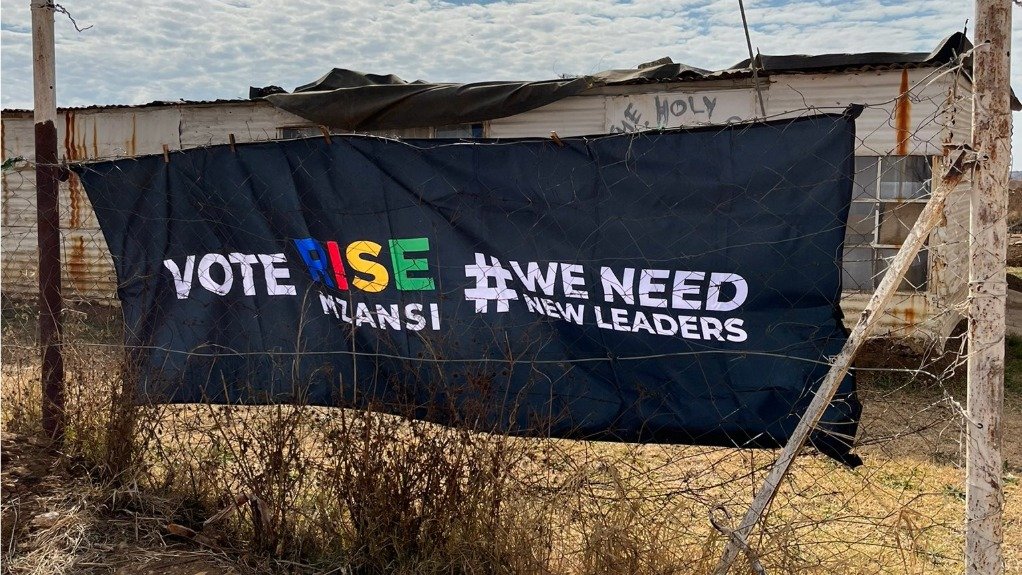
Civil society group My Vote Counts (MVC) argues that Rise Mzansi’s R30-million loan conversion highlights major flaws in the Political Party Funding Act (PPFA), saying it allows wealthy donors to obscure their identities and potentially exert undue influence.
In its latest quarterly disclosure report, the Independent Electoral Commission (IEC) notes that Rise Mzansi declared a R30-million donation. This came from an entity called "We are the People", which has apparently converted a previous loan into a donation.
MVC points out that it is the first time a loan has been converted into a donation, and that it is the first R30-million donation disclosed since President Cyril Ramaphosa raised the annual maximum donation limit from R15-million to R30-million in August 2025.
MVC argues said the primary issue is that there is no information about the actual donors under We are the People.
There is no website, no registered directors, and no formal registration on the Companies and Intellectual Property Commission (CIPC) database, MVC revealed, describing this as a loophole in the PPFA, which is meant to promote transparency.
MVC said while the PPFA uses a dual disclosure mechanism, requiring both the receiving party and the donor to submit forms indicating their identity, registration, or trust numbers, the public is frequently left in the dark about who the true donor is.
MVC intends to submit a Promotion of Access to Information Act (PAIA) application to uncover information about unidentified donors and is exploring legal avenues to make the IEC’s quarterly reports more detailed and transparent.
The IEC’s latest quarterly report reveals that political parties collectively disclosed just under R100-million in private funding.
The lion's share of disclosed private funding went to the DA, which led recent declarations with R57-million, followed by Rise Mzansi's R30-million, and ActionSA with R9.9-million. The total value of private donations above the disclosure threshold has now exceeded R1-billion.
Many of these donors represent powerful economic sectors, such as mining and finance.
Notable past declarations include Patrice Motsepe’s Botho Botho (R10-million) to the ANC, Betway billionaire Martin Moshal (R5-million) to ActionSA, and Main Street 1564 (R10-million) and Harry Oppenheimer’s daughter Mary Slack (R10-million) to the DA.
Despite the strides made under the PPFA, MVC warns that the system is far from perfect. The recent decision to double donation limits and increase the disclosure threshold increases secrecy in political funding, granting donors a greater ability to influence South African politics.
The landscape is also plagued by noncompliance, MVC says.
Most notably, the ANC failed to report two donations disclosed by their respective donors. One of these undisclosed donations, worth nearly R500 000, came from Valumax, a company that has received billions in tenders from the Gauteng Department of Human Settlements.
The MVC says for the transparency regime to work, the IEC must be adequately funded and empowered. Watchdogs have warned that a projected decrease in the IEC's budget for its Party Funding programme will severely limit its ability to investigate and enforce the law.
Ultimately, late, incomplete, or opaque disclosures deny voters the information needed to make informed democratic choices, MVC says.
It says it is involved with ongoing litigation to strengthen the PPFA, to ensure it achieves its stated objectives of absolute transparency and accountability.
EMAIL THIS ARTICLE SAVE THIS ARTICLE ARTICLE ENQUIRY FEEDBACK
To subscribe email subscriptions@creamermedia.co.za or click here
To advertise email advertising@creamermedia.co.za or click here


