





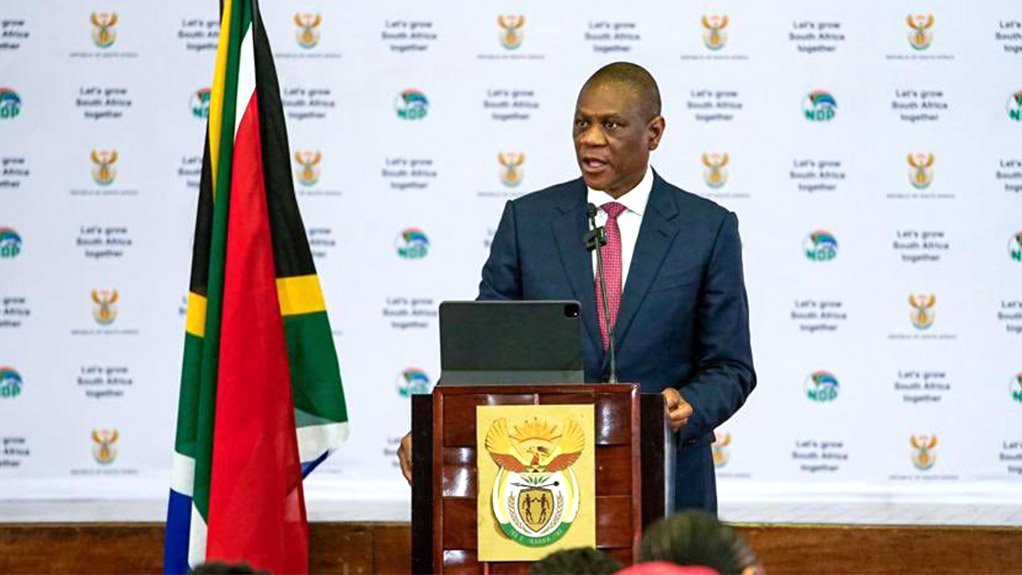
Deputy President Paul Mashatile declared on Wednesday that while South Africa celebrates its progress in overcoming apartheid, the country and the global stage now face a "new generation of challenges".
Speaking at the eighth national congress of the Federation of Unions of South Africa (Fedusa), Mashatile warned that geopolitical tensions, shifting trade policies, and a severe financial crisis at the International Labour Organisation are actively disrupting economic stability, export markets, and industrial competitiveness.
At the core of these modern challenges, he said, is the rapid ascent of AI.
He described the rise of AI, automation, and digital platforms as a double-edged sword capable of boosting productivity but also displacing human labour.
"The rise of artificial intelligence presents organised labour with a historic challenge and opportunity. Those who anticipate change and prepare workers with the skills, protections and voice needed in the digital economy will help shape the future," said Mashatile.
He warned that failing to adapt to technological changes will worsen inequality and exclusion. To counter this, Mashatile argued that trade unions must position themselves at the forefront of the digital transition, aggressively bargaining over workplace data, technological restructuring, and reskilling, while expanding representation to informal and digital platform workers.
The Deputy President balanced his forward-looking technological warnings with grim figures reflecting South Africa's current economic climate, highlighting that the national economy shrank by 0.2% in the second quarter of 2026, putting intense pressure on the mining, manufacturing, and trade sectors.
He noted the official unemployment rate, which has climbed to 33.6%, means 8.5-million South Africans are without work.
Mashatile stressed that these percentages represent human suffering, such as graduates locked out of the market and entire communities declining when local factories close.
He insisted that retrenchments should never be treated as an unavoidable side effect of corporate restructuring. Instead, he called for mandatory, good-faith engagements between government, employers, and unions before any retrenchment notices are issued.
Furthermore, he urged the Temporary Employee/Employer Relief Scheme to operate with greater speed and transparency to swiftly protect distressed companies and worker incomes.
Mashatile also addressed ongoing transformation deficits, noting that despite progressive labour laws, South Africa's labour market still mirrors historical inequalities across race, gender, and disability – particularly within senior management.
He noted that formal compliance and legislation are no longer enough, suggesting that employers actively correct unequal recruitment practices and pay disparities, while urging unions to monitor employment equity plans.
Acknowledging that relations between the government and social partners are "at times under strain" owing to slow reforms and inadequate consultations, Mashatile stated that pretending these frustrations do not exist serves no one.
He reaffirmed that driving inclusive growth and job creation remains the apex priority of the Government of National Unity.
Government is currently targeting industrial reforms to secure electricity supply, upgrade freight logistics, boost infrastructure investment, and scale up the Labour Activation Programme through expanded apprenticeships and artisan development, he ended.
EMAIL THIS ARTICLE SAVE THIS ARTICLE ARTICLE ENQUIRY FEEDBACK
To subscribe email subscriptions@creamermedia.co.za or click here
To advertise email advertising@creamermedia.co.za or click here


