





The mining industry must deepen trust with workers and host communities through sustained engagement, accountability and shared responsibility, speakers at the seventh annual Marikana Memorial Lecture said on August 18.
Hosted virtually by socioeconomic healing and development initiative the Marikana Renewal Programme and JSE-listed mining and metals group Sibanye-Stillwater, the lecture marked the fourteenth anniversary of the Marikana tragedy, in which 34 men were killed by police during a violent labour dispute and wildcat strike on August 16, 2012.
Sibanye-Stillwater CEO Dr Richard Stewart said the tragedy should be understood not only as a defining moment for the mining industry, but as a symptom of deeper fractures in South African society.
“Acknowledgement is about more than just honouring the memory of those who died. It is about acknowledging the broader role played by the mining industry and by various institutions that, over many decades, perpetuated inequality, exclusion and hardship.
“We need to acknowledge and learn transparently, speaking honestly about what was good, about what was bad, about what failed and what we take and what we learn from it. Without acknowledgement, there can be no healing,” he said.
Stewart added that Sibanye-Stillwater inherited "grief, mistrust and unfinished conversations" when it assumed responsibility for the Marikana operations in 2019 following its acquisition of Lonmin.
However, Sibanye-Stillwater has also been given an opportunity to build a different future.
He identified three interdependent pillars underpinning the company's Marikana renewal process – “honour, engage and create” – arguing that meaningful renewal must move beyond remembrance towards practical outcomes.
“Honour is not about passive remembrance. It is about trying to understand. Understand perspectives and understand lived experiences,” Stewart added.
Anglo American South Africa chairperson and Business Unity South Africa VP Nolitha Fakude similarly emphasised the human dimension of mining and the importance of trust between employers, employees and mining communities.
Reflecting on growing up in Cenyu, a small village outside Stutterheim in the Eastern Cape, she said mining had long been understood in many communities as part of everyday life, with families shaped by the migrant-labour system and the absence of fathers, brothers and sons who worked far from home.
Fakude, who was Minerals Council South Africa president when the country marked the tenth anniversary of Marikana in 2022, said the tragedy had been a watershed moment that changed the industry's understanding of its relationship with mineworkers and other stakeholders.
She also highlighted the disproportionate impact of the tragedy on women, noting that Marikana unfolded during Women's Month in August and that mothers, wives, partners, sisters and daughters continued to carry the consequences of the loss.
“In many ways, the story of Marikana is also the story of women. Women who have carried grief with dignity, who have sustained families through unimaginable hardships and women who have shown extraordinary resilience in the face of profound loss, while continuing to commit and contribute to the economy,” Fakude highlighted.
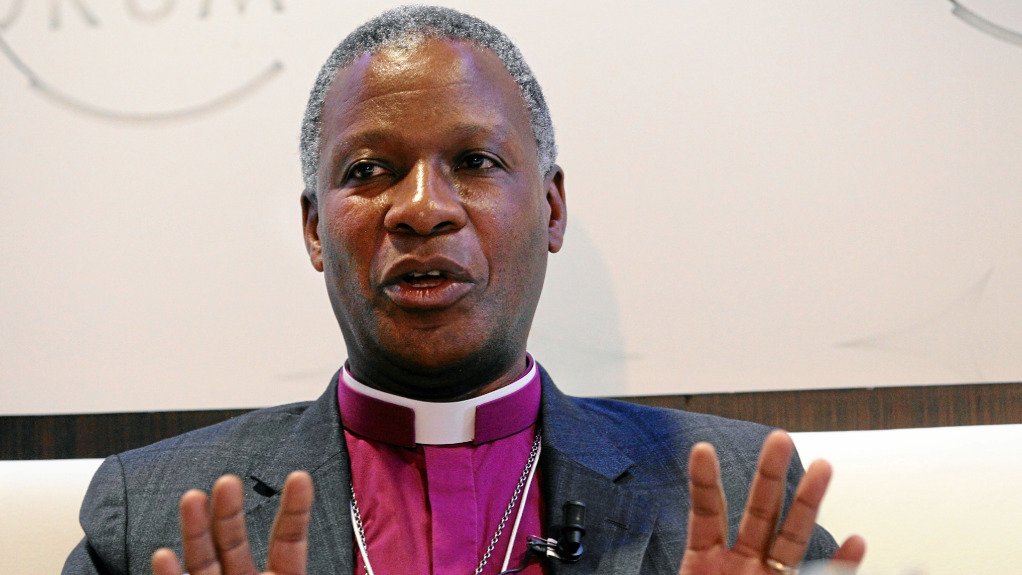
Delivering his keynote address near the end of the lecture, Anglican Archbishop of Cape Town and Marikana Renewal Programme patron Dr Thabo Makgoba said South Africa needed to continue confronting the questions raised by the Marikana tragedy, including whether enough had been done to rebuild trust and make justice visible through practical change.
“We cannot then, and we cannot now, look away. The memory of Marikana is painful for those left behind and also for the rest of the country because it asks difficult questions.
“It asks: have we done enough to ensure that suffering never happens again, have we done enough to restore dignity, have we done enough to listen to the families, to workers and to communities?
“Have we done enough to build trust where trust was broken? Have we done enough to make justice visible not only in words but in practical change?” Makgoba probed.
He described hope, trust, listening, reconciliation and responsible leadership as disciplines requiring continuous work.
Makgoba also acknowledged progress in the years since the tragedy, including people who had once stood apart beginning to engage with one another, but cautioned that progress should not become complacency.
He said many families continued to carry emotional and economic burdens, while inequality remained a daily reality for communities and workers who continued to question whether their dignity was fully recognised.
Makgoba concluded by calling for the next phase of the Marikana renewal journey to be more practical, honest and people-centred, arguing that the tragedy should ultimately be remembered not only for the lives lost, but for how South Africans responded to the challenge of rebuilding trust.
EMAIL THIS ARTICLE SAVE THIS ARTICLE ARTICLE ENQUIRY FEEDBACK
To subscribe email subscriptions@creamermedia.co.za or click here
To advertise email advertising@creamermedia.co.za or click here


