





While many of South Africa’s water challenges could be fixed by resolving the high level of losses in the water system, risks remain nonetheless, as South Africa is a water-scarce country, and climate change and growth, besides others, will continue to impact supply.
Raw water supply and demand in South Africa are roughly in sync, but there continue to be localised water supply deficits, delegates heard at a Talbot seminar discussing South Africa’s water landscape under the theme ‘Strengthening water security and business continuity for industry and mining’.
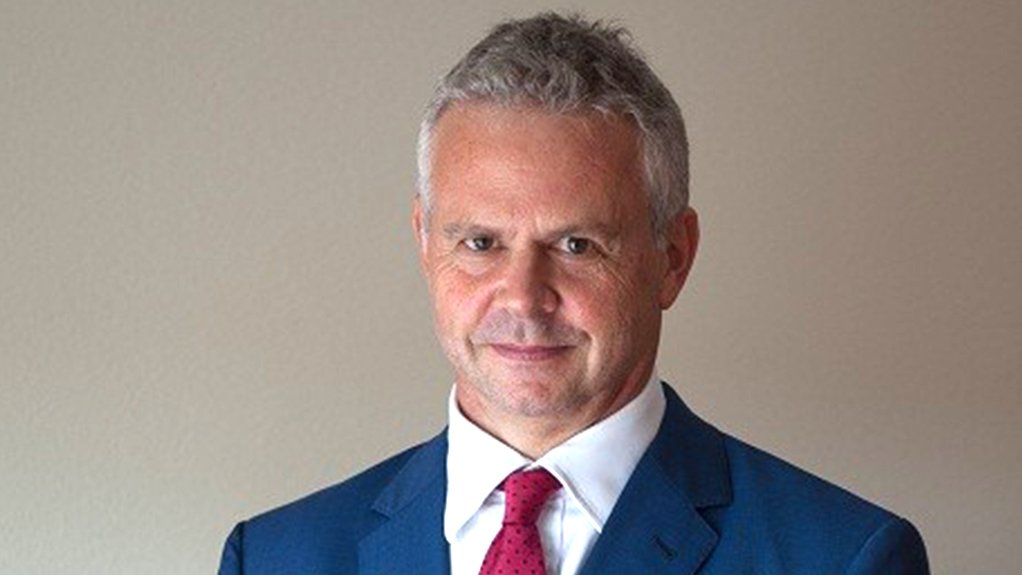
“Water is a very local function. There is no national water grid. We have over 1 000 different water systems, most of which are not interconnected in South Africa, and the reasons why you might have water shortages in one area differ very much from why you might have water shortages in another area,” said Department of Water and Sanitation (DWS) director-general Dr Sean Phillips.
Water deficits in Nelson Mandela Bay, from 2015 to 2023, and in Cape Town, which faced a Day Zero scenario from 2016 to 2018, were caused by droughts, while the challenges with water supply and the availability of water in Gauteng and eThekwini had nothing to do with drought, he explained.
Gauteng is currently facing a deficit owing to increased demand, high levels of leaks and a lack of municipal investment in water and sanitation infrastructure, with nonrevenue water at unsustainable levels of 47%.
“One could say that there is a shortage of water for Gauteng because the municipalities are asking for more water than we allow Rand Water to supply them through its abstraction from the Vaal river system. But the other side of that coin is the very high level of losses in the municipal distribution systems.”
Similarly, the water deficit in eThekwini are caused by a delay in the uMkhomazi water project, rapid increase in demand and high leaks, as well as lack of municipal investment in water and sanitation infrastructure, leading to nonrevenue water of 60%.
He questioned the options of building more dams just to have half the water lost through leaks in the municipal distribution systems, or ensuring water security by reducing the leaks in the water distribution systems.
This is one of the potential risks to South Africa’s water security in the future, should municipal water distribution systems continue to deteriorate and the percentage of losses in those systems continue to increase.
In addition, the average daily consumption of water per capita in South Africa is 218 litres, with Gauteng using more than 250 litres, well above the international average of 173 litres.
With South Africa being one of the 30 most water-scarce countries in the world, this is not sustainable.
“We have been singing this song for decades, but unfortunately, it is not getting better. In fact, it is probably getting worse. One of the reasons why it is probably getting worse is because of the high level of leaks in the municipal distribution systems,” Phillips continued.
“We are in a serious crisis. If you look at the most recent results by the Blue, Green and No Drop reports, 107 out of 144 water services authorities rated critical or poor in terms of the performance of their drinking water or wastewater systems. That means that 74% of municipalities are in a critical or poor state of performance with regard to water services.”
In addition to this, water availability could deteriorate as supply contracts and demand escalates owing to economic growth, population growth, urbanisation, degradation of wetlands and the impacts of climate change.
“There are many risks on the horizon. We all know about the risks brought about by climate change, and we are not sure the extent to which that is going to have an impact. It could result in much more intense droughts in future, as well as much more intense flooding, and the intense droughts in particular could have severe implications for water security in South Africa,” Phillips commented, adding that there were many other risks that were difficult to quantify amid uncertainty of whether they would materialise.
“If we are going to ensure water security in future, we need to make sure that we address all of these issues. If we do not address all of them, then we could well have problems in terms of water security. There is no single solution.”
He pointed to the need to build dams to exploit the remaining affordable and sustainable opportunities for capturing surface water, diversifying the water mix and implementing more effective water conservation and demand management, particularly in domestic and general industrial use and through reducing physical losses in municipal distribution systems.
Diversifying South Africa’s water resource mix is also critical for water security as potential to develop its surface water resources is limited with the country already harnessing about 75% of sustainably usable surface water resources.
This can be done through the increase of the sustainable use of groundwater, the desalination of sea water, return flows from treated wastewater systems and water reuse and the reuse of other poor quality water such as acid mine drainage, besides others, many of which are municipal functions.
“Municipal water and sanitation services are deteriorating, so it is a risk that, on top of them struggling to implement quality, reliable water services, currently, we also expect them to be leading in terms of diversifying the water mix.”
“It is a challenge, and we hope that maybe there might be potential for the new National Water Resource Infrastructure Agency and or the water boards to get involved in some way through agreements with municipalities.”
According to Phillips, the main cause of the water crisis was an inappropriate delivery model, characterised by a lack of ring-fencing revenue from the sale of water, with municipalities allocating the revenue to other functions, and a lack of single-point key accountability for the water function, weakening incentives for financially sustainable management.
This has led to insufficient funding for infrastructure maintenance and investment, as well as for the hiring of skilled technical staff; inadequate water treatment, storage, pumping and distribution capacity; underdeveloped wastewater infrastructure; poor asset condition and rising leaks; slow leak repairs owing to being under-resourced and inefficient maintenance teams; a lack of focus on improving metering, billing and revenue collection; a lack of attention to address vandalism, theft and sabotage of water assets; and weak water conservation and demand management.
Ring-fencing of revenue from the sale of water to be used for all the water management functions, through a transition to a utilities model, will be critical to helping rectify many of the challenges.
The DWS is continuing its reforms, including through the Water Services Amendment Bill - currently before Parliament -which aims to steer municipalities to a utilities model, as well as clarify the roles of water service authorities and water service providers and introduce operating licence requirements for water service providers, besides others.
The department is also in discussions with National Treasury about possible amendments to the Municipal Finance Management Act, which would cement ring-fencing as a requirement.
National Treasury is also implementing the Metropolitan Trading Services Reform Programme, which offers strong financial incentives to metropolitan municipalities to ring-fence revenue from the sale of water and to create properly ring-fenced entities.
Blended financing mechanisms and financial structuring support are also being offered to municipalities to assist them attracting sector investment.
In addition, the National Water Crisis Committee, which is chaired by President Cyril Ramaphosa, is also focused on leading the delivery of the National Water Action Plan which is centred on many of the reforms the department is implementing.
EMAIL THIS ARTICLE SAVE THIS ARTICLE ARTICLE ENQUIRY FEEDBACK
To subscribe email subscriptions@creamermedia.co.za or click here
To advertise email advertising@creamermedia.co.za or click here


