





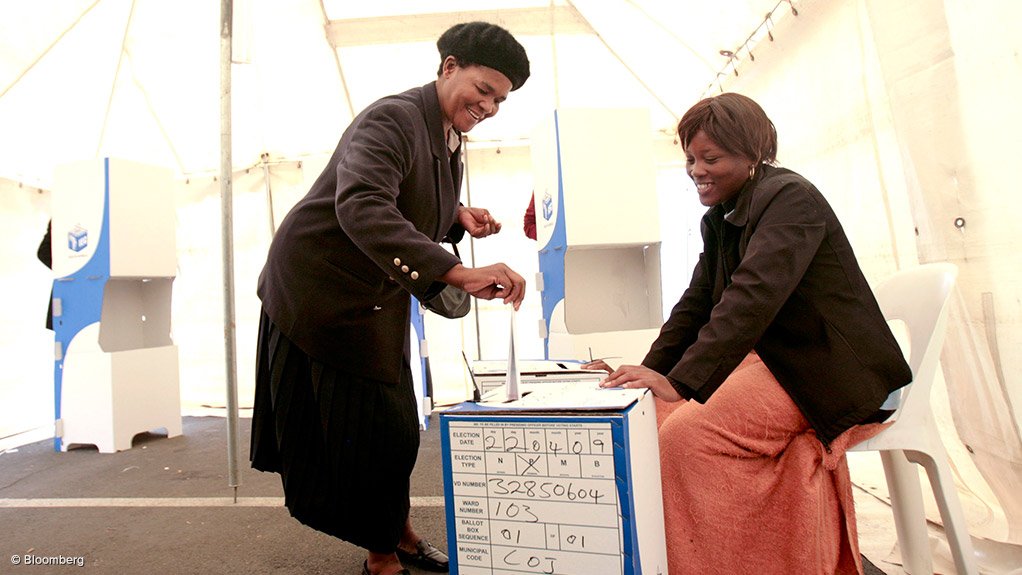
We have grown ever so accustomed to a political theatre staged once every five years, a psychopatriachal spectacle that priorities campaign spending over the lives of marginalised communities. It has become a season in which politicians repackage old ideas as new solutions. Meanwhile, local government is crumbling, and those with the least are paying the highest price.
Party manifestos still read like lists of promises that go unmet, even by the standards of the parties that wrote them. They offer few clear, tangible plans to change the material conditions of the communities they claim to serve.
True to form, the campaign season has been about blame-shifting and mudslinging rather than solutions to the service delivery crises undermining communities’ rights to clean water and a healthy environment. The question that matters the most (how a party will reverse maladministration and corruption at the root of municipal failure) go largely unanswered.
The challenges are well documented. From unmaintained infrastructure that deepens inequality and poverty, gross financial mismanagement and outright corruption aided by cadre deployment. In too many places, municipalities have become a crime scene.
The evidence is everywhere. Decaying infrastructure, uncollected waste, and contaminated water that makes people sick. Section 24 of the constitution guarantees everyone the right to an environment that is not harmful to their health and wellbeing. When taps run dry or water arrives unsafe, that right is being violated in real time, by the sphere of government closest to the people.
We can no longer afford to vote on party lines and loyalty alone; the choice is between having services and accepting the continued decay of local government. The people elected in this vote are the ones we will meet at ward meetings and call when the sewer bursts.
Participatory democracy enables communities to develop their own manifestos with clear timelines and accountability mechanisms for those who lead them. So how, practically, do you test a candidate against that?
Start with your own list. Before you read a manifesto, write down the three to five problems that shape daily life in your street or ward: the pipe that has leaked for months, the dumping site behind the school, the drain that floods every rainy season. Do it with your neighbours if you can. That list is your community's manifesto, and every candidate should be measured against it.
Then put each candidate through five tests.
The specificity test: Does the candidate name your ward's problems, or speak only in slogans? "We will improve service delivery" is not a plan. "We will fix the sewer pump station on Main Road within the first year" is something you can check.
The money test: Ask where the money will come from. A promise that is not within the municipal budget, or the Integrated Development Plan (the municipality's five-year plan) is a wish. Ask whether the candidate has read the current plan and what it says about your ward.
The record test: If the candidate has served before, ask what they did: how many ward meetings they held, which complaints they escalated, what changed. If they are new, ask what they have done for the community before asking for a vote. The Auditor-General's municipal audit reports are public; read them alongside the promises.
The systems test: A new face in an old system can produce the same failures. Ask what the candidate would change about how the municipality works (the skills of its officials, how contracts are awarded, how complaints are tracked), not only who sits in the council chamber.
The accountability test: Ask the candidate to commit publicly to timelines on your list, and to say how they will report back once elected. A candidate unwilling to make that commitment before the vote is unlikely to honour it after.
The decision of whom to vote for rests with each individual voter. What matters is that every voter makes an informed choice, with their community’s needs and expectations in mind, and continues to hold elected leaders accountable long after the ballots have been counted.
Written by Thami Nkosi, Activist Support and Training Coordinator, Centre for Environmental Rights
EMAIL THIS ARTICLE SAVE THIS ARTICLE ARTICLE ENQUIRY FEEDBACK
To subscribe email subscriptions@creamermedia.co.za or click here
To advertise email advertising@creamermedia.co.za or click here


