





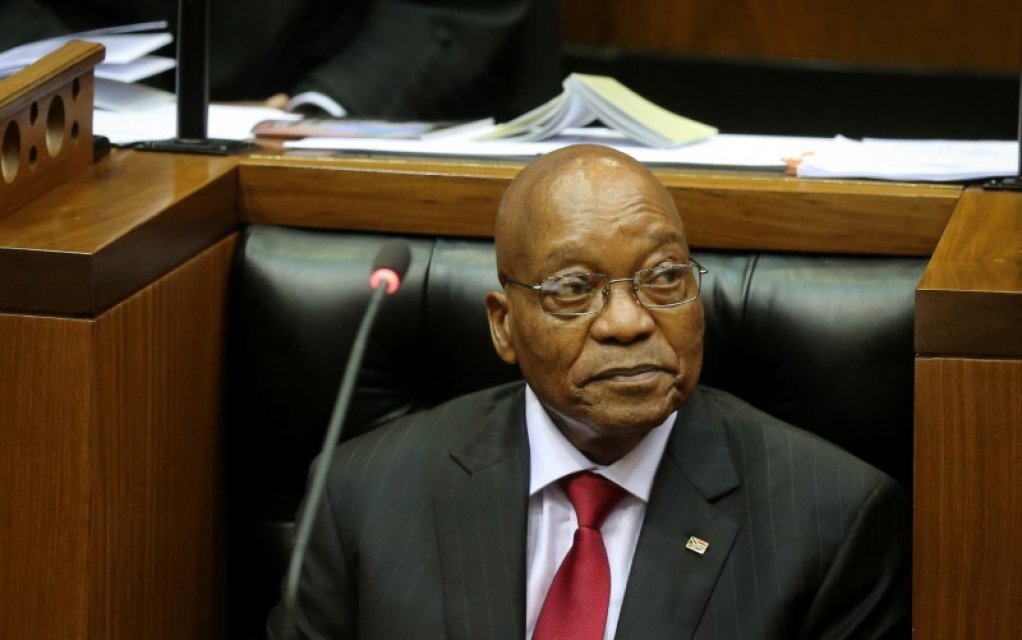
Judge Piet Koen has dismissed the six applications launched by Jacob Zuma against the legitimacy of his corruption prosecution - in a decision that casts strong doubt on the former president's hopes of avoiding trial through court action.
In a 61-page ruling delivered in the Pietermaritzburg High Court on Wednesday, Koen reiterated what the National Prosecuting Authority (NPA) had previously argued: that Zuma did not have the legal right to appeal the dismissal of his "special plea" challenge to prosecutor Billy Downer's title to prosecute him now.
After citing multiple court rulings, Koen said it was clear that such an appeal could happen only if and when Zuma was convicted of the Arms Deal corruption he stands accused of.
"On the peculiar facts relating to this matter", Koen said, "an appeal against the dismissal of the special plea, if successful, would not lead to a 'just and prompt resolution of the real issues between the parties' before this court, in this instance Mr Zuma's guilt or innocence".
"In the absence of a prompt resolution of that real issue between the parties, there is no scope for an appeal prior to conviction, based on s 17(1)(c) of the Superior Courts Act."
He added that, even if it was heard at this stage, Zuma's appeal had "no prospects of success".
The judge also explained in painstaking detail how Zuma's various applications, which the state contended were clearly aimed at delaying his trial, were either legally unfounded or "irrelevant" or based on "frivolous" or ill-founded irregularity claims.
In the result, he stated that: "The interests of justice require that the matter now proceeds to trial in respect of the not guilty pleas of the two accused [Zuma and French arms company Thales]."
"The criminal trial shall proceed during the second and third terms of the 2022 court calendar of this court, where it has been set down, as previously agreed by all the parties, commencing at 10h00 on 11 April 2022, being the date to which the trial was adjourned on 26 October 2021," he said.
Moments after the judgment was delivered and without actually having read it, Zuma Foundation spokesperson Mzwanele Manyi slammed the decision as a "travesty of justice" and strongly suggested that the former president would seek to appeal it.
Despite Koen finding that none of the 14 grounds raised by Zuma as a basis for Downer being removed as his prosecutor were valid - a decision that the former president had tried and failed to appeal - Manyi maintained that the only way the case against Zuma would proceed was if the NPA replaced Downer.
The NPA's refusal to do so, he insisted, would result in Zuma's trial being delayed.
Manyi's comments appear to disregard the fact that Zuma had contended that both Downer and the entire NPA all lacked the title to prosecute him and he should therefore be acquitted.
In any event, Koen's ruling made it apparent that Zuma had little to no prospect of getting Downer removed as his prosecutor through a special plea application.
He explained why Zuma's efforts to challenge Downer's "title" to prosecute him was legally unfounded.
This, he said, was because previous cases had made it clear that accusations of bias made against a state advocate, as Zuma had made against Downer, were not a basis to remove the prosecutor.
Koen also hit back at Zuma's claim that he had committed an irregularity by fixing dates for the NPA to file a response to his application to appeal the judge's dismissal of his "special plea" application - something which the judge made clear he had not done.
Instead, Koen said, he had set dates for the NPA to file a reply to Zuma's application to lead further evidence about the various abuses he claimed to have suffered at the hands of the state.
Zuma's complaint of an "irregularity" was therefore "factually flawed, unfounded, and possibly opportunistic", he said.
Koen also dismissed Zuma's application to lead further evidence, on the basis that he had failed to demonstrate any prejudice that he had suffered as a result of the case being decided on the sworn statements filed by himself and the NPA.
Leaked
While Zuma also applied to lead further evidence in his appeal, largely to do with his complaints that Downer had "leaked" publicly available court documents to News24, Koen said none of this evidence related to whether Downer had the "title" to prosecute him - the key issue that would need to be decided in an appeal.
He added that the evidence that Zuma wanted to lead about his laying of criminal charges against Downer in relation to alleged media leaks "is not a fact which could reasonably lead to a different verdict or sentence in Mr Zuma's criminal trial, and would not lead to a different outcome in relation to his special plea under s 106(1)(h), as it is irrelevant to both".
The judge was equally unimpressed with Zuma's contention that Downer should not be allowed to file any court documents in response to his various applications - as he was seeking the prosecutor's removal on the basis that he was biased and had committed various acts of alleged misconduct against him.
As such, Zuma argued, Downer had a "conflict of interest". Koen said there was "no substance" to this contention.
"Mr Downer had deposed to the state's main answering affidavit in response to the special plea, without any objection from Mr Zuma, and correctly so, because Mr Downer was the person best equipped to answer the allegations against him," Koen said.
"In the present proceedings, Mr Downer has no conflict of interest with the state; on the contrary, they make common cause in opposing the grant of the application for leave to appeal and the other applications."
The judge again reiterated what he had stated when he first dismissed Zuma's special plea application: "Any infringement of fair trial rights, which is the true basis of Mr Zuma's complaints, is best determined when the evidence in the criminal trial has been heard, digested in the light of conflicting evidence, and the credibility to be attached to the evidence has been properly assessed.
"Whether an accused will ultimately receive a fair trial, is a question to be answered on all the evidence. It is probably most appropriately decided, although this is solely at the discretion of the trial court, at the end of the trial..."
In other words, Zuma should seek to prove his claims of prosecutorial abuses, not in the court of public opinion, but in his actual trial.
EMAIL THIS ARTICLE SAVE THIS ARTICLE FEEDBACK
To subscribe email subscriptions@creamermedia.co.za or click here
To advertise email advertising@creamermedia.co.za or click here


