





The world needs to contend with a new, “fragile”, reality – while the world economy and trade continue to grow, debt levels and geopolitical stresses are undeniable and risks are increasing, which could lead to a crisis.
For South Africa, this requires a situational awareness to understand these new circumstances and a pragmatic energy to identify potential growth opportunities and capitalise on them.
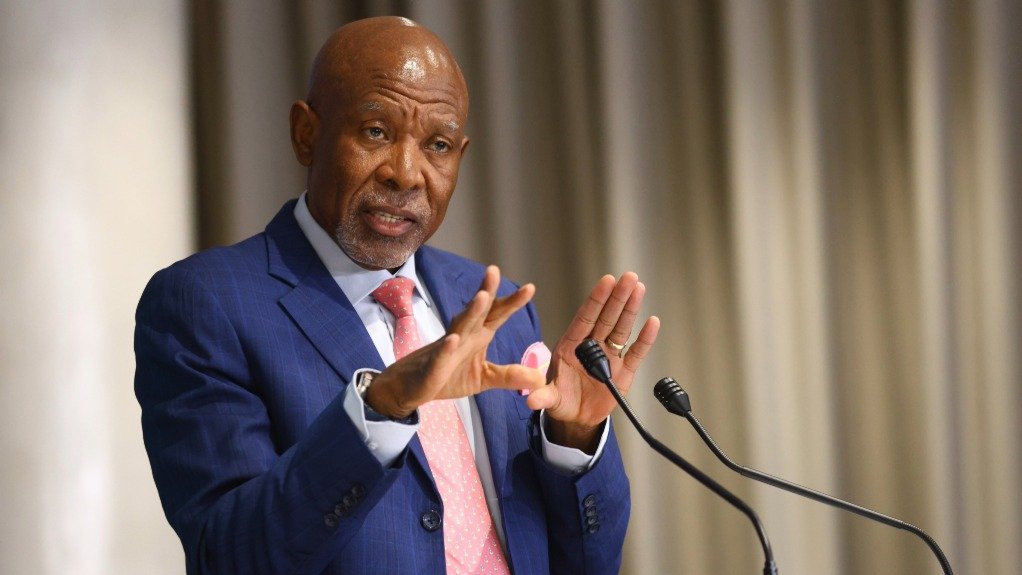
This was highlighted by South African Reserve Bank governor Lesetja Kganyago, delivering the keynote address at research institution the Mapungubwe Institute for Strategic Reflection's third Forum on Africa & Geopolitics, held on September 28, in Sandton.
He pointed out that South Africa's young population and ample natural resources would benefit the domestic economy, despite the impact of global geopolitical risks.
He stated that South Africa’s macroeconomic prospects were healthier than in preceding years.
“After many years of underperformance, with high and rising debt, plus relatively high inflation, we are starting to look better, especially in comparative perspective.”
On monetary policy, it had been about six months since the country last hit its inflation target, which was not ideal, however, this was better than the 67 months since the US last hit its target, Kganyago cited, noting that various other major economies had also not met their inflation targets for prolonged periods.
“Local inflation has been pushed away from target by the energy shock from the war, but we were at target when the shock hit,” he highlighted, adding that the country had considerable experience in dealing with supply shocks.
“We can all agree that they confront us with unpleasant trade-offs, with growth down and inflation up. Still, we have a strategy we believe in, which is to take a forward-looking approach and ensure policy is tight enough so that temporary shocks do not [become persistent],” Kganyago explained.
He said the expectation was for inflation to slow significantly next year. The SARB had raised its key repo policy rate by 25 basis points to 7.25% in September to steer headline inflation back toward its 3% target, with the expectation for this to occur towards the end of 2027.
With regard to fiscal policy, Kganyago said the country finally seemed to have been recovering from the “outer year syndrome”.
“Sufferers of this disease promise that things will get better at the end of the forecast period, but with each forecast, the promise shifts later. Now, there is increasing conviction that South Africa's debt has peaked already, and that the debt-to-GDP ratio will improve over the next few years,” he explained.
The governor said South Africa’s better macro prospects had been important in shielding the country from global bond repricing this year.
“Because our country’s premium has fallen, our longer-term borrowing costs are not rising in line with rich countries. In fact, yields have been quite continuous this year at around 9% at the longer end of year. This is roughly where we were at the end of 2025, and well below end-year levels. . . We are also seeing the rand is holding up well with unusual productivity,” he emphasised.
Notwithstanding these gains, South Africa remained an outlier for growth, Kganyago warned.
“Everyone in the world has been affected by the Iran war shock, but not many economies contracted in the second quarter. If anything, it is puzzling that world growth is not doing worse, considering all the shocks being thrown at the global economy. For South Africa, however, the fundamental problem is a weak underlying growth trend, so it does not take much to get us below zero,” he averred.
Kganyago pointed out that the country’s growth had averaged about 0.6% a year for the past decade. While there was optimism around potential growth being a bit higher now, at roughly double that, this still represented low levels, he cautioned.
He pointed out that the country had a reform agenda with good priorities; however, progress was gradual and there were strong headwinds to contend with.
“For example, South Africans are very happy that loadshedding has stopped. But since that happened, they have had to contend with plenty of bad news, such as the Iran war and rising costs. For instance, even if electricity is now reliably available, it still costs double what it did in 2020. The bad news offsets the good news. If we are going to get back to growth, we will need more good news than bad,” Kganyago quipped.
The forum, held under the theme: “Imagining the World in 2040”, explored possible geopolitical pathways over the next 15 years, given that geopolitical volatility has become a defining feature of current times, and is contributing to a global polycrisis.
Speakers described a polycrisis, with geopolitical tension, climate change, economic fragmentation, financial inequality, technological disruption, organised crime and weakening multilateral institutions.
Some of the suggestions proffered included reforming global financial governance, strengthening African agency and sovereignty, developing responsible and locally relevant AI, improving security policy and building reliable infrastructure, skills and productive capacity.
EMAIL THIS ARTICLE SAVE THIS ARTICLE ARTICLE ENQUIRY FEEDBACK
To subscribe email subscriptions@creamermedia.co.za or click here
To advertise email advertising@creamermedia.co.za or click here


