





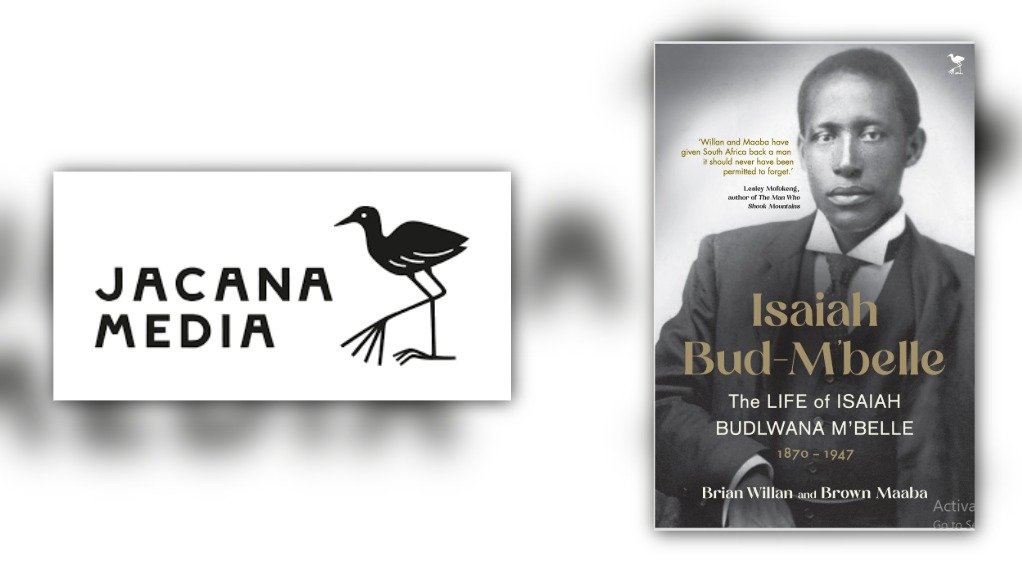

Isaiah Bud-M’belle: The Life of Isaiah Budlwana M’belle, 1870–1947
Chapter 3: War and its aftermath 1899 – 1903
Page 52 -59
The second project which preoccupied Bud-M’belle at this time was researching and writing the book which the Lovedale Press would publish as Kafir Scholar’s Companion in December 1903.29 It arose out of his deep knowledge of and interest in his language. This was still generally referred to as ‘Kafir’, or ‘Caffre’, a term which, when applied to the language rather than people, did not have the offensive connotations it acquired subsequently. Until the middle of the nineteenth century it was taken to mean the language spoken, with some dialectical variation, by Africans of Nguni origin living in the coastal belt between the eastern Cape and the border with Portuguese East Africa. This would have encompassed the language spoken by Bud-M’belle’s ancestors when they lived around the Tukela River in present-day KwaZulu-Natal.
In the 1850s, however, American missionaries in Natal and Zululand had taken the view that the language spoken in the areas in which they operated was sufficiently distinct from the ‘Kafir’ spoken in the eastern Cape to require a separate translation of the Bible. This opened up a divide which, over time, saw isiZulu and isiXhosa develop their own distinct identities. There were many people, however, who believed that this was a mistake, that there were no significant differences between the two languages and that it would have been perfectly possible to develop a single written standard. Bud-M’belle, a native speaker of a Mfengu dialect which had much in common with isiZulu, would have fallen into this camp. He favoured a broad definition of the language but was forced – in Kafir Scholar’s Companion – to recognise the reality of the divide by distinguishing between ‘Zulu’ and ‘Kafir proper’, once referring to ‘Zulu’ as a ‘language’ rather than a dialect. It was only later that the term ‘Xhosa’ came to replace ‘Kafir’ in common usage among whites.
In Kafir Scholar’s Companion Bud-M’belle hoped to contribute to the preservation and development of the language, to apply the lessons he had learned from his practical experiences as a court interpreter, and to share what he knew with other people. The eighteen months he spent with the Eastern Districts Court, where isiXhosa was the predominant African language spoken, perhaps provided an immediate stimulus. He wished to make the case that isiXhosa should be taken seriously as a language, and its merits recognised. ‘Practically speaking,’ he wrote in the introduction to the book, ‘it is the knowledge of ourselves and our surroundings which have been so neglected by us in the past. If it will lead any of his readers to give more thought or attention to the wonderful storehouse of information which await their research, he shall feel that he had done something, however insignificant, to induce them to follow the history of the land of his birth, and the study of the races which make up the total of our mixed and varied population.’
Bud-M’belle drew upon several strands of knowledge and scholarship in compiling his book. IsiXhosa had deep roots, brought to the eastern Cape centuries ago by migrants from the north, but it was only in the early nineteenth century that the process of reducing it to writing began. Missionaries and philologists embarked upon this task, compiling grammars and dictionaries, and then translating the Bible and other religious literature, relying upon the early Xhosa converts to Christianity for the expert knowledge they needed. By the middle of the nineteenth century, literate Africans were starting to write about their own history and traditions, keen to preserve these memories in the face of the changes brought about by the spread of Christianity and the increased use of European languages, especially English.
Periodical publications sponsored by the missionary societies provided the initial outlet for these writings, enabling writers like Tiyo Soga, Elijah Makiwane and the poet Jonas Ntsiko to have their work published. Then came Imvo Zabantsundu, founded in 1884 as an independent weekly newspaper; it was bilingual (English and isiXhosa) but the greater part was in isiXhosa, and it soon built up a substantial circulation. While supportive of the Christian message it was not constrained by the priorities of the missionary societies, and it opened up many new opportunities for its writers and contributors. So Imvo enabled isiXhosa to flourish as a literary language, an accomplishment that Bud-M’belle recognised in dedicating the book to John Tengo Jabavu, Imvo’s editor. He commended Jabavu’s contribution as ‘the pioneer in the publication of South African Native newspapers, the lay member of the present (1903) board of revisors of the Kafir Bible, and who for over a quarter of a century has rendered great service to our language’. This was the tradition to which Bud-M’belle now wished to make his own contribution.
Kafir Scholar’s Companion is a miscellany. The book begins with short chapters on isiXhosa literature and the history of the black press, providing context and background for the word lists that follow, which make up the bulk of the book. These are organised into chapters under the headings of divisions of time (days, weeks, months, seasons, etc), borrowed words (from English and Dutch), miscellaneous words, idioms and syllabic words, and names of trees. There are also chapters listing proverbial expressions with English translations, ‘historical events known amongst natives’ and a short chapter on versification in isiXhosa.
Bud-M’belle drew not only upon published dictionaries, works of grammar and other published sources in compiling his book, but upon his own personal knowledge and experience. The balance between the two varied from chapter to chapter. Setting out lists of words borrowed by isiXhosa from English and Dutch, for example, was not something that white linguists usually concerned themselves with, preferring isiXhosa in what they saw as its purer form, i.e. before it was influenced by the European languages. Bud-M’belle, by contrast, was fascinated by these borrowings and would have often encountered them in the courtroom. And in his mind, Kafir Scholar’s Companion was a handbook for practitioners of the language, not an academic treatise.
Likewise, where he sets out 219 Xhosa proverbs with English translations, Bud-M’belle drew upon previous published compilations but supplemented them with his personal knowledge and information. For this chapter he was also happy to acknowledge the help of Brownlee J. Ross, a Free Church of Scotland missionary, and a fluent isiXhosa speaker, who ‘kindly revised some of the “Proverbial and other Expressions”’.
The last thirty pages of the book are devoted to an annotated list of publications ‘in which references are made to the Native Races South of the Zambezi’. He begins with W. ten Rhyne’s Account of Cape of Good Hope and Hottentots, published in 1703, and ends with Dawn on the Dark Continent; or Africa and Its Missions (1903), by the Rev. James Stewart, the former principal of Lovedale – although he does anticipate the report of the South African Native Affairs Commission, which he assumed would be published in 1904. Most of the titles listed came with his own annotations, in which he drew attention to what he thought was most important or interesting about them. Often, he would note where portraits or photographs of African chiefs or other notable personalities were to be found.
The history of the Bhele, and the Mfengu more generally, features on several occasions. In the entry for John Bird’s The Annals of Natal, 1495 1845 (1888), for example, he quotes a substantial passage about the history of the Bhele and their chiefs, including the text that explains where the Bud-M’belles, and other Bhele families, fit into the picture.
There are personal asides too. Sometimes these take the form of opinions expressed, as in the entry for Lovedale: Past and Present (1887), a biographical register of the college’s alumni. Other ‘Native Training Schools’, he suggests, should follow this example and publish similar volumes, as it would then be ‘an easy matter to refute the thousand and one lies which are often heard about the mischief or crimes attributed to the “school” or “educated” natives’; while Francis J. Peregrino, the author of A Short History of the Native Tribes of South Africa, Their Manners and Customs (1900), would not have conveyed misleading opinions if he had taken the trouble to look at some of the books listed in Kafir Scholar’s Companion.
Elsewhere, Bud-M’belle does not hesitate to criticise his own people when he disapproves of their actions: his note on the book he calls A History of the Ethiopian Movement in South Africa, ‘in French’, published in 1903, says it ‘describes the denominational somersaults now unfortunately taking place amongst some of the author’s emotional poor countrymen’. Here is the voice of a man who never wavered from his loyalty to the Methodist Church and consistently opposed any form of black separatism. Asides also take the form of anecdotes. His entry for Day-Dawn in Dark Places (1883), by the Rev. John Mackenzie, reminded him of the time, ‘shortly before the death of the former veteran missionary [1899], the writer had the good fortune to be a listener at an interview between Rev. and Mrs John Mackenzie and Chief Bathoen and his Chieftainess … at Dr Mackenzie’s house in Kimberley’. Dr Mackenzie, son of the famous missionary, was Solomon Plaatje’s medical doctor and most likely Bud-M’belle’s too.
The Lovedale Press probably did not have very high expectations of sales of Kafir Scholar’s Companion, and Bud-M’belle had to find £80 himself to pay for its first printing of 1,000 copies. But it seems to have made a promising start, it was advertised regularly in Imvo, and at 3s 6d a copy, including postage, was quite reasonably priced. Congratulations and commendations flowed in from a number of friends and colleagues. One letter was from a former Healdtown classmate, the Rev. Elias D. Kumalo, now stationed in Lourenço Marques in Mozambique, who wrote to say, ‘I feel very proud to know that you have made a successful attempt by editing your Kaffir Scholars Companion, etc.’
The initial reviews that appeared were favourable, recognising that the book made an important contribution to the Xhosa language and its practical application. ‘Y’ in the Christian Express considered it a pioneer in ‘native literature, being a work that will greatly assist the intelligent study of Kafir’, and commended Bud-M’belle for the ‘valuable suggestion that all existing books in Kafir should be collected into one place so as to form the nucleus of a reference library upon Kafir literature’.
A second review in the Christian Express extended a ‘hearty welcome to this book’ and thought it would enable Africans to counteract what the reviewer considered to be the regrettable inclination to treat their own language with ‘scanty respect’ once they had learnt English. ‘There is a tendency among those who come into contact with Europeans to use their own language without due regard to correctness of idiom or nicety of expression.’ This book, the reviewer thought, would provide the means to remedy this. Mr Bud-M’belle ‘has called attention to the language itself as a language, and we hope that those who speak it may be led to bestow more pains upon their mother tongue, and to draw out its various powers’.
Some Zulu students at Lovedale objected publicly to Bud-M’belle’s rendering of the meaning of the word ‘Zulu’ as ‘vagabond’, but for the most part his book was seen as a valuable contribution and welcomed as the first book of its kind. A further review in Imvo in isiXhosa linked the achievement of the book to wider issues of education, particularly the demand for higher education. Bud-M’belle had set an example to them all, the reviewer thought, and deserved every encouragement. All the knowledge of Europe, America, Asia and Australia was of no value, the reviewer added, if we know nothing of Africa and its people. We should rise above our petty quarrels and disagreements, celebrate Bud-M’belle’s achievement, and learn about ourselves and our language from what he has written.
Not everybody was impressed, however, and there was strong criticism from George Tyamzashe, a journalist and former editor of Izwi Labantu. He was unhappy about the tone of a speech Bud-M’belle had made at a meeting of the Mfengu community in Kimberley, and he wrote to Imvo to make his views known. Bud-M’belle had praised the contribution of the Mfengu as pioneers in South Africa, but in doing so Tyamzashe thought he had showed a lack of respect to the Xhosa and failed to recognise their contribution. In making his point he also criticised Kafir Scholar’s Companion, accusing Bud-M’belle of rushing it into print in order to further the cause of the Mfengu, with the result that it contained many mistakes – though he did not specify what these were. Why, he asked, did Bud-M’belle rely upon William Alexander at Lovedale, a white man, to check the proofs rather than someone like Aaron Nazo, a well-known writer and linguist who was at that time a court interpreter in Port Elizabeth?
Bud-M’belle’s reply was that it was inevitable, in the first edition of a book of this kind, that there would be some mistakes, which was why he stated in the preface that ‘any indications of errors, whether as to omission or commission, will be thankfully received by me’. As to Aaron Nazo, he said that he had in fact showed him proofs of the book. Nazo’s` response had been to commend him for having ‘acquitted himself of his task right royally’, adding that he would ‘earn the thanks of their people, if they will emulate the example set by one of themselves who, contending against heavy odds, has managed to bring his work to such a successful issue’.
This exchange between Tyamzashe and Bud-M’belle reflected a growing divide between Mfengu and Xhosa, as well as personal rivalry between the two men, and it was not the only time they clashed publicly. It was inevitable that Kafir Scholar’s Companion would be caught up in this. Broader linguistic issues were at stake too. Differences over new translations of the Bible, for example, sponsored by different missionary societies, led to further arguments. Had Tyamzashe gone into any more detail about the ‘mistakes’ he detected in Kafir Scholar’s Companion, he would most likely have complained about the inclusion of words that he considered to be Mfengu dialect and consequently not ‘pure’ isiXhosa. Conversely, John Tengo Jabavu, from an Mfengu point of view, complained that the British and Foreign Bible Society’s new isiXhosa translation of the Bible, published in 1905, ‘contains certain expressions which would only be understood by the Xosas’, not Mfengu. So language becomes another terrain where differences between Mfengu and Xhosa were played out. It would be another twenty years before anything approaching a unified written standard for isiXhosa emerged.
Kafir Scholar’s Companion was even more of an achievement considering the difficulties Bud-M’belle would have encountered in gathering the information he needed. Some of the books he consulted he must have purchased for himself. In time he came to build up a large personal library, much of which he would later donate to the University of the Witwatersrand. But many of the books he needed were either out of print or beyond his means, so he would have needed access to a library. For most black South Africans this was far from straightforward, but Bud-M’belle, given his status, was in a good position to navigate his way through the restrictions, formal and informal, that existed. These were perhaps the ‘heavy odds’ that Aaron Nazo was thinking of. In Kimberley, however, which had one of the best public libraries in the Colony, the chairman of the library committee was Mr Justice Laurence, a keen bibliophile as well as High Court judge and president of the Griqualand West High Court. That may well have helped Bud-M’belle to gain access to the books he needed to consult.
By the time Kafir Scholar’s Companion was published, Bud-M’belle was back in Kimberley, reappointed – in April 1903 – to the position of ‘Interpreter in Native Languages’ to the Griqualand High Court and clerk to the magistrate’s court. He returned with the higher salary he had enjoyed in Grahamstown, now augmented by a local allowance of £50 per year. One wonders what drew him back to Kimberley. Perhaps it was the attraction of working with an eminent and agreeable group of judges and advocates who respected him as much as he did them. Or maybe he just felt he had put down deeper roots in Kimberley than elsewhere, and this was where he preferred to bring up his young family.
He and Maria now had two daughters, Grace and Victoria. A third, Jane – or Poppy as she would be known in the family – would be born soon. But there had also been a sad loss to bear. This is revealed by the record of a donation, one of several from Bud-M’belle and his family, of 5 shillings to the Queen Victoria Memorial Fund, in June 1902, listed simply ‘in Memoriam Harry Francis Ford Mbelle’.47 He must have been their young son, and his name is easily explained. Harry Francis Ford was the registrar of the Griqualand West High Court, the official responsible for the administration of the court’s affairs and Bud-M’belle’s boss at work. The two men obviously got on well, and Bud-M’belle named his young son after him. He remembered that he had been ‘much assisted by his old chief, Mr Ford’, and he considered him ‘a gentleman who had absolutely no colour prejudice in his dealing with persons’. Even when ‘a backveld Bantu came into his office’, Bud-M’belle recalled, ‘Mr Ford was sure to offer that native a seat, and no matter who came to the door he would first finish the business he was transacting with the backvelder’.
Deciding to name his young son after Harry Ford was a tribute to the esteem Bud-M’belle clearly felt towards him and perhaps a sign, too, of the emotional connection that drew him back to Kimberley.
'Isaiah Bud-M’belle: The Life of Isaiah Budlwana M’belle, 1870–1947' is published by Jacana Media
EMAIL THIS ARTICLE SAVE THIS ARTICLE ARTICLE ENQUIRY FEEDBACK
To subscribe email subscriptions@creamermedia.co.za or click here
To advertise email advertising@creamermedia.co.za or click here


