






Infrastructure South Africa has indicated that it plans to offer quarterly status reports on the projects that are included in its so-called ‘Construction Book’, which is published yearly and lists public infrastructure projects across all three spheres of government that are considered “construction-ready”.
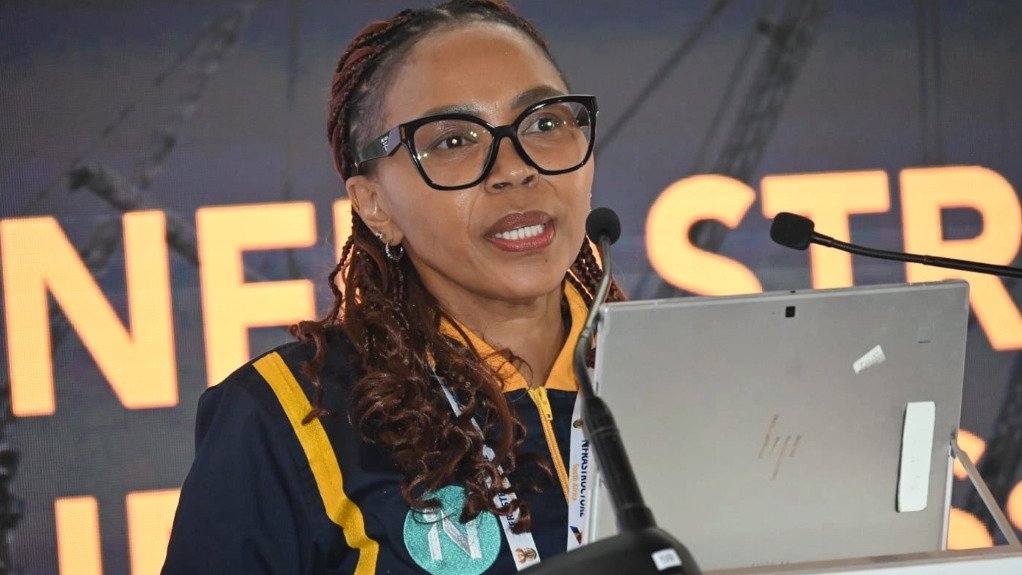
Speaking ahead of the release by President Cyril Ramaphosa of the third edition of the book, Infrastructure South Africa head Mameetse Masemola said the quarterly updates would provide an indication as to whether the projects were proceeding as intended.
She acknowledged that a collation of projects was insufficient and indicated that it, thus, intended to provide regular reviews in a bid to offer “line of sight” over government’s R1.1-trillion infrastructure commitment “from budget to delivery”.
The third edition, Masemola confirmed, would also include public-private partnerships for the first time, but would have municipal infrastructure, including water, sanitation, electrification and roads, as its key focus.
This was in line with the ‘Shaping the Future of Municipal Infrastructure’ theme of the 2026 edition of the Sustainable Infrastructure Development Symposium South Africa, where the new Construction Book was due to be unveiled.
Public Works and Infrastructure Minister Dean Macpherson indicated that the conference would also highlight progress on the country’s 81 Strategic Integrated Projects (SIPs), which comprised 263 individual projects.
The SIPs, which were Gazetted only following Cabinet approval, had an estimated combined investment value of R2-trillion and included both public-sector-led and private-sector-led infrastructure projects.
“Over the last 18 months, 37 projects worth approximately R69-billion have been completed. Eighty-two projects worth approximately R502.7-billion are currently in construction. A further 54 projects worth approximately R206-billion are in documentation and procurement,” Macpherson reported.
“These figures show both the scale of the pipeline and the importance of sustained coordination across the infrastructure system,” he added.
The conference was also taking place only days after the launch of Phase 3 of the Government-Business Partnership, which listed infrastructure as one of four sectors that would be prioritised in an effort to lift growth to 3% and to create one-million new jobs by 2030.
The other growth sectors are mining, agriculture and tourism, with the partnership also continuing with its previous focus on electricity, freight logistics, crime and corruption, and youth employment.
While specific targets had been set for the other three sectors, it was indicated that work was still under way to finalise the framework for infrastructure.
Nevertheless, business did name Fani Titi, Sim Tshabalala and Hendrik du Toit as its three CEO sponsors for the partnership’s focus on infrastructure.
EMAIL THIS ARTICLE SAVE THIS ARTICLE ARTICLE ENQUIRY FEEDBACK
To subscribe email subscriptions@creamermedia.co.za or click here
To advertise email advertising@creamermedia.co.za or click here


