





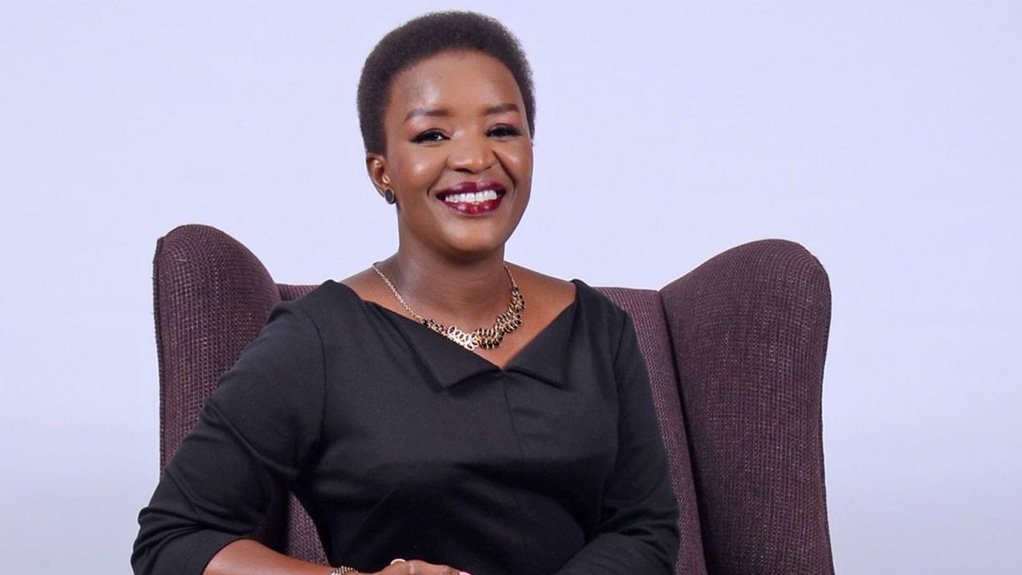

The endorsement of the first report of the Eskom Restructuring Task Team by President Cyril Ramaphosa provided a clear vision for the independent Transmission System Operator (TSO) and made the policy unambiguous, says business organisation Business Leadership South Africa (BLSA) CEO Busisiwe Mavuso.
An independent grid operator is the only way to build a competitive electricity market that treats all electricity generators equally, brings prices down over time and gives investors the certainty they need to commit capital, she says.
The independent TSO is the foundation of a competitive electricity market. Without it, Eskom controls both generation and the grid, which is the equivalent of letting one airline also control the airports, and private generators cannot compete on fair terms, new investment is constrained and the promise of lower electricity prices remains out of reach.
With the endorsement, the President reinforced that electricity reform must create the foundation for South Africa's growth and the independent TSO is needed to deliver on that commitment.
“The President's endorsement is highly positive for investment. Uncertainty about whether South Africa would follow through on electricity market reform has been a source of concern for independent power producers and large industrial consumers alike. That uncertainty is now substantially reduced. A long-term, sustainable electricity market will emerge, and investors can plan accordingly,” Mavuso says.
The task team's Phase 1 report proposes important interim steps while the full unbundling is concluded.
It recommends strengthening the independence of the National Transmission Company South Africa (NTCSA), which was created through the Eskom unbundling process, through completely independent boards with no cross-directorships with Eskom, and with the NTCSA board responsible for appointing its own CEO and senior management.
Eskom must delegate to the NTCSA all decision-making related to the electricity market, with the NTCSA's finances and operations ring-fenced.
These recommendations build the institutional muscle that the independent TSO will eventually inherit. Additionally, the report directly addresses the concern that Eskom could continue to exercise influence over transmission decisions through informal means, as the ring-fencing and governance separation proposals prevent this.
These interim steps also matter for the immediate reform pipeline. The NTCSA taking on genuine independence clears the path for the launch of the South African Wholesale Electricity Market (SAWEM), which is due this quarter.
The SAWEM launch has already faced delays; the President's endorsement and the task team's governance proposals remove the main institutional obstacle and it must now be launched on schedule, Mavuso says.
The task team is now working on a Phase 2 report covering the transaction structure and implementation plan, due within three months. That deadline must be met.
“Eskom must now fully align with the report's recommendations, as there is no longer any debate about the policy direction. The transaction will be complex, as bondholder consent will be required and restructurings of this scale take careful management, but these difficulties are not insurmountable.
“There is substantial international experience of transmission unbundling that South Africa can draw on and bondholders can be treated fairly through a well-structured process. Eskom needs to approach the Phase 2 work as a constructive participant,” she says.
The task team also identified municipal debt to Eskom as the biggest single threat to the utility's long-term sustainability and recommended that a working group develop a consolidated action plan to address it. Municipal arrears to Eskom now stand at over R114-billion.
Interventions are under way, including smart meter installation, distribution agency agreements and local government financial reform, but they are fragmented. A working group that coordinates all of these into a coherent plan, with clear accountability and timelines, is helpful, Mavuso states.
Eskom cannot be put on a sustainable financial footing while debt continues to grow, she adds.
EMAIL THIS ARTICLE SAVE THIS ARTICLE ARTICLE ENQUIRY FEEDBACK
To subscribe email subscriptions@creamermedia.co.za or click here
To advertise email advertising@creamermedia.co.za or click here


