






The International Monetary Fund on Wednesday inched its 2026 global growth forecast lower again to a sluggish 3.0%, warning of ongoing risks linked to the war in the Middle East, trade fragmentation and potential corrections in market expectations for AI.
The global lender said the world economy had dodged a sharper downturn, with demand for AI and other technologies helping to offset a sharp drop in energy supplies as a result of the war. Growth should rebound to 3.4% in 2027, but that is still below the average of 3.5% seen in 2024 and 2025. In April, the IMF had forecast 3.1% growth.
The inflation outlook was less rosy. The IMF raised its 2026 headline inflation forecast by 0.3 percentage points to 4.7% from April, and said it should drop to 3.9% next year. Energy prices were 25% higher now than before the war began on February 28 and would remain higher, it said.
The new forecast, which was locked in on June 10, assumes the Strait of Hormuz will start to reopen in mid-July, with traffic gradually normalizing to reach prewar conditions by March 2027. It assumes an average oil price of $89 per barrel.
"In effect, we expect a V-shaped recovery, weaker growth this year relative to our pre-war forecast, followed by a rebound next year," Petya Koeva Brooks, deputy director of the IMF's research department, told reporters. "The world economy has weathered the shock from the war better than feared so far, with limited evidence of second round effects."
The IMF raised its forecast for some energy exporters and countries that are closely integrated into the technology sector, while commodity importers that are not well-positioned to benefit from AI developments generally saw downgrades in their growth forecasts.
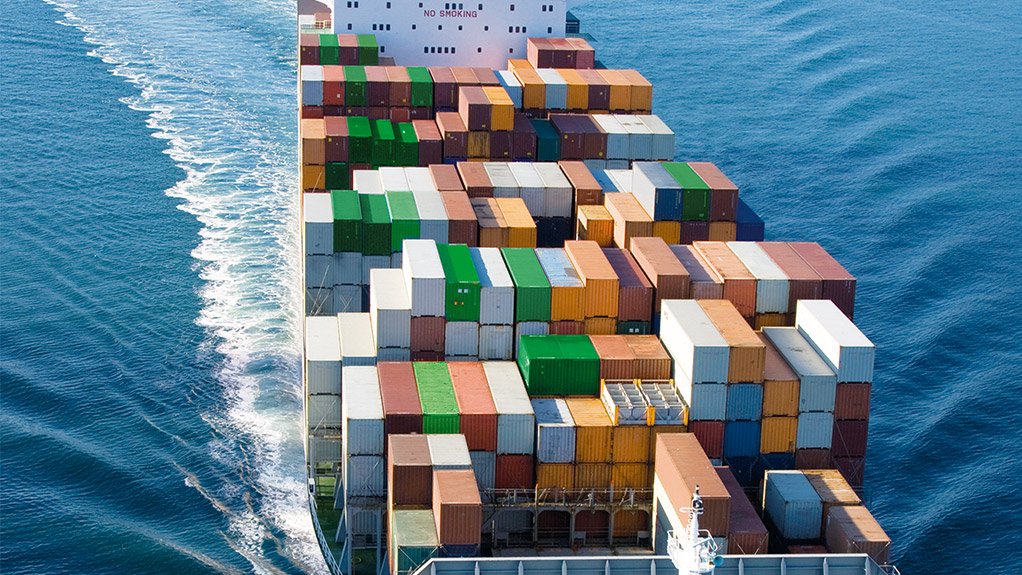
Growth in global trade was projected to slow sharply to 3.5% in 2026 from 5% in 2025, a year marked by heavy front-loading ahead of US tariffs, before rebounding to 4.3% in 2027.
Brooks said the spike in oil prices during the war was limited by the release of strategic oil reserves and commercial inventories, expanded production outside the Gulf, rising energy efficiency and a steady rise in the share of renewable energy. The private sector had also adapted quickly, finding alternative routes and supplies.
"There's still a lot of uncertainty," she said. "A renewed escalation in the conflict could reignite commodity price volatility, tighten financial conditions, strain policy buffers and worsen food insecurity in low-income countries." A market correction in the AI sector was another downside risk.
Higher oil prices could also de-anchor inflation expectations, which would unleash a correction in financial conditions, she said.
The US military unleashed a new wave of strikes against Iran. US President Donald Trump said a memorandum of understanding with Iran to end the conflict was "over," raising fresh concerns about the future of an already fragile ceasefire.
"A renewed conflict in the region is going to catch the global economy in a worse position than it was the first time," Deniz Igan, who leads the IMF's work on economic updates, told Reuters.
Igan noted that many countries had tapped out their oil reserves, leaving them with less room to maneuver. A big push by countries to rebuild those reserves could drive up prices.
Inflation and inflation expectations had remained fairly well-anchored, except in a few cases, and there was little evidence thus far that expectations were shifting in the medium term, the IMF officials said.
SCENARIOS CHANGE
The IMF's updated World Economic Outlook dropped the three separate scenarios it had released in April, before the US and Iran reached their ceasefire deal, reverting to a more traditional baseline forecast. Comparisons were made to the April reference forecast that assumed a shorter war.
The IMF left its 2026 growth forecast for the US economy unchanged at 2.3% and raised its 2027 forecast by 0.1 percentage point to 2.2% from the April forecast.
It lowered the 2026 growth forecast for the euro area to 0.9% from its previous forecast of 1.1% in April, and left its 2027 forecast unchanged at 1.2%.
Japan's growth forecast for 2026 edged lower by 0.1 percentage point to 0.6%, with the 2027 forecast raised by the same amount to 0.7%. South Korea's growth was revised upward by 0.7 percentage point to 2.6%, given strong growth in AI hardware exports.
Emerging market and developing economies also saw a 0.1 percentage point cut in their growth forecast to 3.8% in 2026, while the 2027 forecast was raised by 0.3 points to 4.5%.
China's growth was now expected to reach 4.6% in 2026 after a strong first quarter, up from the April forecast of 4.4%, with 2027 growth expected to reach 4.1%, up from 4% in April.
India, one of the world's fastest-growing economies, also got a small downgrade to 6.4% for 2026 from 6.5% in April, but the IMF lifted its 2027 forecast to 6.7% from 6.5%.
The Middle East and Central Asia region, hardest hit by the war, saw its growth forecast cut by 1.2 percentage points to 0.7% from the April forecast, although the IMF also raised its 2027 forecast by 1.9 percentage points to 6.5%.
EMAIL THIS ARTICLE SAVE THIS ARTICLE FEEDBACK
To subscribe email subscriptions@creamermedia.co.za or click here
To advertise email advertising@creamermedia.co.za or click here


