






The Independent Electoral Commission (IEC) has officially shifted its full attention to final election day preparations following what it describes as a successful conclusion of the final voter registration weekend.
Over the course of Saturday and Sunday, the commission recorded a massive 1.7-million voter interactions through its 23 699 registration stations and online portal.
With the registration weekends wrapped up, the country now moves closer to the highly anticipated local government elections scheduled for November 4.
For eligible citizens who missed the physical registration window, the IEC is keeping the online registration portal open until the official proclamation on Friday.
To make the process even easier, Mamabolo announced a brand-new digital feature: voter registration is now officially available via WhatsApp, offering a highly accessible, data-friendly modality for last-minute registrations.
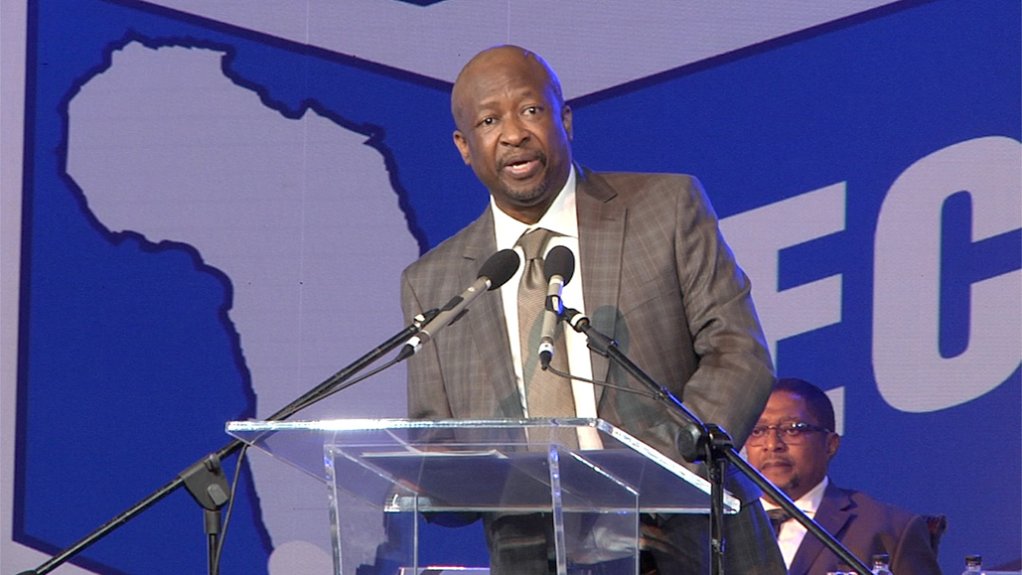
IEC Chief Executive Officer Sy Mamabolo revealed that the two 2026 registration weekends added 754 332 new voters to the national roll.
Out of the last weekend’s 1.7-million transactions, 291 806 (16%) were first-time voters registering for the first time.
The vast majority, about 1 502 245 citizens, or 84%, used the opportunity to inspect and update their existing registration details.
Mamabolo emphasised the strict rules governing local government polls, noting, "This is in line with the message that a voter must register and vote in the voting district within the ward where they reside. In local government elections, there is no provision to vote outside of the voting station of registration."
KwaZulu-Natal led the country with 427 592 total registration transactions, Gauteng with 314 856 transactions and the Eastern Cape with 313 797 transactions.
Mamabolo said the final registration weekend maintained the long-standing trend of higher female political participation, with 1 005 790 female voter interaction (56% of total activity), male with 788 261 interactions (44% of total activity) and among the newly registered voters, exactly 50% were female.
The youth showed up in significant numbers, with citizens aged 16 to 29 accounting for 485 757 (26%) of the total weekend transactions. Crucially, 46% of all brand-new registrations came from voters under the age of 29.
KwaZulu-Natal again led youth registrations with 137 046, followed by the Eastern Cape with 79 417 and Gauteng with 78 405.
Mamabolo explained that physical stations remained the preferred choice, the commission recorded 1 555 318 station-based applications transactions, led by KwaZulu-Natal with 386 258.
The online portal recorded 238 733 transactions.
He said the online portal saw its highest usage in highly urbanised provinces, led by Gauteng with 86 492, KwaZulu-Natal with 41 334 and the Western Cape with 33 783.
The combined effort of the registration drives in June and August 2026 resulted in a staggering 4.66-million voter interactions.
He said this marks a massive increase from the 1.7-million recorded ahead of the 2021 local government elections, which suffered under a compressed timetable owing to Covid-19.
Mamabolo announced that 2.1-million new voters have been added to the voters' roll since the 2024 general elections, noting that the substantial growth comes despite the IEC removing about 884 000 deceased voters from the system, averaging a mortality rate of about 34 000 people per month.
The formal election timetable will officially kick off once the election is proclaimed on Friday.
Mamabolo emphasised that this proclamation will lock in dates for critical milestones, including candidate nominations, certification of the final voters' roll, and logistical setups leading to November 4.
The IEC noted strong early engagement with its Online Candidate Nomination System, which is already being used by over 93 independent candidates and 87 political parties.
EMAIL THIS ARTICLE SAVE THIS ARTICLE ARTICLE ENQUIRY FEEDBACK
To subscribe email subscriptions@creamermedia.co.za or click here
To advertise email advertising@creamermedia.co.za or click here


