





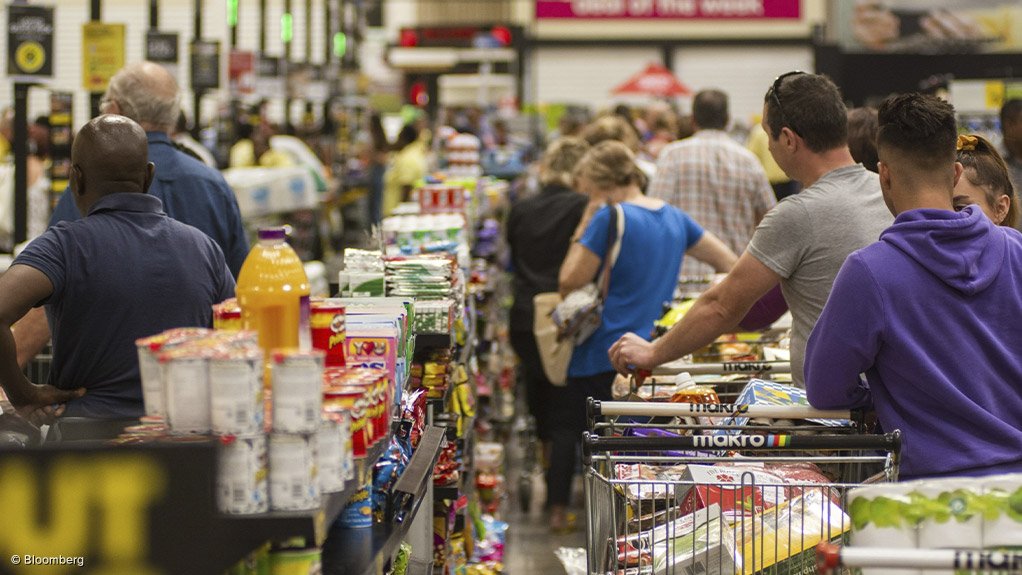

The Competition Commission’s ‘2026 Cost of Living’ (COL) report shows that household budgets are under sustained pressure as electricity, water, petrol, transport, healthcare and communication costs continue to rise faster than overall inflation.
The commission also raises concerns that consumers are not always benefiting from lower input costs. In several food markets, including brown bread, maize meal and sunflower oil, the producer prices remain elevated despite significant decreases in the price of grains and oilseeds.
In other food markets, such as individually quick frozen (IQF) chicken and canned pilchards, the retail price remains elevated despite stable or declining producer prices, the report says.
The COL report provides insight into the affordability of basic food and non-food items, particularly for low-income households.
The analysis shows that, although price pressures differ across different categories, essential expenditure continues to place significant pressure on household affordability.
Between July 2025 and July this year, electricity prices rose by 8.1% and water prices by 10.1%, both significantly above overall inflation of 4.3%. Over the six-year period, both electricity and water prices increased well above cumulative overall inflation, the report shows.
Similarly, general practitioner consultation costs increased by 3.5% between January 2025 and January this year. Over six years, these costs rose by 38%, which exceeded cumulative overall inflation of about 36%.
Petrol prices increased by 26% between January and July this year, driven largely by global pressures linked to the Middle East conflict.
Minibus taxi fares increased by 13% over the same period, which raises concerns that commuters may continue to face higher costs even if petrol prices decline, as taxi fares generally do not adjust downwards.
Additionally, wireless Internet service prices increased by 4.1% between January and July, which is above overall inflation of 3.8% over the same period.
Further, the COL report also examines the spread between what producers receive and what consumers pay for selected foods, including canned pilchards, eggs, IQF chicken, brown bread, sunflower oil and maize meal.
The spread reflects the percentage difference between the producer and the retail prices.
Higher fuel and transport costs have increased production, logistics and distribution costs across the economy, adding additional upward pressure on the prices of basic goods. This is reflected in several food markets.
However, in some markets, producer or retail price increases to historically high levels raise concerns that these increases are not cost-reflective and may not decrease when fuel prices normalise.
The commission says it will continue to monitor these markets closely.
Egg producer prices have increased substantially since April, coinciding with the fuel price increases during this period.
Additionally, the retail prices of IQF chicken and canned pilchards have been increasing this year, despite producer prices for both items remaining stable and declining over the same period.
For brown bread, maize meal and sunflower oil, the producer prices remain elevated despite significant decreases in wheat, maize and sunflower seed prices.
This is concerning as consumers are not seeing the benefits of lower grain and oilseed prices, the report points out.
The COL report also focused on water, where similar affordability concerns arise.
Water tariffs are primarily shaped by the costs and institutional arrangements across the water value chain, which highlights an important policy challenge of ensuring financially sustainable water services without placing an excessive affordability burden on households.
Ongoing sector reforms provide an important opportunity to address these challenges, the commission states.
Greater transparency and consistency in tariff setting, stronger oversight across the water value chain, improved infrastructure investment and incentives for greater operational efficiency will be critical to ensuring that future tariff increases are justified by the efficient cost of providing services, it says.
EMAIL THIS ARTICLE SAVE THIS ARTICLE ARTICLE ENQUIRY FEEDBACK
To subscribe email subscriptions@creamermedia.co.za or click here
To advertise email advertising@creamermedia.co.za or click here


